About Trapezites praxedes (Plötz, 1884)
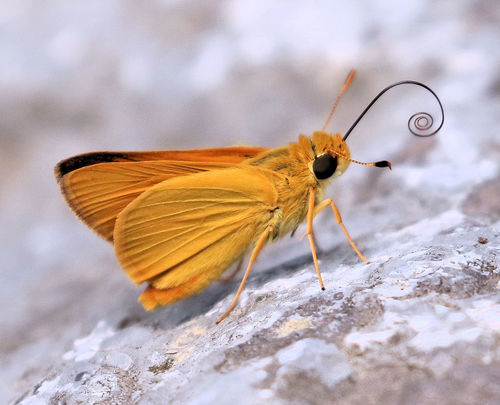
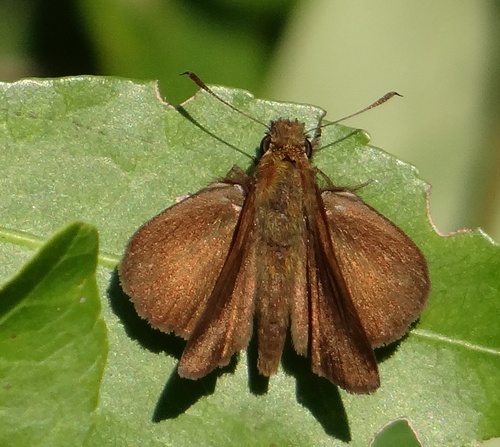
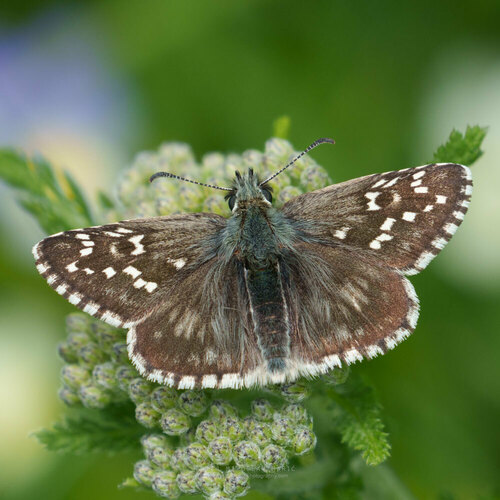
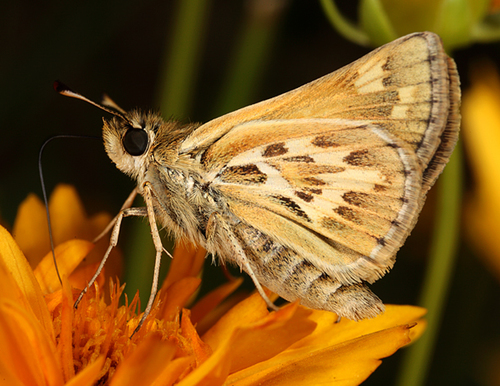
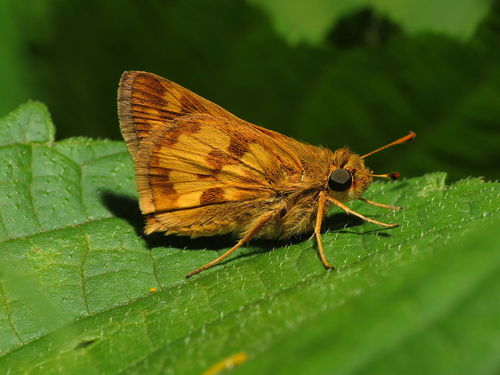
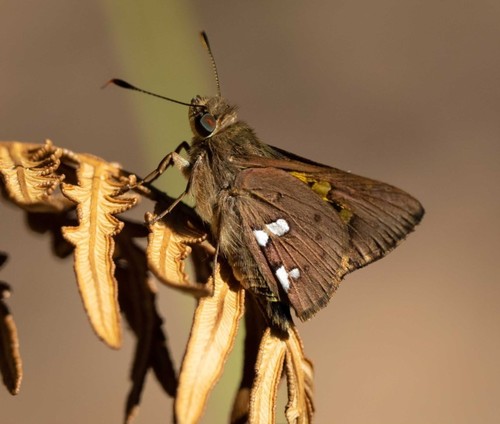
Trapezites praxedes (Plötz, 1884) is a species that is extremely similar in appearance to Trapezites maheta, and distinguishing between the two is difficult even when working with pinned specimens. Adult Trapezites praxedes have brown upper wing surfaces and purplish-brown lower wing surfaces, with yellow or orange markings on the wings, and a total wingspan of approximately 29 mm (1.1 in). When viewed from above, each forewing has three large yellow central spots, one median yellow spot near the dorsum, and a band of three small yellow subapical spots. Each hindwing has a broad orange-yellow central band when viewed from above. When viewed from below, the forewings have markings that are similar to those seen from above. The ventral surface of the hindwings shows sexual dichromatism: from below, males have three large and several small silvery spots on their hindwings, while females have several brown rings marking their hindwings instead. Eggs of this species are dome-shaped, and range in colour from cream to white, with irregular reddish-orange bands. They measure approximately 1.1 mm (0.043 in) in diameter and have 18 longitudinal ribs. Larvae are reddish-brown with a faint brown middorsal line, and a brown head marked with lighter spots. They can grow up to 24 mm (0.94 in) in length. Pupae are pinkish-brown, marked with black dots, and covered in a waxy white powder. Adult Trapezites praxedes fly quickly. They feed readily at flowers that grow close to the ground, and will also feed at flowers high in the canopy. Adult females lay their eggs singly on leaves at the base of the species' host plants, which are several species of mat-rushes: Lomandra confertifolia, Lomandra laxa, Lomandra longifolia, Lomandra obliqua, and Lomandra spicata. After hatching, larvae construct a shelter at the base of the host plant. They rest inside this shelter during the day, and emerge to feed at night. Larvae overwinter inside their larval shelters. Pupation can take place either inside the larval shelter, or in a curled dead leaf near the base of the host plant. Adults primarily emerge in January, but have been recorded between September and May.