About Tragopan satyra (Linnaeus, 1758)
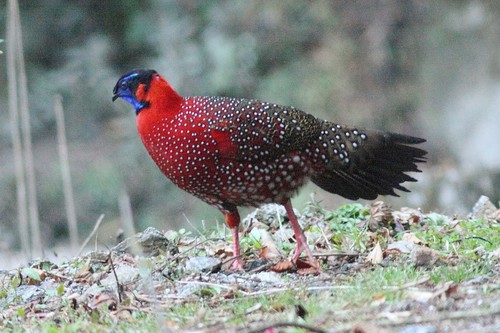
The satyr tragopan, scientific name Tragopan satyra, is also commonly called the crimson horned pheasant. This species of pheasant occurs in the Himalayan regions of India, Tibet, Nepal, and Bhutan. It lives in moist oak and rhododendron forests that have dense undergrowth and clumps of bamboo. Its elevation range is 2400 to 4200 meters in summer, and 1800 meters in winter. Adult males measure approximately 70 centimeters in total length. During mating season, males develop blue horns and a gular wattle. When preparing to display to potential mates, males inflate their horns and hide behind a rock, waiting for females to pass. When a female approaches, the male performs an elaborate courtship display in front of her. At the end of this display, the male stretches to his full height to show off all of his decorative ornaments. Female satyr tragopans are brown in color. Males are typically red, marked with blue, black, and white spots and freckles. While satyr tragopans are categorized as the least threatened species among tragopans, they still face multiple threats. The species is believed to have a moderately small population, which is impacted by both hunting and habitat loss across most of its native range.