About Tradescantia hirsuticaulis Small
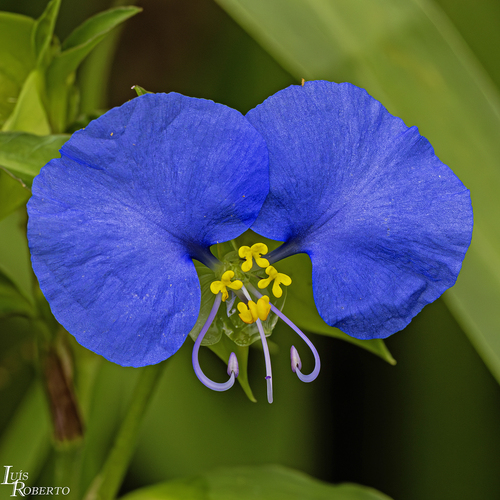
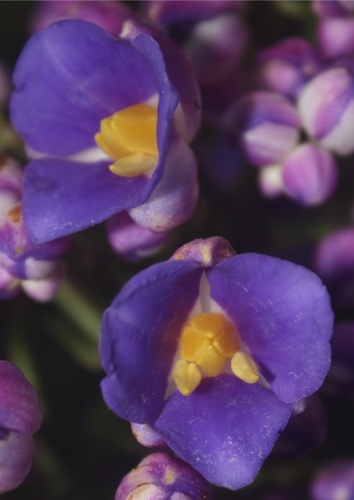
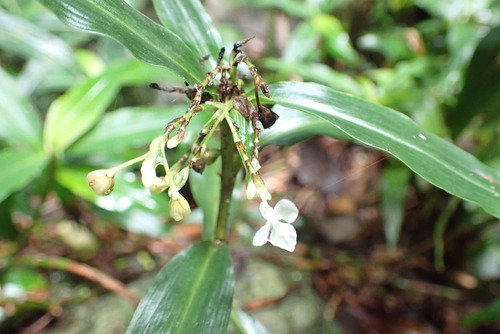
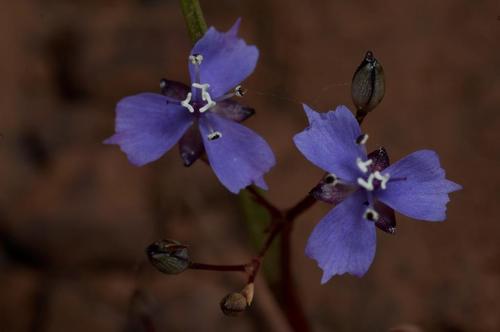
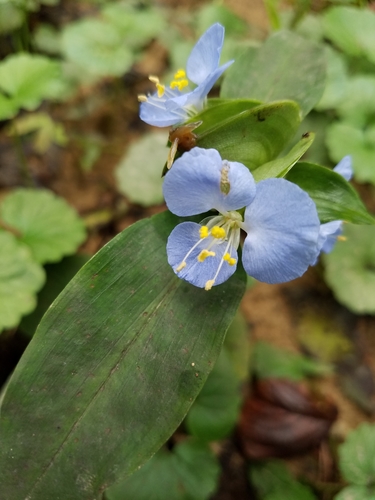
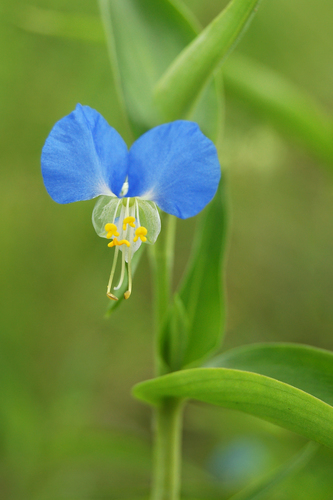
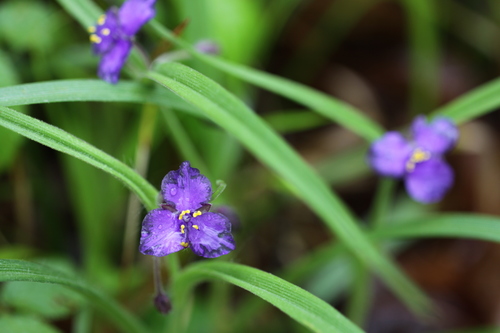
Tradescantia hirsuticaulis Small grows between 15 cm and 40 cm tall. Its leaves attach directly to the base of the stem and are arranged in a spiral around the stem. The leaves are dull green, linear or lanceolate in shape, 10–30 cm long and 0.6–1.6 cm wide; they are wider at the base and taper toward the tip. Leaf margins can be densely ciliolate or sparsely ciliate, and leaves have a pointed apex. Leaves are typically covered in both puberulent and pilose hairs, and the species is deciduous, shedding its leaves once each year. The species produces purple actinomorphic flowers. Each flower grows from a 1.5–3.5 cm pedicel covered in both glandular and non-glandular trichomes. Most flowers have 3 petals, reach roughly 1 inch in diameter, and have 6 stamens with bearded filaments; each stamen is polyandrous. Petals are ovate, lack claws, and measure 11–16 mm in length. Sepals under the petals are tinted red or purple, covered in both glandular and non-glandular trichomes between 1.5 mm and 16 mm long. Inflorescences are mainly terminal, and occasionally axillary; they are usually puberulent and pilose, with foliaceous bracts that have ciliolate margins. After flowering, the plant produces a dry, brown fruit capsule. Flowering and fruit development typically occur between late spring and early summer. Seeds measure 2–3 mm, have a hilum that extends vertically across the seed, and undergo dehiscence. Stems are either unbranched or sparsely branched, and can grow erect or descending. Internodes are usually either pilose or glabrescent. Below ground, the plant’s roots are brown and covered in tomentum. Tradescantia hirsuticaulis is most often found in the Southeastern United States. Its native range extends west to eastern Oklahoma and Texas, and east to Georgia and the North Carolina Piedmont. It is most commonly encountered in Alabama, Arkansas, Georgia, North Carolina, Oklahoma, South Carolina, and Tennessee; in Tennessee, populations are generally concentrated in Giles, Hickman, and Lawrence counties. Two individual plants have been recorded growing outside its native range in Pennsylvania and Bolivia, and it is unknown how these plants arrived at these locations. Populations within the native range are scattered but dense. The species grows best in dry woods, rocky areas, poor-quality dry soil, and partial shade, all common habitat types across the Southeastern United States. In early spring, T. hirsuticaulis flowers open for around one day. Insects visit the flowers even though they offer no nutritional reward such as nectar. The species has no specialized pollen dispersal mechanisms, and most pollen is thought to be spread primarily by bees and syrphid flies. Uniquely among members of the Commelinaceae family, T. hirsuticaulis acts as a host for the stilt bug Jalysus spinosus (a berytid). J. spinosus is thought to feed on the plant’s glandular hairs and on small bugs trapped by the plant’s secretions. Adult J. spinosus and their nymphs have been observed on the plant’s fruit and pedicels, suggesting the bugs may lay their eggs on T. hirsuticaulis. While wind pollination is possible, it is considered unlikely due to the plant’s small size, and only one species in the Commelinaceae family has been recorded to use wind pollination. After pollination, seeds are most often dispersed by gravity and moving water. It is not confirmed whether T. hirsuticaulis can self-pollinate. Unpublished data from Robert Wyatt of the University of Georgia reports the species is not self-compatible, but no details of the supporting work have been published. Most species in the Tradescantia genus, including the close relatives of T. hirsuticaulis, are self-incompatible. However, some Tradescantia species are self-compatible even when their closest relatives are not, so self-pollination remains a possibility for T. hirsuticaulis. This plant causes contact dermatitis when it touches the skin of humans and pets. While the source of this irritation is unknown, contact with any part of the plant—flowers, fruit, leaves, roots, sap, seeds, or stems—causes irritation. Ingestion of any plant part can also irritate the mouth and stomach. T. hirsuticaulis is occasionally grown as an ornamental plant, most often used as a groundcover along walkways and in rock gardens. Groundcover plantings help prevent erosion and suppress weed growth, though this use of the species remains uncommon. Other spiderwort species have been used for medicine and food by Native American tribes. For example, tribes have eaten the leaves of Tradescantia virginiana in salads, and some historically used preparations of its roots and other plant parts to treat cancer or kidney problems. It is unknown whether Native American groups ever used T. hirsuticaulis for these purposes.