About Trachylepis brevicollis (Wiegmann, 1837)
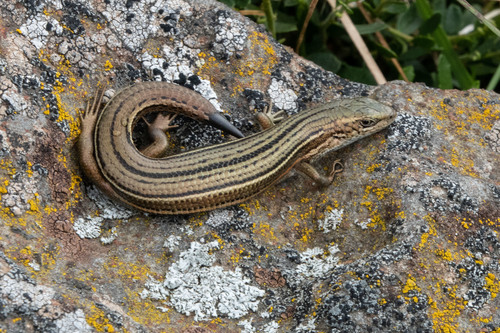
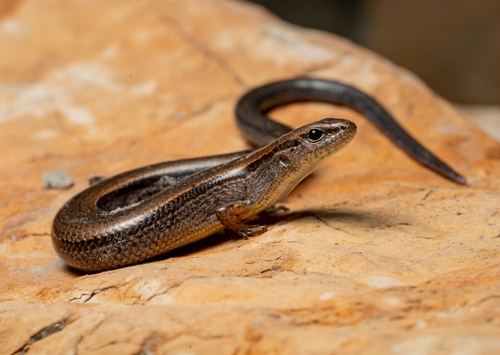
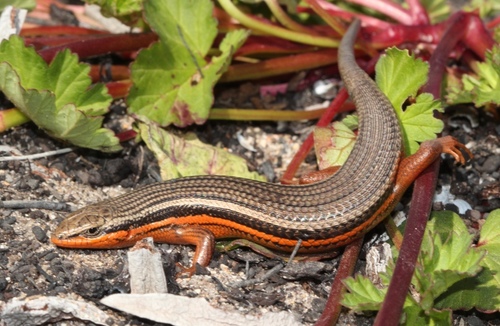
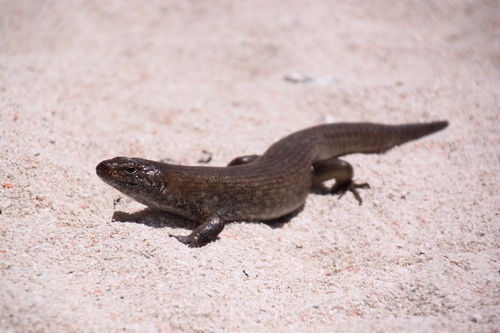
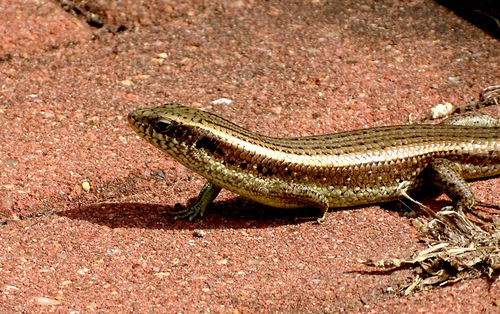
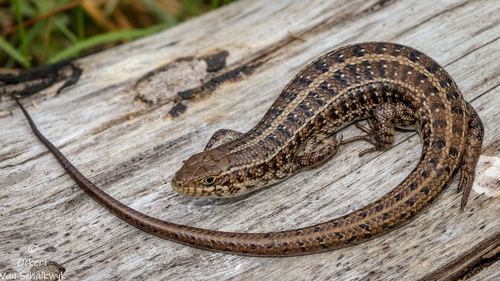
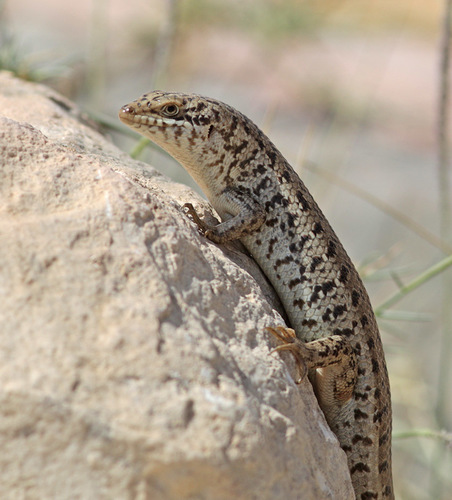
Trachylepis brevicollis is a relatively large, robust skink that reaches an approximate snout–vent length of 140 mm. It has a cylindrical body with well-developed limbs. Its dorsal and lateral scales are strongly keeled, often with double keels, which gives its skin a rough texture. The species has a broad head, with five supralabial scales positioned anterior to the eye, and the first supraocular scale contacts the frontal scale. Trachylepis brevicollis has variable coloration. Juveniles typically show bold dark and light patterning, while adults are usually more uniformly brown or grey. In some populations, particularly those in Arabia, adult males may display orange or reddish coloration along their flanks and body sides. This species is found across Sudan, South Sudan, Eritrea, Ethiopia, Somalia, Kenya, Uganda, Tanzania, Yemen, Saudi Arabia, and Oman. It lives in open and semi-arid environments, including savanna, scrubland, rocky terrain, agricultural areas, and disturbed habitats. It is often found on the ground, in low vegetation, and within human-modified landscapes. Trachylepis brevicollis is diurnal and primarily terrestrial. Individuals are commonly seen basking in sunlight and actively foraging during the day. Like other species in the Trachylepis genus, it is presumed to be insectivorous and feeds mainly on small invertebrates, though no detailed studies of its diet have been completed. This species is ovoviviparous: females give birth to live young instead of laying eggs, a reproductive mode that is typical of many African mabuyine skinks.