About Trachycardium egmontianum (Shuttleworth, 1856)
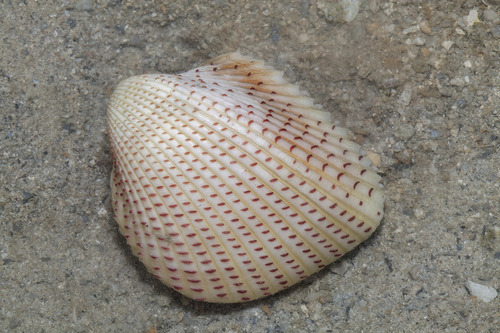
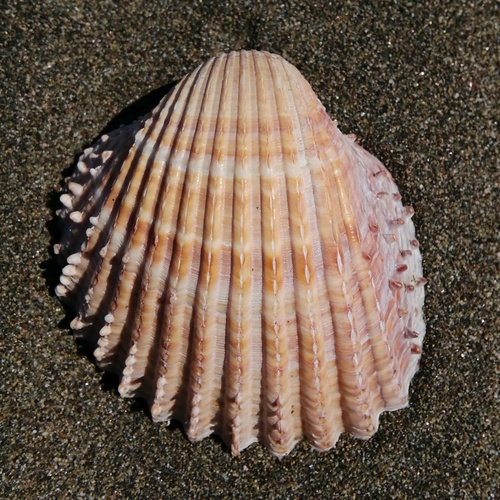
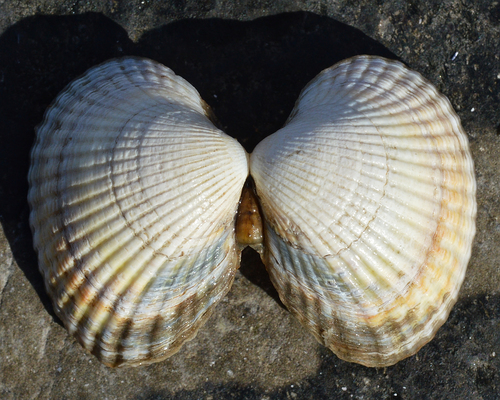
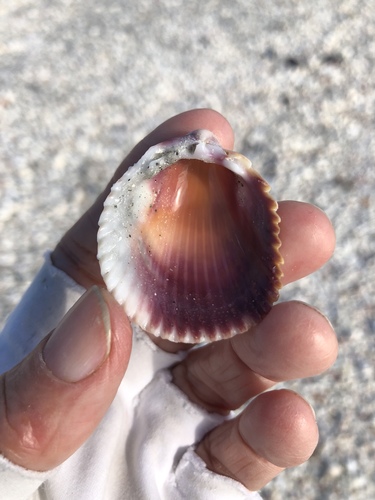
The shells of Trachycardium egmontianum grow to approximately 50 millimeters, or 2.0 inches, in size. These shells are oval-shaped and have between 27 and 31 strong radial ribs. Like other species in the genus Trachycardium, T. egmontianum has V-shaped hooks that grow along its radial ribs. The outer shell surface ranges from whitish to tawny-gray or pale purplish, and is marked with yellow, brown, or purplish streaks. The glossy inner shell surface is pink, reddish, or purplish. This species occurs along the Atlantic coast of North America, from North Carolina through Florida and extending into the West Indies. The unique V-shaped hooks along the radial ribs of T. egmontianum improve its ability to burrow in sandy substrates. This improved burrowing works partly because the shape of these protrusions alters water flow over the shell and reduces scouring. The shell protrusions also create asymmetry that further increases the species' burrowing speed. When the cockle twists during burrowing, the asymmetrical protrusions catch on the sand for grip at certain angles, and allow the shell to glide through sand at other angles, resulting in faster burrowing overall.