About Trachurus symmetricus (Ayres, 1855)
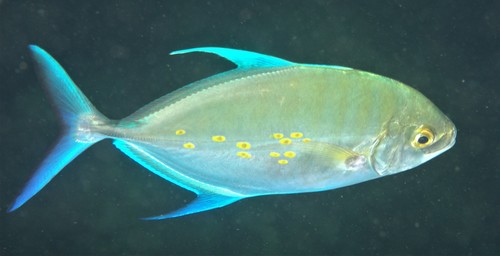
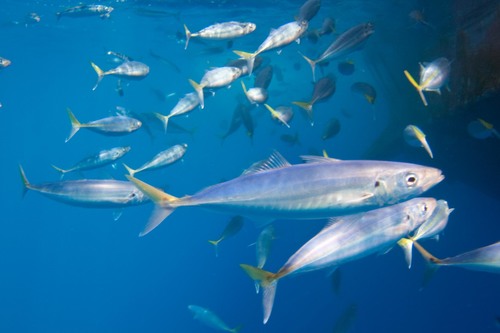
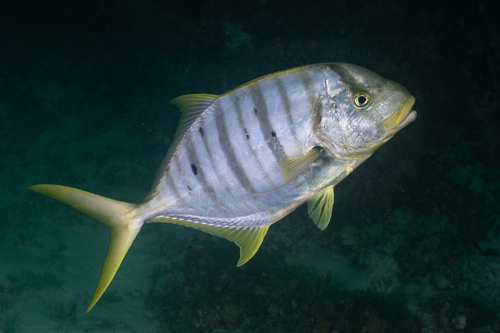
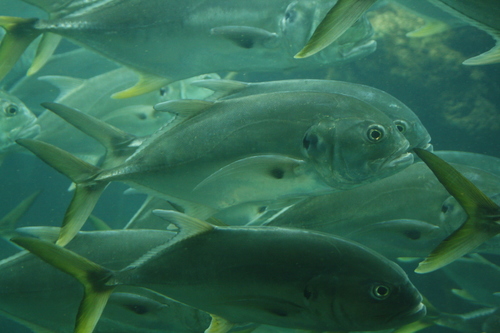
The Pacific jack mackerel, scientifically named Trachurus symmetricus (Ayres, 1855), shares many physical traits with other members of the Trachurus genus and multiple other carangid genera. It has an elongated, slightly compressed body, where both the dorsal and ventral body profiles have the same amount of curvature. This is a medium-to-large-sized fish, reaching a maximum recorded length of 81 cm (32 in), though most individuals grow to less than 55 cm. It has two distinct dorsal fins: the first holds eight spines, while the second holds one spine followed by 31 to 35 soft rays. Its anal fin has two anteriorly detached spines, followed by one spine connected to 26 to 30 soft rays. In some larger individuals, the last few rays at the back of the soft dorsal and anal fins are almost fully separate from the rest of the fin, forming small finlets. Like most members of the Carangidae family, the caudal fin is strongly forked; the pelvic fin has one spine and five soft rays. The pectoral fin, which has 22 to 24 total rays, ends before the start of the anal fin. The lateral line drops sharply after the pectoral fin, with 50 to 53 scales on its upper section and 43 to 52 keeled scutes on its posterior section. This species has very small teeth, with a narrow club-shaped strip of teeth forming a patch on the tongue. It has a total of 24 vertebrae. Dorsally, Pacific jack mackerel are colored metallic blue to olive-green, fading to silvery on the ventral side before transitioning to a white belly. The top of the head and the area around the eye are quite dark, and there is a dark spot on the upper rear part of the gill cover. Most fins range from hyaline to dusky, though the caudal fin may be yellow to reddish. Pacific jack mackerel are distributed across the northeastern Pacific Ocean, ranging from Alaska in the north, along the western North American coast, south to the Baja California peninsula in the Gulf of California. Individuals have been recorded as far south as the Galápagos Islands, but at these southern latitudes the species overlaps in range with T. murphyi, which may have led to misidentification between the two. This fish lives in both pelagic and inshore environments, and often travels up to 600 miles offshore, with recorded occurrences down to depths of 400 m. In more coastal areas, they are known to live in bays and very shallow waters. As a food fish, Pacific jack mackerel has a similar flavor to canned sardines. It can be used interchangeably with salmon or tuna in recipes. It is considered safer for consumption than tuna because it is a smaller fish and not a top predator, so it does not accumulate high levels of heavy metals like mercury.