About Trachinus draco Linnaeus, 1758
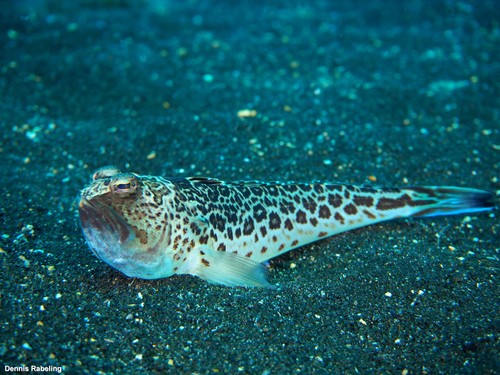
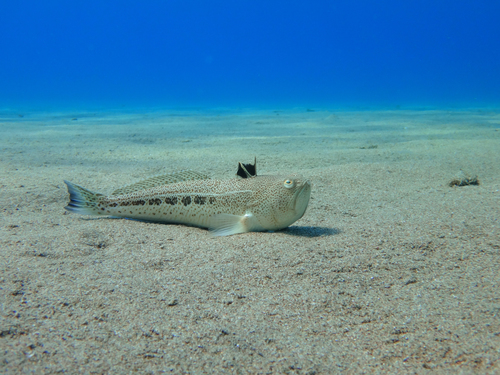
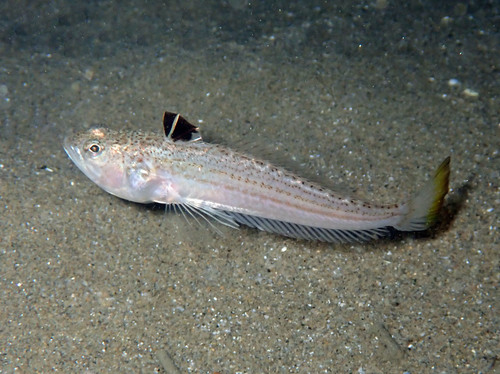
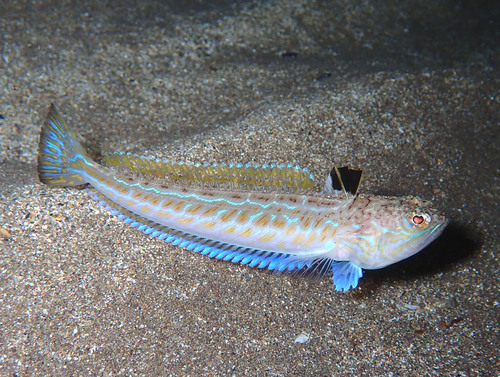
The greater weever (scientific name Trachinus draco Linnaeus, 1758) is a benthic, demersal, venomous marine fish belonging to the family Trachinidae. It is widely distributed along the eastern Atlantic coastline from Norway to Morocco, and its range extends into the Mediterranean, Aegean, and Black Seas. T. draco can be found at depths ranging from shallow water up to 150 metres (490 ft), and it mostly inhabits muddy or sandy substrates. This species is most famously and notoriously known for its venomous spines, which can cause serious injuries to humans through accidental stings. Due to these spines and its potent venom, it is classified as one of the most venomous fish found in the Mediterranean. The name "weever" is thought to derive from the Anglo-Saxon word "wivre", which translates to "viper".
The reproduction period of T. draco was originally recorded as lasting from June to October. This broad range was narrowed by 2004 observations from Ole Bagge, who reported that his findings strongly indicate the species' spawning time is actually restricted to between June and August, with a peak in spawning activity during July. Bagge also noted that no greater weever in spawning condition has been recorded from September to May. T. draco is an oviparous spawning fish that lays its eggs in the pelagic zone. Larvae measure between approximately 4.8 mm and 6.8 mm, and hatch after roughly three months. Both eggs and larvae are found in the pelagic zone and surface plankton. T. draco larvae may require relatively warm water with relatively low salinity to produce larger hatching numbers. T. draco is probably not territorial, even during the mating season, and no form of parental care has been observed in this species.
Although greater weever is sold commercially in France, where it is considered a delicacy, it is most often caught as by-catch. When caught alongside other by-catch fish, it is commonly sold on markets in the mixed fish category also called "morralla" — this practice is documented in parts of the Mediterranean.