About Trachinotus ovatus (Linnaeus, 1758)
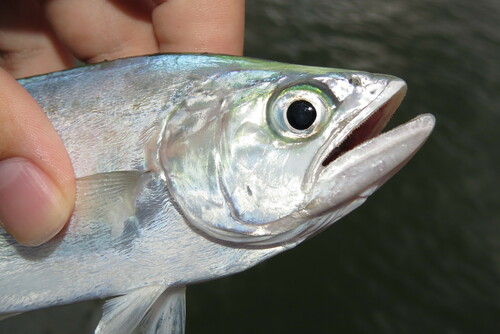
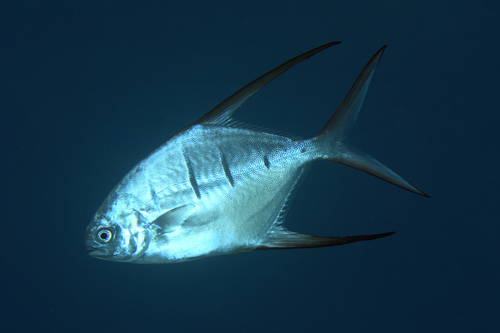
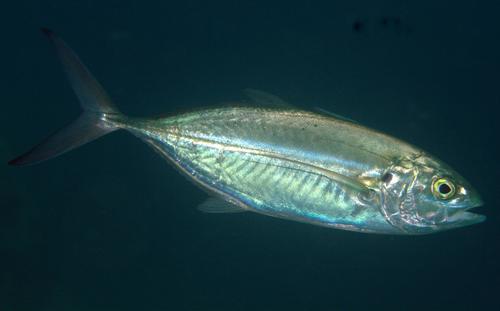
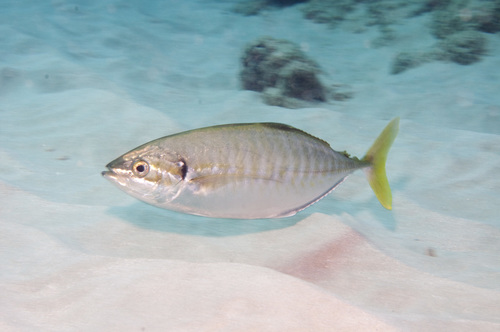
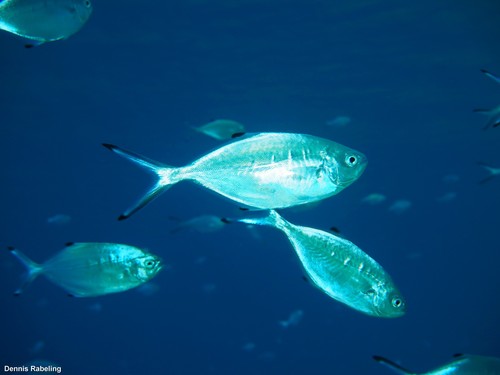
Trachinotus ovatus has an elongated, strongly laterally compressed body. Its body has a silver base color with a greenish back. The caudal fin is distinctly forked, with black margins and a white spot on the fin's upper half. The dorsal and anal fins bear black spots, and 3 to 5 black spots run along the center line of its flanks. This species can reach a maximum length of 70 centimeters (2.3 feet), though most individuals do not grow longer than 35 centimeters (14 inches), and can reach a maximum weight of 2.8 kilograms (6.2 pounds).
Trachinotus ovatus is found in the eastern Atlantic Ocean, ranging from the Bay of Biscay, where it is a rare vagrant in British and Scandinavian waters, south to Angola. Its range covers the Mediterranean Sea, including coastal waters off Spain, the Ligurian Sea, the southern Tyrrhenian Sea, the Adriatic Sea, the Aegean Sea, and the Levantine Sea off Egypt; it is apparently absent from the northern Adriatic Sea. It also occurs in Macaronesia and mid-Atlantic islands such as St Helena and Ascension Island.
Adult Trachinotus ovatus are common in shallow, surging waters, and prefer clear water with sand or mud substrates. They are sometimes found in lagoons and river estuaries. This is a social species that forms schools. Smaller individuals are often caught at night near steep rocky shores. Adults feed on small crustaceans, molluscs, and smaller fish. They spawn pelagic eggs during the summer, and inhabit depths between 50 meters (160 feet) and 200 meters (660 feet). They will gather around fish farms to feed on food pellets that fall through the mesh at the bottom of the farm cages.
Trachinotus ovatus is a minor commercial target for fisheries, is reared in aquaculture, and is a popular exhibit in public aquaria.