About Trachinotus falcatus (Linnaeus, 1758)
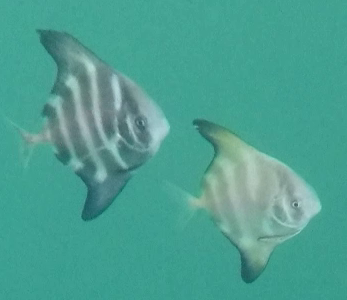
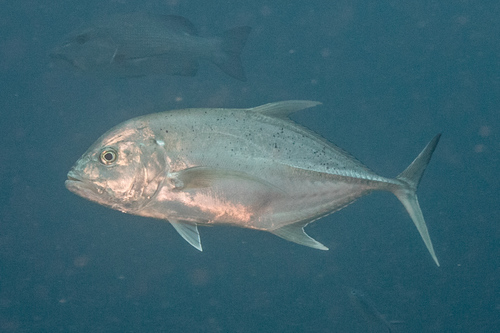
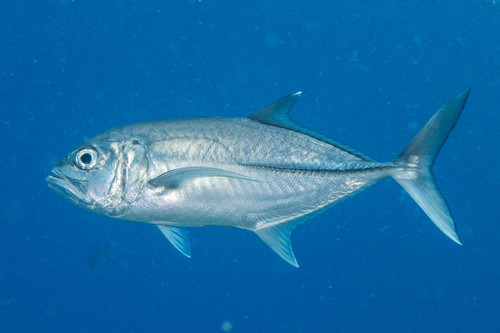
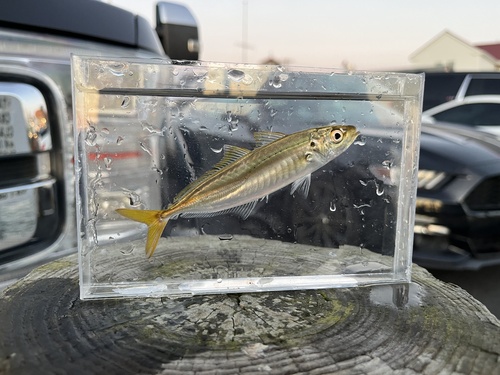
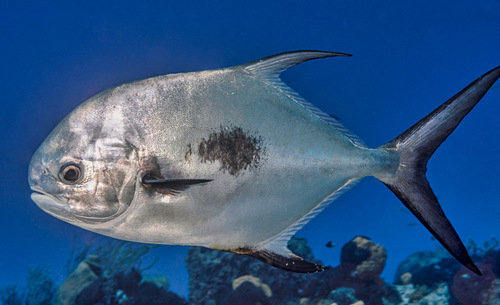
Anatomy and morphology: Permit (Trachinotus falcatus) can be distinguished by their elongated dorsal and anal fins. The dorsal fin has a distinct scythe shape. Permit also have deeply forked tails, and their bodies are compressed laterally, giving them a tall, thin appearance when viewed from the front. The average permit has six or seven dorsal spines, and 18 to 21 soft dorsal rays. The anal fin has two or three spines, and 16 to 18 soft anal rays. Both the dorsal and anal fins have dark anterior lobes. Permit have no scutes, and they have a large, orange-yellow patch on their abdomens, located in front of their anal fins, while their pectoral fins are dark. According to the Florida Museum of Natural History, permit can reach a maximum total length of 122 cm and a maximum weight of 36 kg. Distribution and habitat: Permit typically inhabit shallow tropical waters, including mudflats, channels, and muddy bottoms. While permit are found close to shore and even in some brackish areas, they spawn in offshore waters. Young permit are usually found in the surf zone, where small invertebrates, their food source, are available. Permit are distributed across the western Atlantic Ocean, ranging from Massachusetts to Brazil, and including most Caribbean islands. Two United States Navy submarines were named USS Permit in honor of this fish, following the "denizens of the deep" naming theme for U.S. Navy submarines that was standard before the 1971 naming of USS Los Angeles.