About Trachinotus baillonii (Lacepède, 1801)
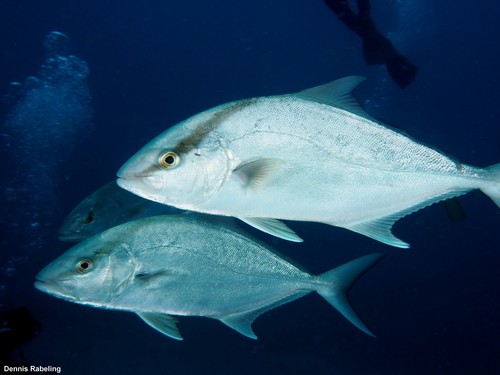
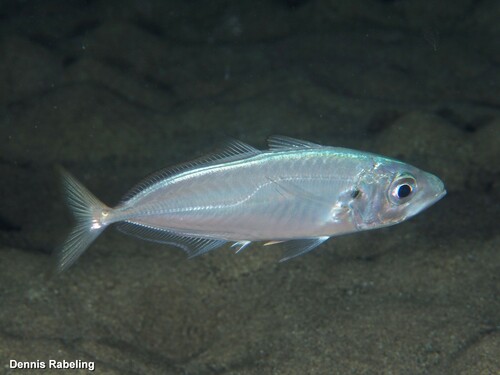
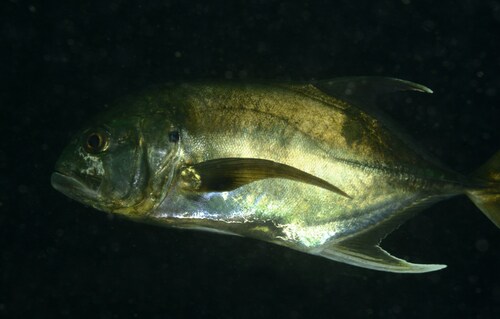
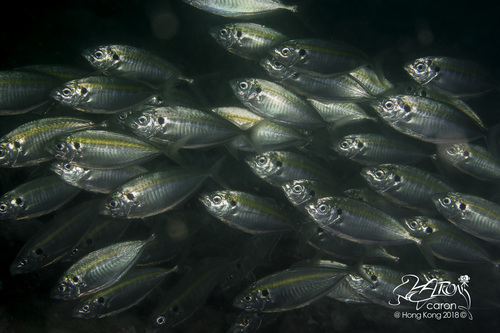
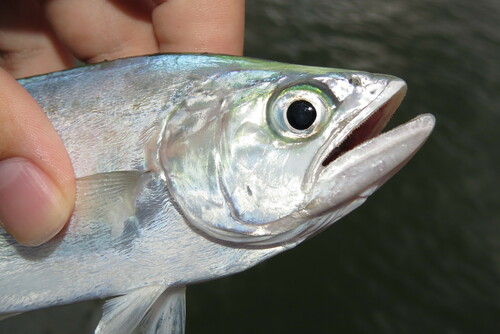
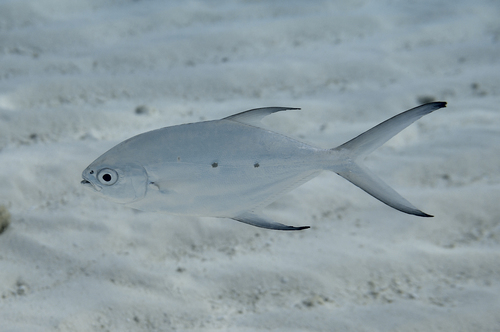
Trachinotus baillonii, commonly called smallspotted dart, can reach a maximum total length of 60 cm (24 in) for males, and a maximum weight of 1.5 kg (3.3 lb). Its dorsal body color ranges from silvery blue to grey, with small black spots on the flanks, and the number of these spots increases as the fish ages. The ventral side of the body is silvery white. It has large, strong fins, a forked tail, and a narrow caudal base. This species feeds on small fishes. Trachinotus baillonii was formally described in 1801 by French naturalist Bernard Germain de Lacépède (1726–1825), originally under the name Caesiomorus bailloni. The name was originally recorded in an unpublished manuscript by Philibert Commerson. The specific name honors one of two French naturalists: either Louis Antoine François Baillon (1778–1851), or his father Jean François Emmanuel Baillon (1742–1801), and it is not clear which one is the honoree. This species is widespread across the Indo-Pacific region, ranging from the Red Sea and the coast of East Africa east to the Gambier Islands, and north to southern Japan. In the Marquesas Islands, this species is replaced by the closely related Marquesas dart, Trachinotus macrospilus. The smallspotted dart is a reef-associated fish. It occurs in lagoons and on seaward reefs, and typically forms schools near the water surface.