About Trachemys terrapen (Bonnaterre, 1789)
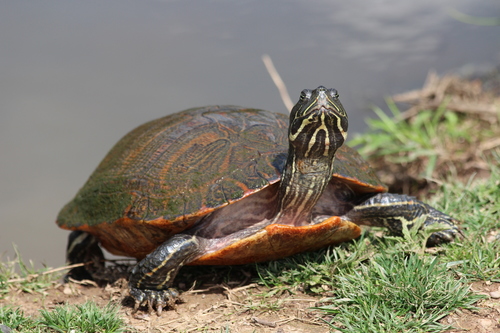
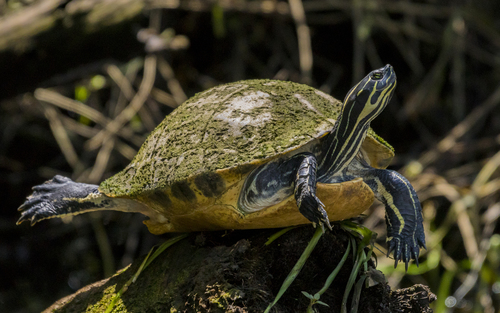
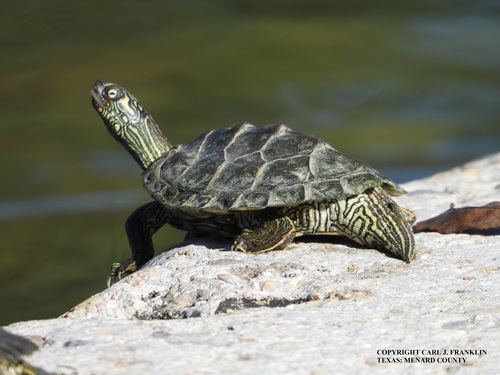
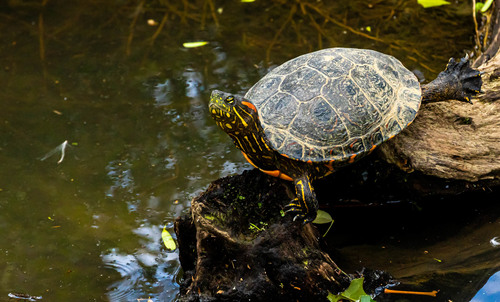
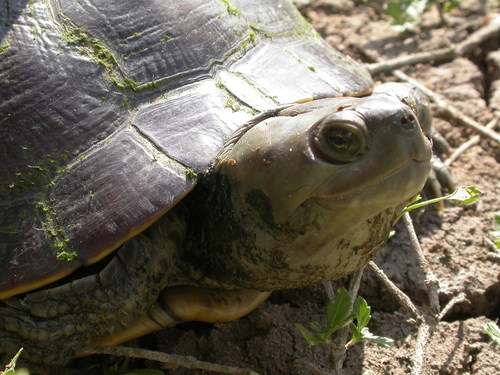
Jamaican sliders (Trachemys terrapen) are moderately sized freshwater turtles. Males have an average carapace length of 200 millimetres (7.9 in), while females are larger, averaging 270 millimetres (11 in) in carapace length. Adult individuals are dark brown to olive in color with very faint markings. Juveniles have much clearer markings, which appear to disappear within the first three years of life. These freshwater turtles live in most fresh to brackish wetlands across their range, including swamps, streams, ponds, and even ephemeral or temporary ponds. The Jamaican slider occurs across many areas of the island of Jamaica, and on a small number of islands in the Bahamas. In the Bahamas, approximately 60% of the species' total population lives on Cat Island, where it is commonly called the Cat Island slider. Smaller populations are also found on Eleuthera, Andros Island, the Exumas, and New Providence. The populations on New Providence (and nearby Paradise Island) and Exuma are hybrids between the red-eared slider (Trachemys scripta elegans) and the Inagua slider (Trachemys stejnegeri malonei) from Great Inagua. For Jamaican populations of Jamaican slider, the breeding season lasts from February to September. Bahamian populations likely have a shorter, more restricted breeding season, due to lower availability of freshwater. Clutch size observed in populations from both Jamaica and the Bahamas ranges from 3 to 8 eggs, and adults can lay 3 to 4 clutches per year. The final clutch laid each year is always smaller than the first one. Historically, these turtles were eaten by the Taíno people who lived in the region. They are still consumed in the Bahamas today, though this practice is decreasing. On Cat Island, these turtles are also kept as pets, usually housed in wells, and are affectionately called "Peter" by locals there.