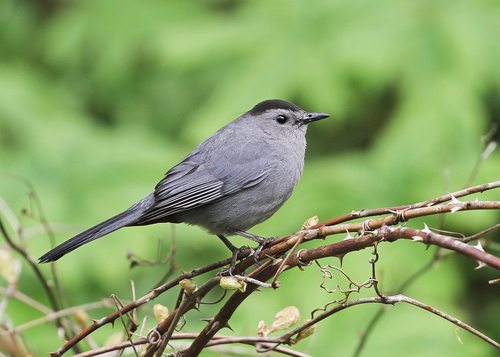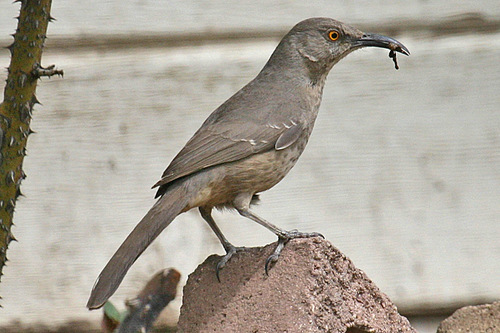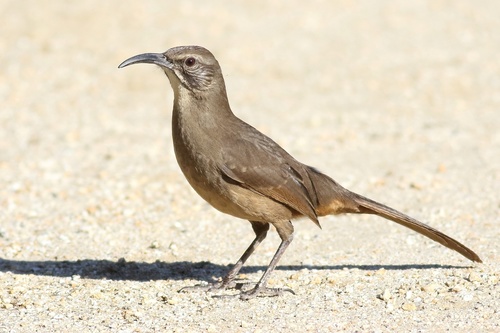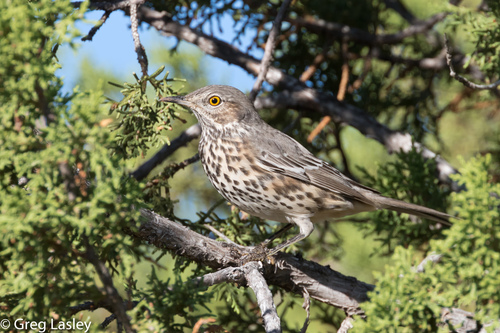
About Toxostoma longirostre (Lafresnaye, 1838)
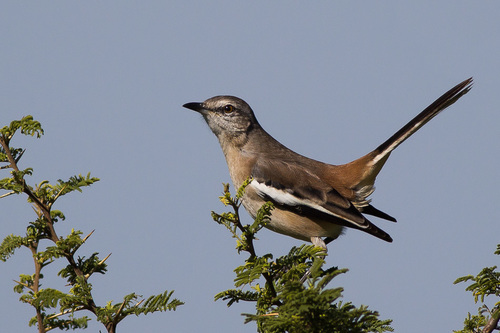
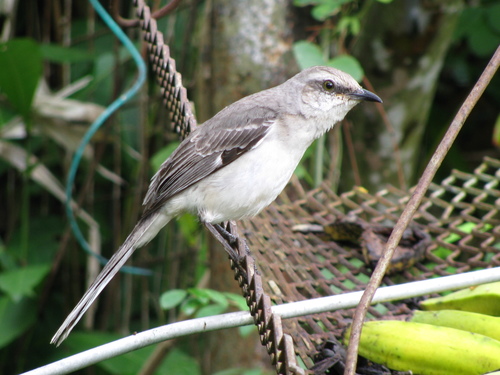
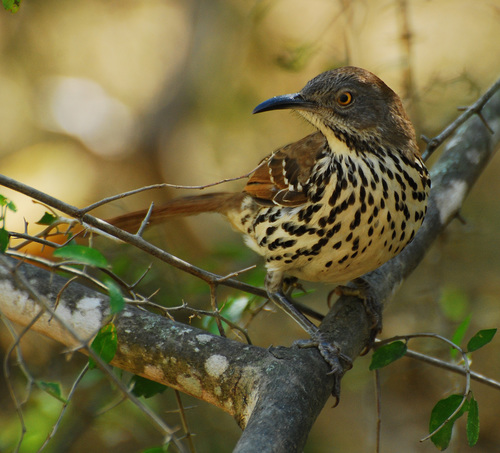
This species, commonly known as the long-billed thrasher, has the scientific name Toxostoma longirostre (Lafresnaye, 1838). The bird is slender with a long tail, averaging 26.5–29 cm (10.5–11.5 in) in length and approximately 70 g (2.5 oz) in weight. It is a large thrasher, close in size to the American robin. The subspecies Toxostoma longirostre ssp. sennitti has a grayish-brown crown, with rufous coloration on the back, rump, rear of the body, and shoulders. Broad white tips on the greater and lesser primary coverts, and dull-brown primary and secondary coverts with rufous brown edges, give the closed wings a rufous appearance. The chin, throat, chest, and belly are white or pale-buffy white, and the chest and belly have distinct blackish oval markings. The underwing is buffy-white. The iris is typically orange or orange-yellow; the bill is dull brown, with a pinkish grey base on the lower mandible. Toxostoma longirostre ssp. longirostre is similar in appearance, except it is smaller, darker, has an overall red-tinged appearance, and has buffy-white underparts. Juveniles have dusty streaks on the rump and buffy-white undertail coverts. This species is a permanent resident across most of its range; vagrants have only been recorded in New Mexico and Colorado. Its resident range extends from southern Texas (north to San Antonio and Aransas County) south through northwestern Mexico to central Veracruz, and east to eastern Coahuila, San Luis Potosí, and Hidalgo. The highest breeding density of the species occurs in the Rio Grande Valley. Although the species is resident in the lower Rio Grande Valley, a large amount of its habitat there was destroyed for agricultural use, leading to a population decline in the area between the 1930s and 1970s. Some human activity that created suitable new habitat is thought to have helped the species, and it remains a common resident throughout its range. In Texas, there is evidence that the species has expanded its range northward and eastward between 1957 and 2007, a shift that is suggested to be caused by climate change.