About Toxopneustes roseus (A.Agassiz, 1863)
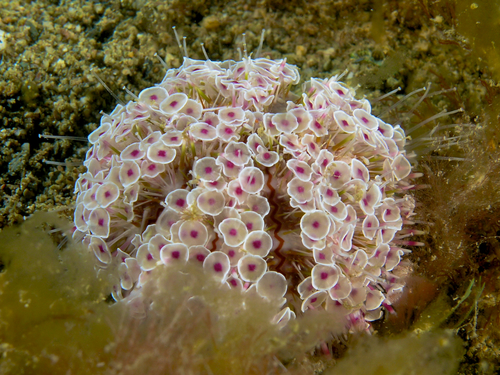
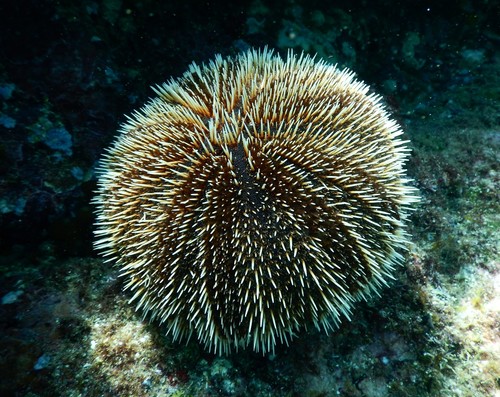
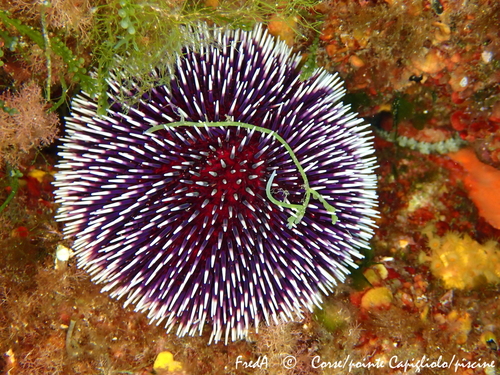
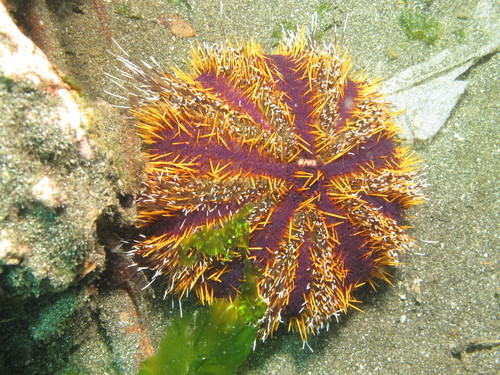
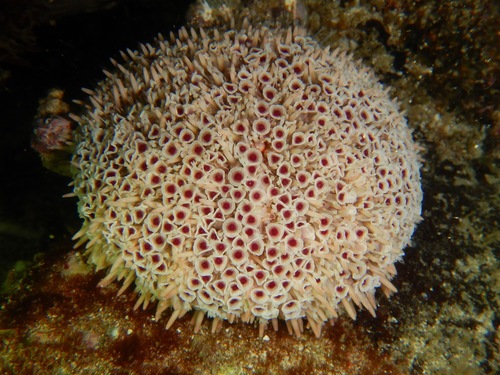
Toxopneustes roseus is similar in appearance to the more widespread flower urchin, Toxopneustes pileolus. It can be distinguished from Toxopneustes pileolus by its rigid "shell" (called a test), which is a solid pink, red, or purple, unlike the variegated coloration of T. pileolus's test. Like other species in the genus Toxopneustes, its most noticeable feature is its numerous pedicellariae — stalked grasping appendages that give the urchin the appearance of a cluster of flowers.
Toxopneustes roseus is the only member of its genus found in the East Pacific. Its range extends from Peru, north along the Central American coast (including the Gulf of California), to as far north as California. It is also found in the waters surrounding the Galapagos Islands. This species is common in coral reefs, rhodolith beds, and rocky environments at depths between 2 and 50 meters (7 to 164 feet), and can also occur on sand and mud substrates.
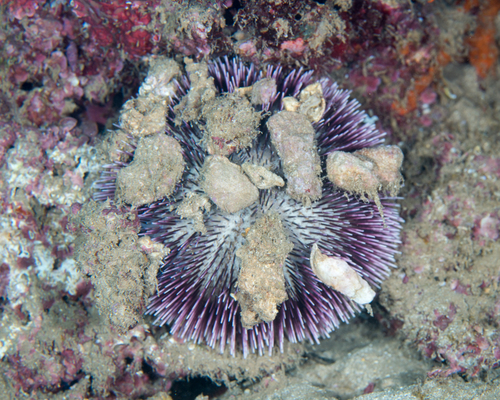
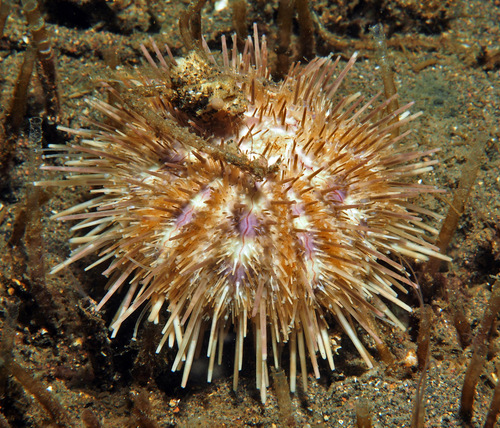
Ecologically, Toxopneustes roseus feeds almost entirely on rhodoliths, which are a type of coralline algae. The species is highly mobile, moving and feeding both day and night, though it tends to be more active during the night. Toxopneustes roseus belongs to a group of sea urchins called "collector urchins", named for their frequent behavior of covering the upper surface of their bodies with debris from their surroundings. This behavior is commonly called "covering" or "heaping". A 1998 study suggested that the debris collected by these urchins may act as ballast, stopping them from being swept away by wave surges while feeding.