About Toxicodendron succedaneum (L.) Kuntze
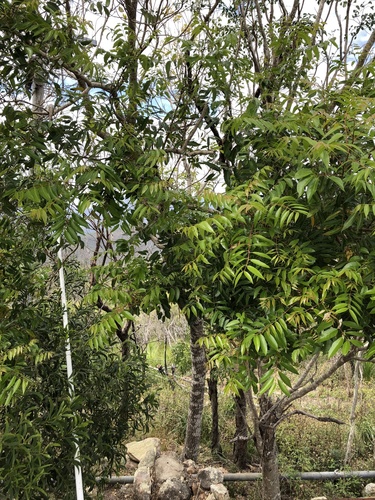
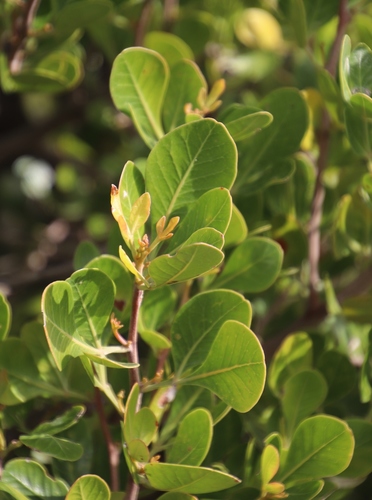
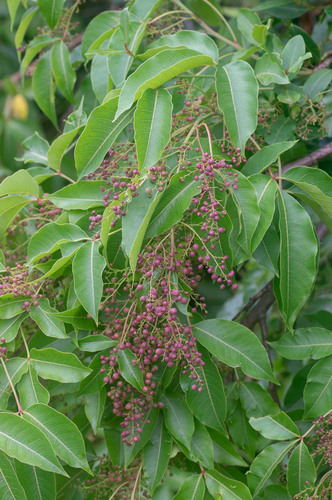
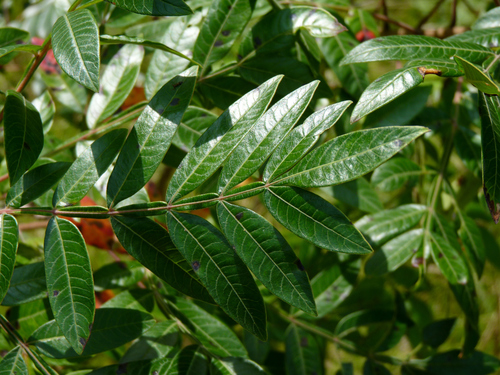
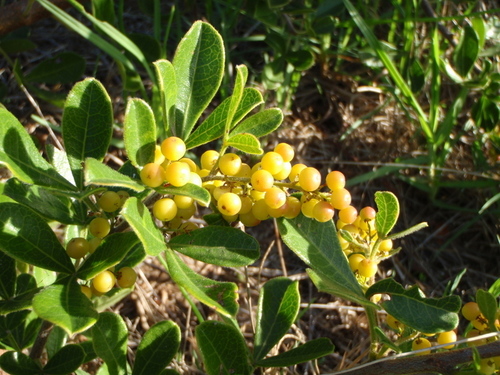
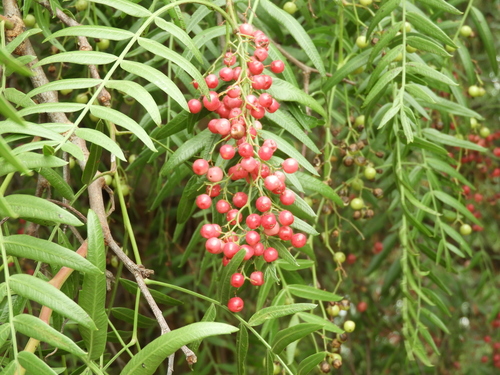
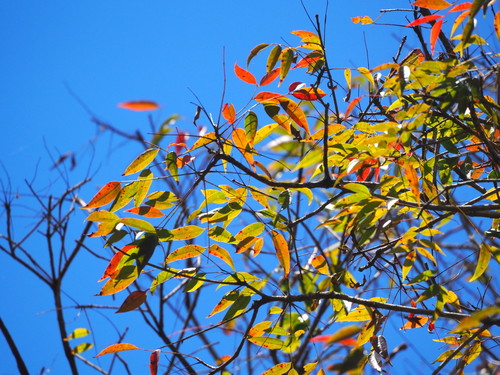
Toxicodendron succedaneum, commonly called the wax tree, Japanese Hazenoki tree, sơn in Vietnamese, or charão in Portuguese, is a flowering plant species in the genus Toxicodendron. It is native to Asia, but has been planted in other regions, most prominently Australia and New Zealand. It grows as a large shrub or tree reaching up to 8 meters tall, and is somewhat similar to a sumac tree. Due to its attractive autumn foliage, it has been planted as an ornamental plant outside of Asia, often by gardeners who did not know it can cause dangerous allergic reactions. It is now officially classified as a noxious weed in Australia and New Zealand, and it is one of the official city tree symbols of Kurume, Fukuoka, Japan. The larvae of the moths Eteoryctis deversa, Caloptilia aurifasciata, Caloptilia protiella, Caloptilia rhois, and Callidrepana patrana feed on this species.
This plant has several recorded uses. It is used to produce lacquer. In Vietnam, lacquer made from this tree's resin is used to create lacquer paintings called sơn mài. In East Asia, especially Japan, traditional candle fuel known as Japan wax was produced from the crushed fruits of Toxicodendron succedaneum (alongside other sumac plants), instead of beeswax or animal fats. Japan wax is a byproduct of lacquer manufacture. It is not a true wax, but a fat that contains 10 to 15% palmitin, stearin, and olein, plus approximately 1% japanic acid (1,21-heneicosanedioic acid). Japan wax is sold as flat squares or disks and has a rancid odor. It is extracted through expression, heat, or the use of solvents. The fatty-acid methyl ester made from the plant's kernel oil meets all major biodiesel standards in the United States (ASTM D 6751-02, ASTM PS 121-99), Germany (DIN V 51606), and the European Union (EN 14214). It is also used as a medicinal plant in India. While the fruits of Toxicodendron succedaneum are edible, consuming them is not recommended because the plant as a whole is toxic.