About Touchardia latifolia Gaudich.
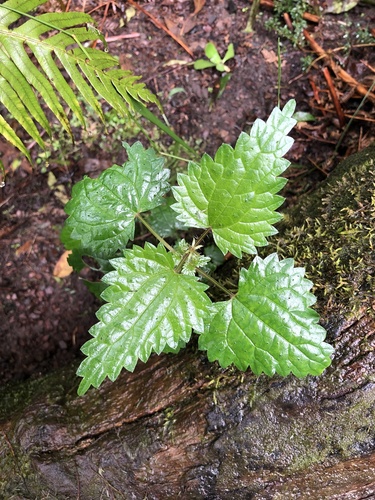
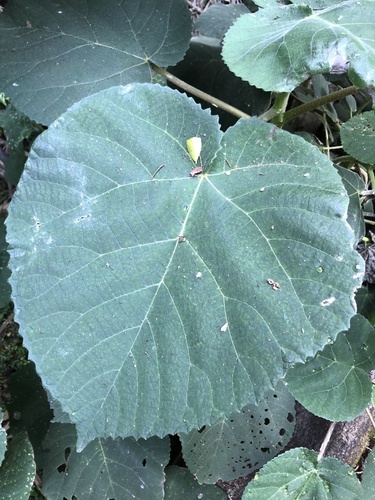
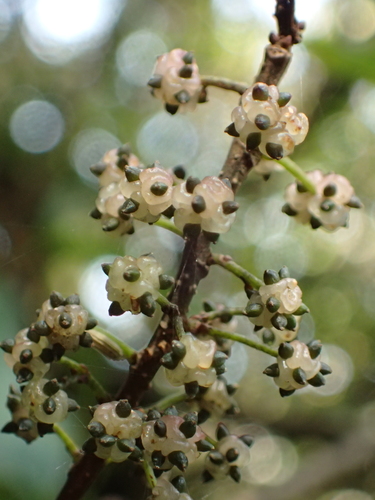
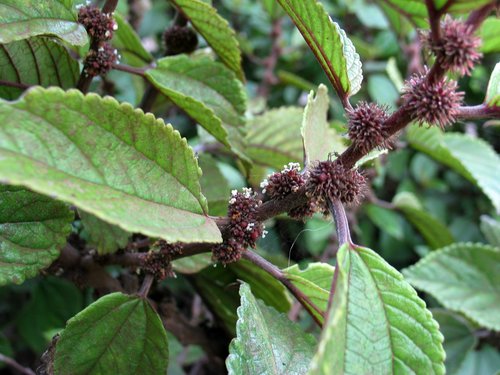
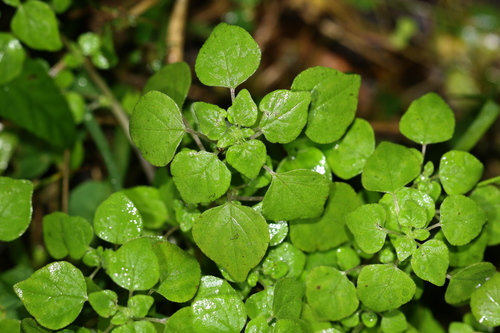
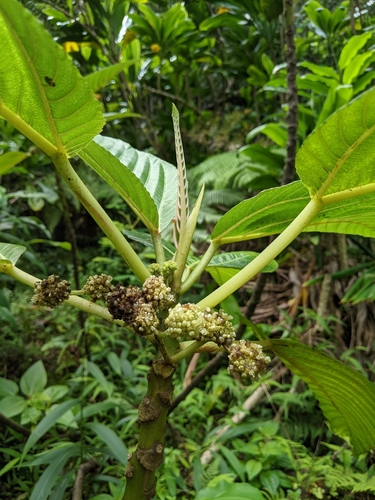
This species, commonly known as olonā, has the scientific name Touchardia latifolia Gaudich. Like many Hawaiian plants, olonā does not have the stinging hairs that its mainland relatives have. It grows on all of the main Hawaiian islands, with the exception of Kahoʻolawe and Niʻihau. This species has alternate leaves, and their shape varies dramatically based on the local environment, ranging from thin lanceolate to broad elliptic. This wide range of natural leaf variation previously led botanists to classify what is now T. latifolia into more than 10 separate species, all of which are currently considered a single species. Olonā typically flowers between May and December. Female flowers grow on branching cymes that develop into fleshy, orange, berry-like achenes, while male flowers are white. Olonā is easy to cultivate, with an 83% germination rate, and sprouts easily from cuttings. However, it does not transplant well due to its fragile roots. Touchardia latifolia is endemic to Hawaii, where it inhabits mesic valleys and wet forests at elevations between 70–1,200 m (230–3,940 ft). Native Hawaiians cultivated olonā to produce cordage, and considered its fiber one of the finest available grades. Its intertwining strands make it one of the strongest natural fibers in the world. Olonā saw extensive use in traditional Hawaiian weaponry: it served as cordage for the wrist loop of pāhoa daggers, for fastening shark teeth to the heads of leiomano, and as the cord for tripping weapons such as the pīkoi. It was also used to make fishing nets and carrying baskets called kōkō. Its fine strong cordage was once sought after by people around the world including climbers and sailors, for its unrivaled strength and durability. Traditionally, olonā was cultivated near upland streams. After harvesting, new fibers were soaked in stream water for 24 to 72 hours. They were then placed on long boards and excess outer bark was removed with a scraper, often made from shell or turtle. Once prepared and dried, the fiber from the bark peels off in ribbon-like sheets. The stripped outer bark of olonā was traditionally carried in the uplands and worn around the neck as a lei.