About Toona sinensis (A.Juss.) M.Roem.
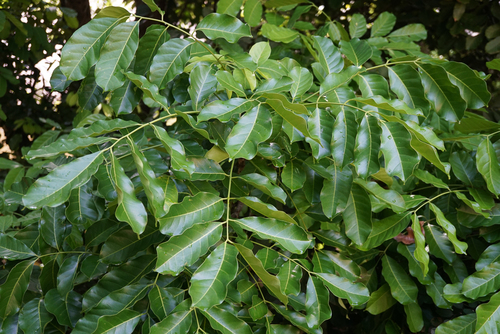
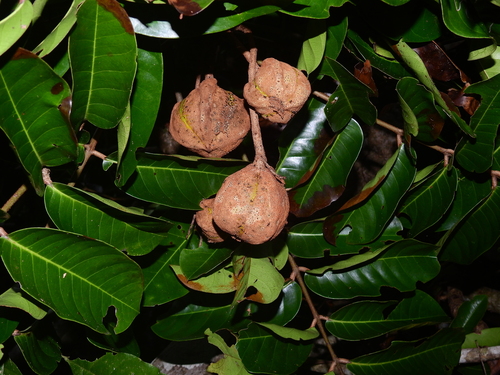
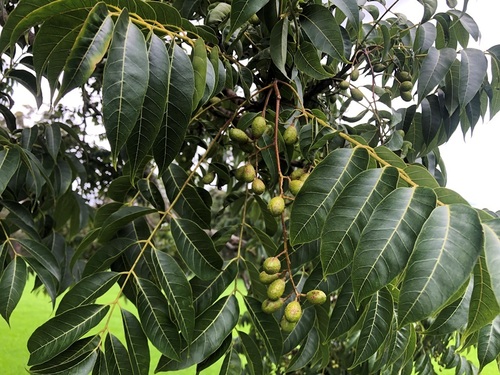
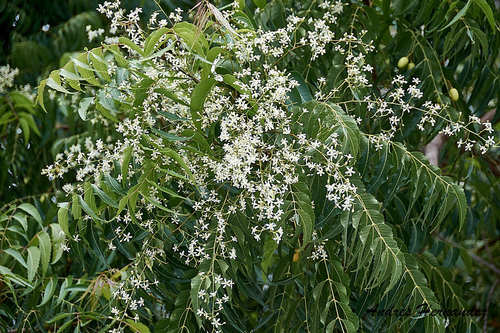
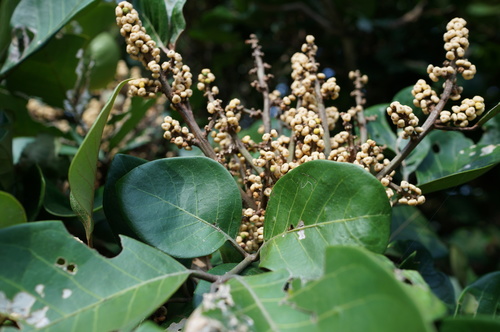
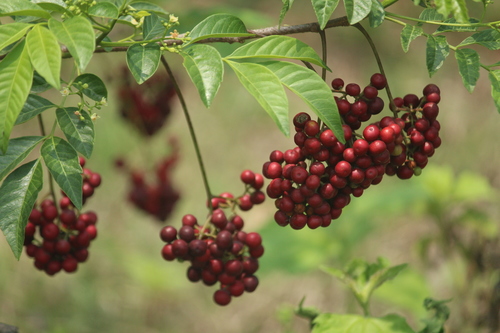
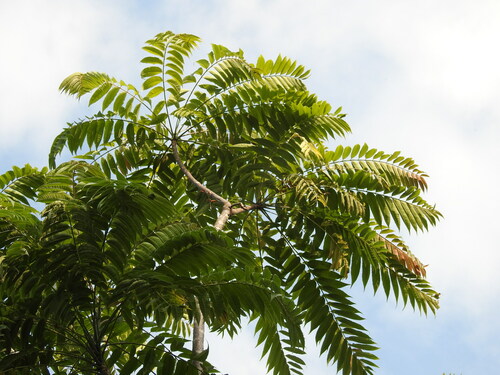
Toona sinensis (A.Juss.) M.Roem. is a deciduous tree that grows up to 25 metres (82 ft) tall, with a trunk reaching up to 70 cm in diameter. Its bark is brown; it is smooth on young trees, and becomes scaly to shaggy on older trees. The leaves are pinnate, measuring 50–70 cm long and 30–40 cm broad, and carry 10–40 leaflets. The terminal leaflet is usually absent, making the leaves paripinnate, but it may sometimes be present, making the leaves imparipinnate. Individual leaflets are 9–15 cm long and 2.5–4 cm broad, with an entire or weakly serrated margin. Young leaves are reddish-brown or purple, and have a distinct scent. The flowers are produced in summer, growing in panicles 30–50 cm long at the end of branches; each flower is small, 4–5 mm in diameter, with five white or pale pink petals. The fruit is a golden capsule 2–3.5 cm long, containing several winged seeds. Toona sinensis resembles Ailanthus altissima in appearance, but the two species differ in leaf scent: Toona sinensis has rough bark, while A. altissima has smooth bark. Toona sinensis can reproduce through both sexual and asexual methods, including seed propagation, cutting propagation, and tissue culture. Seed propagation produces large numbers of seedlings, making it suitable for mass cultivation. Soaking seeds in warm water for a moderate amount of time before sowing improves their germination rate. In East Asia, T. sinensis seeds are normally sown between late March and early April, though sowing time may vary depending on the local planting area. Seedlings grown from seed in spring can be transplanted while they still have leaves in autumn. Cutting propagation uses a section of stem or root taken from a mature plant to grow a new plant in a growing medium such as moist soil. This method produces seedlings with a higher survival rate than other propagation methods. Semi-lignified stems are most commonly used for this method: fully lignified stems are slow to root or fail to root at all, while non-lignified stems easily rot after planting. Treatments with NAA or Vitamin D solutions can help cut stems develop roots. In East Asia, stem cuttings are normally taken from mature plants and cultivated between late June and early July, though this timing may vary by local planting area. Tissue culture research for T. sinensis began in the late 1980s in China. Successful work includes growing T. sinensis seedlings on MS medium supplemented with the hormones IAA and BA. Since the 1980s, researchers have collected stems from mature T. sinensis trees across different regions and developed a specific set of tissue culture methods for rare varieties of Toona sinensis. The young leaves of T. sinensis are widely used as a vegetable in Chinese cuisine. They have a floral yet onion-like flavour, which comes from volatile organosulfur compounds. Plants that produce red young leaves are considered to have better flavour than plants with green young leaves. In China and Southeast Asian countries such as Malaysia, the young leaves of Toona sinensis (commonly called Chinese Mahogany) are used to make Toona paste. This paste is used as a condiment served with plain rice porridge for breakfast and simple meals, and it is also used to enhance the flavour of other dishes and soups. Common dishes made with Toona paste include Chinese Mahogany fried rice, Chinese Mahogany beancurd, and Chinese Mahogany mushroom soup. The leaves contain Vitamin E, and high amounts of iron, calcium, and chlorophyll. The timber of Toona sinensis is hard and reddish, and is valued for use in furniture, musical instruments such as guitars, and woodcarving. It is a common, substantially cheaper alternative to Swietenia, also called "true mahogany", which is now commercially restricted for native sourcing. Outside Asia, T. sinensis is primarily valued as a large ornamental tree for its rugged, haggard appearance. It is by far the most cold-tolerant species in the Meliaceae family, and is the only member of the family that can be cultivated successfully in northern Europe. According to Traditional Chinese Medicine (TCM), the leaves of T. sinensis benefit digestion, relieve cough problems, and help stop bleeding. Recent research has found that polysaccharides contained in T. sinensis leaves can protect liver cells in people following high-fat or high-carbohydrate diets. Quercetin extracted from the leaves has been identified as a natural antioxidant that can act as a cancer preventive.