About Tonna dolium (Linnaeus, 1758)
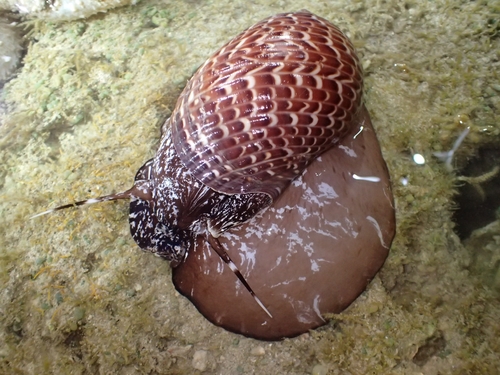
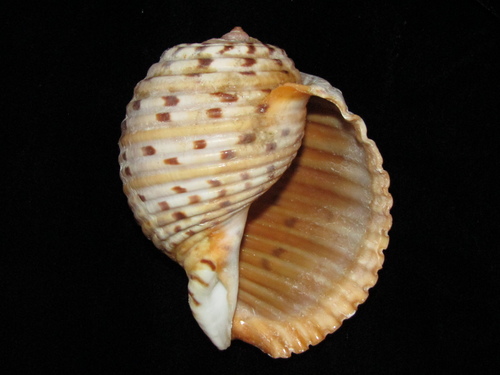
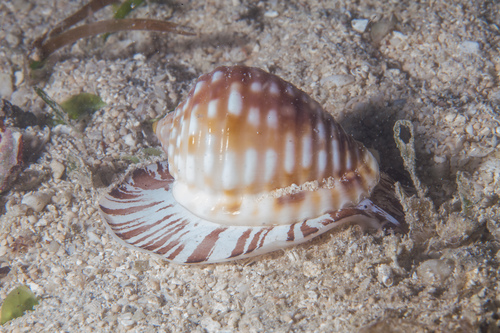
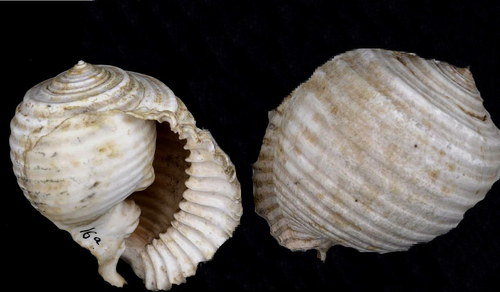
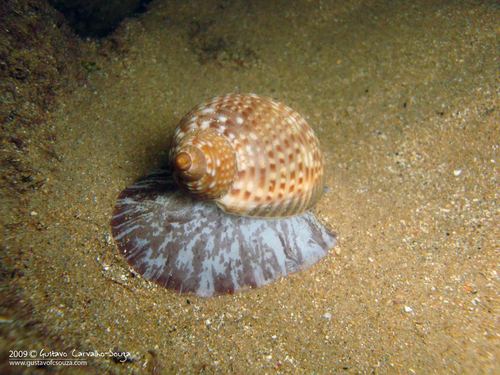
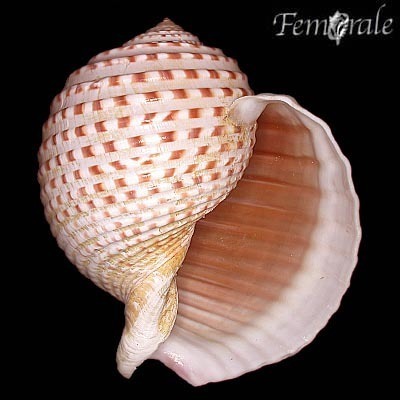
The shell of Tonna dolium ranges in size from 100 mm to 181 mm. It is a thin, ovate-globose, ventricose shell with a generally short spire. The shell is made up of six whorls that are slightly flattened on their upper surfaces. The body whorl is large and very convex. All whorls are encircled by wide, spaced-out, slightly convex ribs; there are ten of these wide ribs on the body whorl. Narrower ribs are placed alternately within the wide, very faintly striated furrows. The shell's base color is white with a faint grayish tint, and sometimes it has a rose-colored hue. The ribs are decorated with regularly spaced alternating white and red spots, which are often orange instead, creating a distinctive attractive pattern. The aperture is very large, and its inner surface is colored chestnut. The outer lip is thin, notched, and channeled on the inside, with a white, undulated edge. The inner lip is only faintly visible near the base, where it forms part of a barely developed umbilicus. The columella is spirally twisted, and has longitudinal ribs on its outer surface that extend all the way to the basal emargination. The combination of wide, spaced ribs and equally wide furrows makes this species easy to identify. This marine species is found in the Indo-West Pacific, off the coasts of Tanzania, the Mascarene Basin, and the Philippines.