About Tolypocladium ophioglossoides (J.F.Gmel.) C.A.Quandt, Kepler & Spatafora
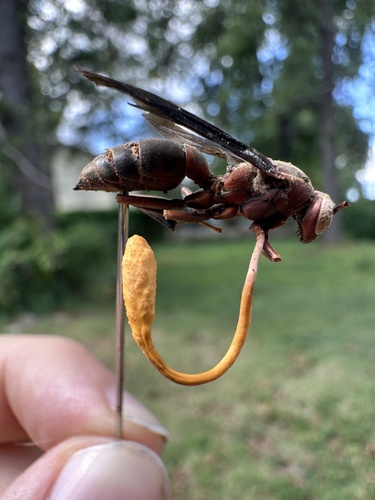
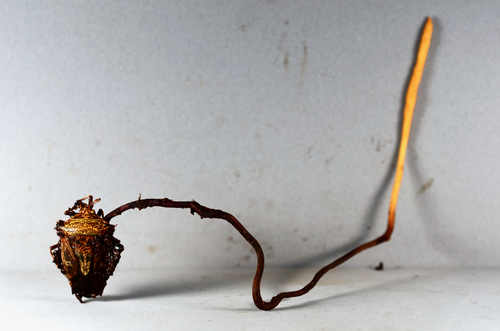
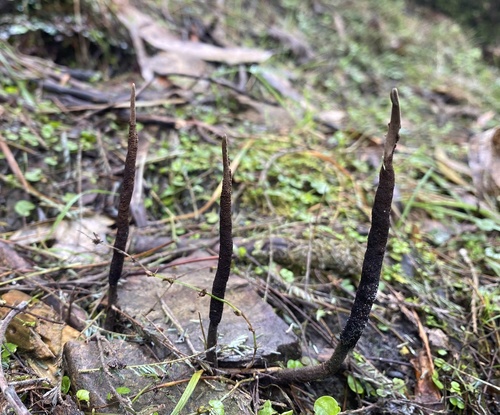
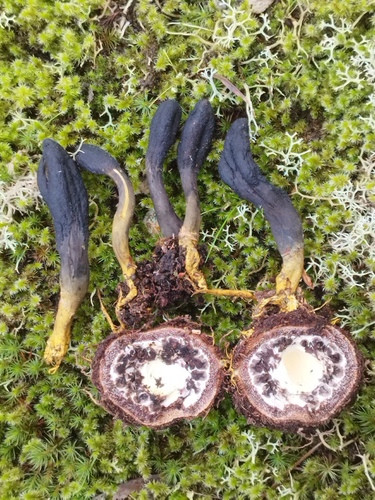
Tolypocladium ophioglossoides is an earth tongue fungus belonging to the earth tongue morphological category. Its sporocarps (fruiting bodies) measure 2–8 centimetres (3⁄4–3+1⁄4 inches) long, are club-shaped, and are typically simple, with branching occurring only rarely. Rhizomorphs connect the fruiting body to its host. This fungus is distributed across the entire Northern Hemisphere. It produces fruiting bodies in late summer and fall, often growing under oak or pine trees, because its host, the fungus Elaphomyces, prefers these tree species. Tolypocladium ophioglossoides is classified as inedible. In traditional Chinese medicine, it is used as an herbal remedy for heat conditions. It shares a phylogenetic branch, genetic material, and habitat with other species in this classification of remedies, and is used to relieve postmenopausal syndrome in women. Research indicates the mycelium of Tolypocladium ophioglossoides may offer protective effects against Alzheimer's disease in humans. The production of intracellular polysaccharides by this species may account for its observed medicinal antioxidant properties, which are used to address menopause symptoms and neurodegenerative disease.