About Tolmomyias flaviventris (Wied-Neuwied, 1831)
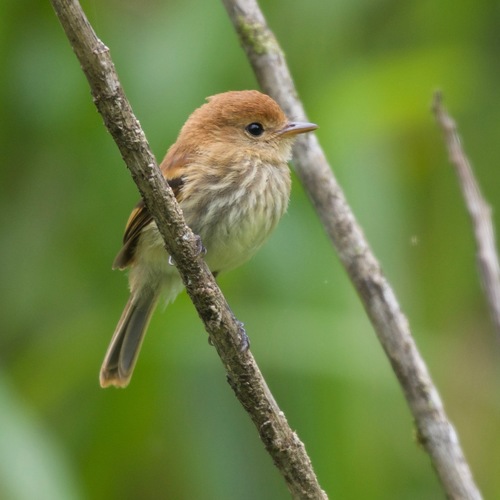
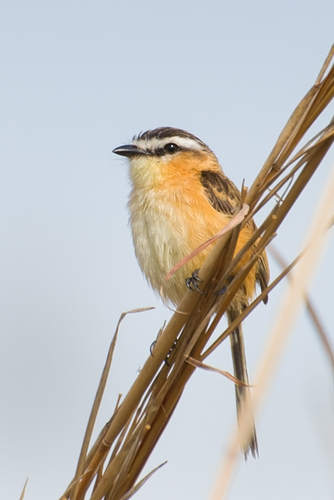
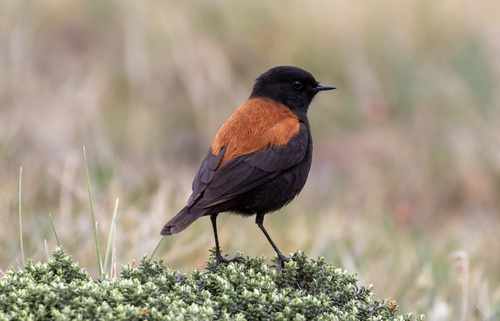
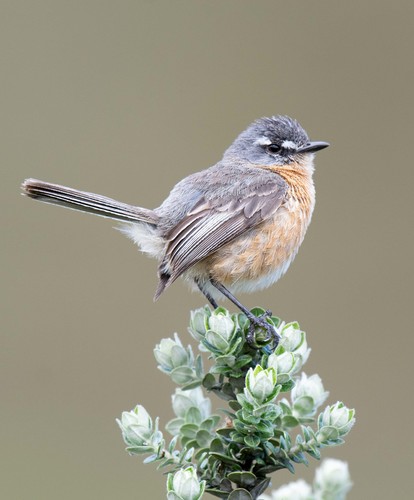
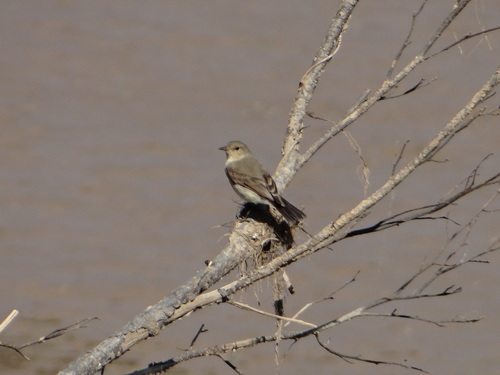
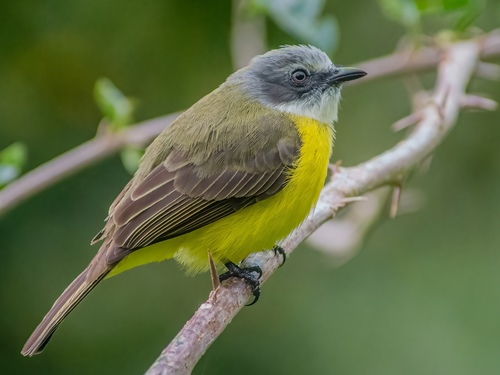
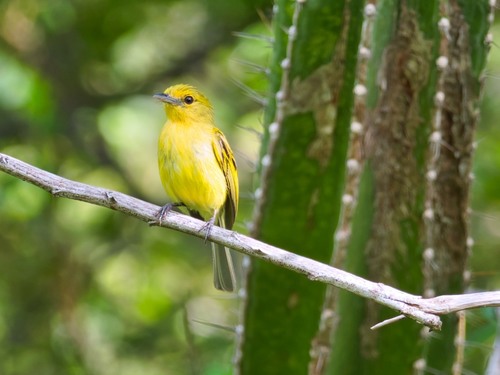
The ochre-lored flatbill, Tolmomyias flaviventris (Wied-Neuwied, 1831), measures approximately 12 to 13 cm (4.7 to 5.1 in) long and weighs 9 to 17.5 g (0.32 to 0.62 oz). Both sexes share identical plumage. Adults of the nominate subspecies have a yellowish olive head, with a brighter ochre-tinged stripe above the lores and a brighter ochre-tinged eye-ring. Their back, rump, and uppertail coverts are also yellowish olive. Their wings are dusky, with yellowish edges on the coverts and remiges that form two distinct wing bars. Their tail is dusky. Their underparts are bright yellow, with an olive to ochre wash covering the throat and breast, and appearing lightly on the belly. The subspecies T. f. aurulentus is darker overall than the nominate subspecies, and has richer yellow underparts. T. f. dissors is slightly smaller than the nominate subspecies, but matches it in all other traits. All subspecies have a brown or red-brown iris, a wide, flat dark gray or black bill that sometimes has a pinkish base to the mandible, and blue-gray or black legs and feet. The ochre-lored flatbill’s distribution spans from eastern Panama to Bolivia and southern Brazil, with each subspecies occupying a distinct range. Subspecies T. f. aurulentus, the northernmost, is found from eastern Panama east through northern and eastern Colombia, across northern and central Venezuela from Zulia south into Bolívar, through the Guianas, across northern Brazil north of the Amazon from the Branco River to the Atlantic coast in Amapá and northern Pará, and on the islands of Trinidad and Tobago. As of 2009, this subspecies was only known to occur in Panama near El Real, in extreme eastern Darién Province. Subspecies T. f. dissors occurs from northwestern Bolívar and Amazonas states in southern Venezuela, extending south and east into Brazil between the Tapajós River and the Tocantins River. The nominate subspecies is found in eastern Brazil south of the Amazon, from Maranhão south to Mato Grosso and along the coast to Rio de Janeiro, and extends into the Santa Cruz Department of eastern Bolivia. The ochre-lored flatbill lives in a wide variety of landscapes, including dry to humid forest and woodlands, gallery forest, restinga, and caatinga. In the Amazon Basin, it is mostly found along waterways, often at the edge of várzea. It occurs less often in terra firme and savanna woodland, though it is found more frequently in savanna in Venezuela than in other regions. On Trinidad and in the Guianas, it inhabits mangroves. Its maximum elevation reaches 800 m (2,600 ft) in Colombia, 900 m (3,000 ft) in Venezuela, and 1,000 m (3,300 ft) in Brazil.