About Todea barbara (L.) T.Moore
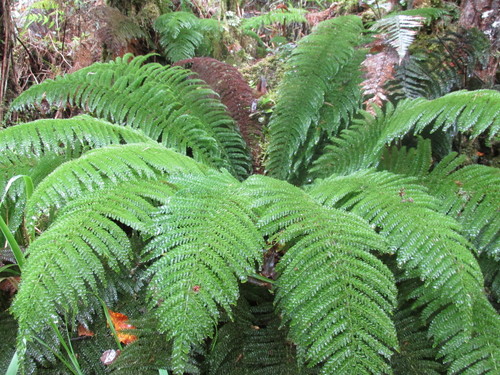
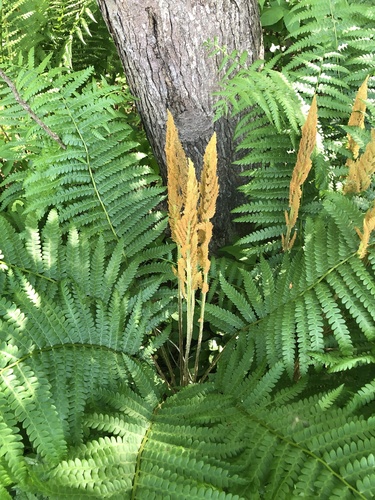
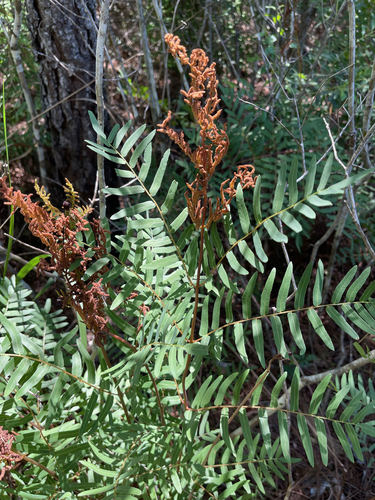
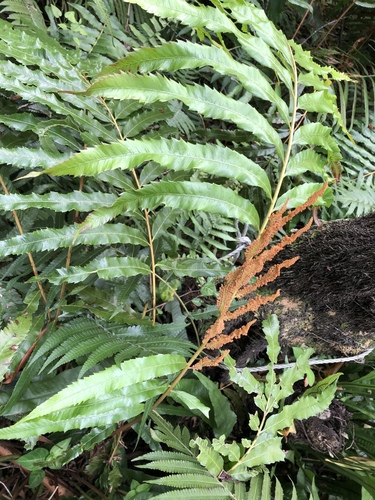
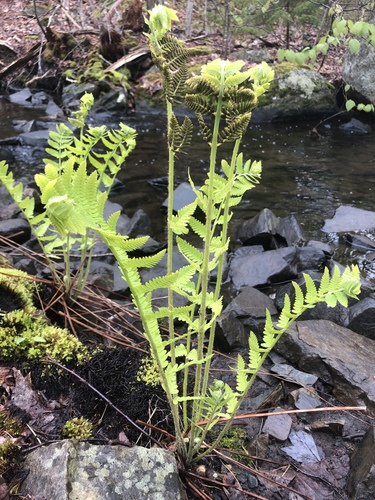
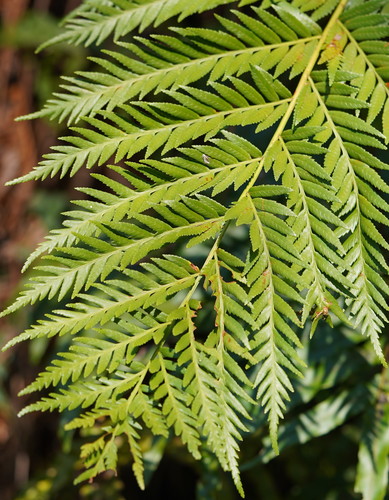
Commonly known as king fern, Todea barbara (L.) T.Moore reaches up to 3 metres (10 ft) in total height, with a short, stumpy base. Its individual fronds grow up to 2.5 metres (8.2 ft) long, while the caudex alone can reach up to 3 m in height and up to 3 m thick. This fern typically grows alongside streams, in rainforest gullies, and other wet areas within tall open forest. Occasionally, it is found growing in drier locations, in rock crevices on sandstone or granite cliffs or rockfaces. In South Australia, Todea barbara is becoming increasingly rare, with small groups growing only in a few scattered localities in the Mount Lofty Ranges. The largest remaining stand was originally located in Uraidla on private property, on the upper reaches of Deep Creek, a tributary to Sixth Creek in the Torrens Catchment. In the 1970s, many ancient 2-metre-tall fern trunks were removed by a plant poacher working at night; this was possibly done under the incorrect assumption that the plants were tree ferns, which transplant easily. Unlike tree ferns, mature king ferns do not survive transplanting. A few remnant plants remain in this gully today, and local native plant specialists have propagated new plants from spores collected from this site. These propagated plants may be grown in home gardens or planted along creek edges. In New Zealand, the king fern grows only in Northland, where it occurs from North Cape to Whangarei and Kai Iwi Lakes, and also on the Three Kings Islands. The Australian native plant industry has propagated many Todea barbara individuals from spores, and this fern is readily available from nurseries as an ornamental plant for gardens and natural landscaping. Most commercially available plants originate from Victoria or New South Wales. The king fern grows well in gardens in temperate or subtropical climates. It prefers a location with moist acidic soil in full shade or dappled shade, though it can grow in sunnier areas if it receives regular watering.