About Tityus serrulatus Lutz & Mello, 1922
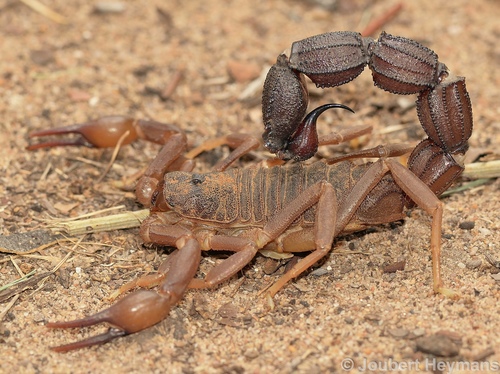
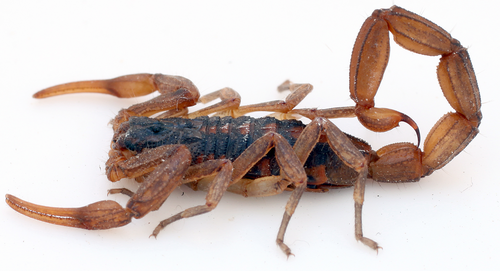
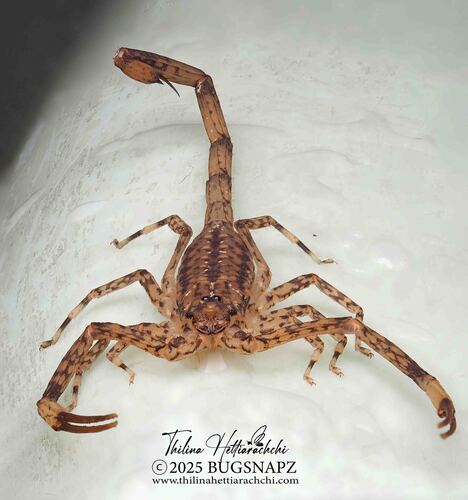
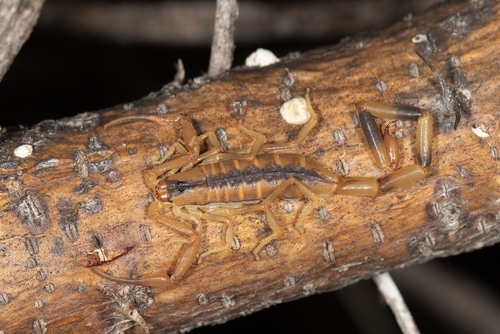
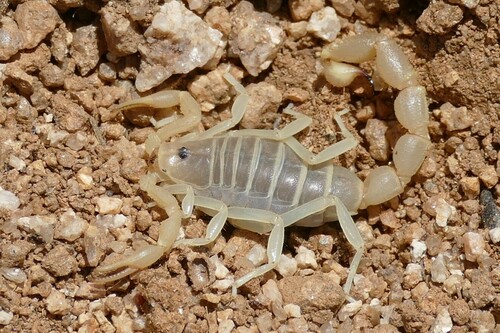
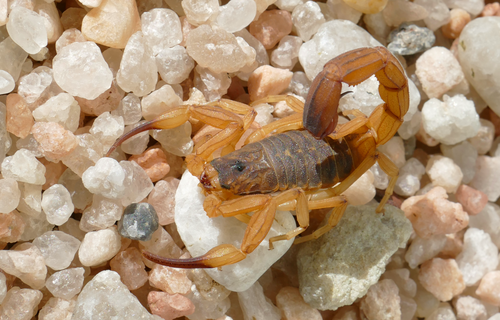
Adult Tityus serrulatus specimens typically measure 5–7 cm (2–3 in) in length. As the common name implies, this species has pale yellow legs (it has eight legs total) and pedipalps, while its trunk, plus the tips of its legs, pedipalps and tail are a darker yellowish brown. Like other species in the Buthidae family, T. serrulatus has a bulbous, segmented tail that it usually carries curved forward over its back; the tail has prominent ridges and serrations, which gives the species its scientific name. The end of the tail holds a venom-injecting barb that can immobilize prey or deliver defensive stings. This species is endemic to Brazil, and is widely distributed across the country, occurring in the states of Alagoas, Bahia, Ceará, Espírito Santo, Goiás, Mato Grosso, Mato Grosso do Sul, Minas Gerais, Paraná, Pernambuco, Rio de Janeiro, Rio Grande do Norte, Rio Grande do Sul, Rondônia, Santa Catarina, São Paulo, Sergipe, and the Distrito Federal. According to Rogério Bertani, a scorpion specialist at the Butantan Institute in São Paulo, quoted in an interview with The Guardian, deforestation and increasing urbanization have led the species to become more common in human areas, and Bertani expects this problem to keep growing. By 2018, there had been a noticeable increase in T. serrulatus populations living in urban areas of São Paulo. This growth contributed to a rise in reported scorpion stings across Brazil, from 12,000 stings in 2000 to 140,000 stings by 2018. Researchers believe the increase in urban scorpion numbers is driven by abundant prey (especially cockroaches), available shelter, and a lack of predators in urban areas. Tityus serrulatus usually reproduces through parthenogenesis.