About Tipula paludosa Meigen, 1830
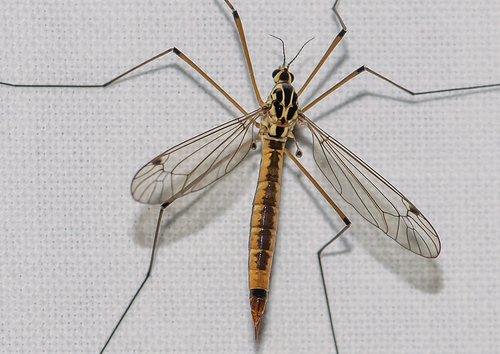
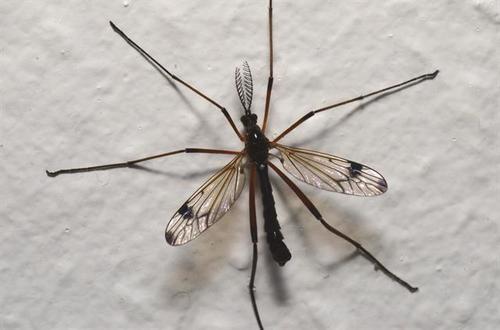
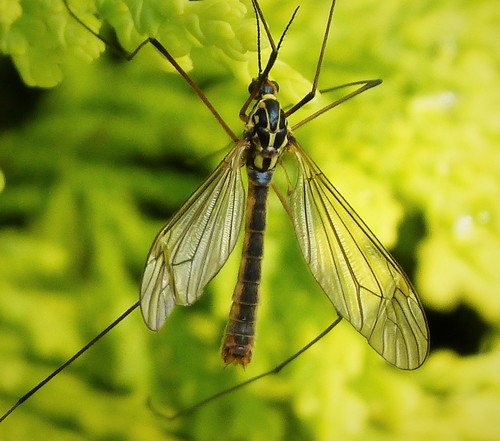
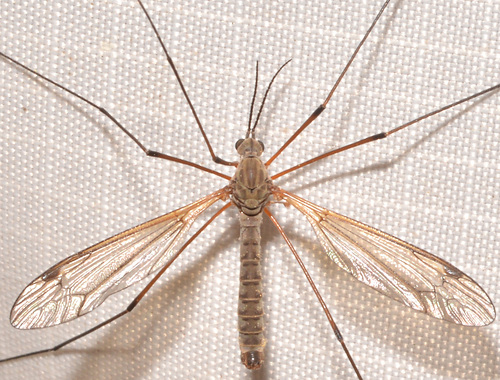
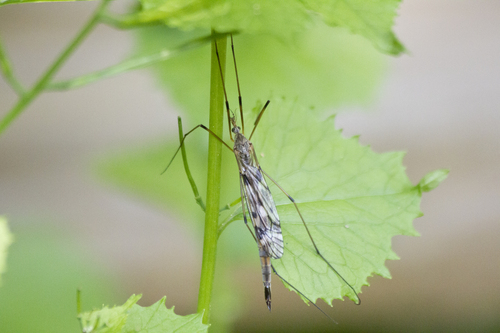
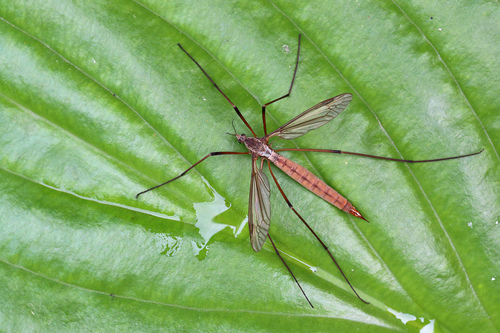
For morphological identification of Tipula paludosa: Adult individuals have grayish-brown bodies measuring 1.5–2.5 cm in length, and they characteristically have long, thin legs. Males have shorter bodies and large wings, while females have shorter wings than their abdomen. Pupae measure 3.0–3.5 cm, and mature pupae are slightly larger, ranging from 3 to 4 cm. Females can lay approximately 200–300 eggs; the eggs are shiny black, about 0.1 cm long, and have an egg-like shape. For both males and females of T. paludosa, the ventral spacing between the eyes is twice as wide as it is in other Tipula species. Both sexes of T. paludosa also have 14 antennal segments, and the ratio of abdominal length in females is another distinguishing characteristic of the species. T. paludosa larvae have elongated, cylindrical bodies with a shortened rear end. They have 13 body segments, with spiracles located on the last segment. Their tough outer skin gives larvae the common nickname "leatherjackets".
The life cycle of Tipula paludosa follows a consistent seasonal pattern. Larvae hatch in mid-September, and initially stay on the soil surface before moving deeper into thatch and upper soil layers as they mature. They remain underground during winter, and start feeding as the weather warms. The most severe damage happens in spring, when larval feeding creates bare patches that are often overtaken by weeds. The presence of the larvae also attracts birds including crows, which cause additional damage to turf while hunting for the larvae. By mid-May, larvae stop feeding. They enter a non-feeding stage in June, moving to just below the soil surface where they stay through the summer. In late August, larvae pupate; adult crane flies emerge shortly after, and mate almost immediately. Females lay eggs in moist soil within 24 hours of emergence, which starts the cycle over. Adult T. paludosa do not feed, and only live for about two weeks. However, their larvae are a serious ecological and economic threat to lawns, pastures, and crops.