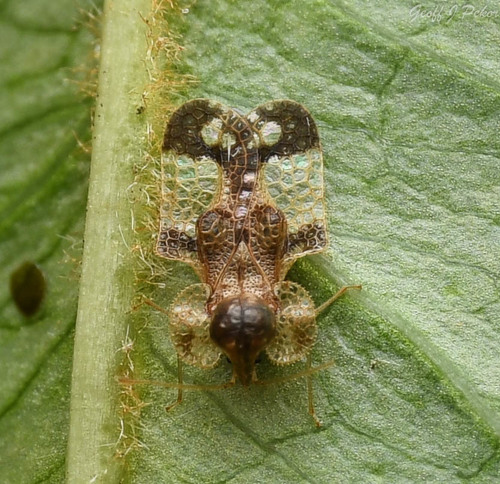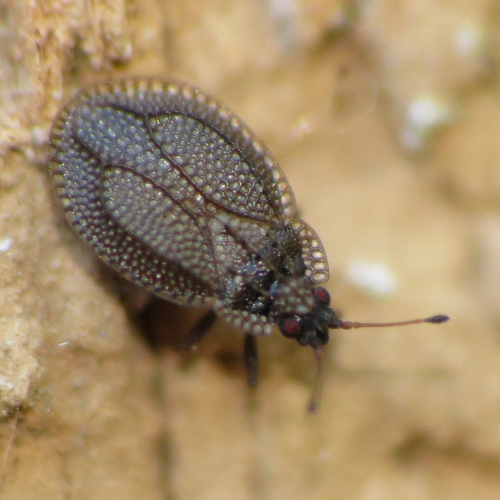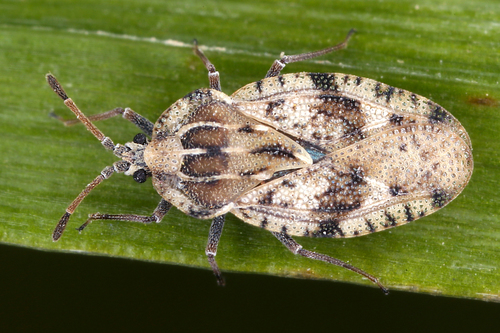
About Tingis cardui (Linnaeus, 1746)
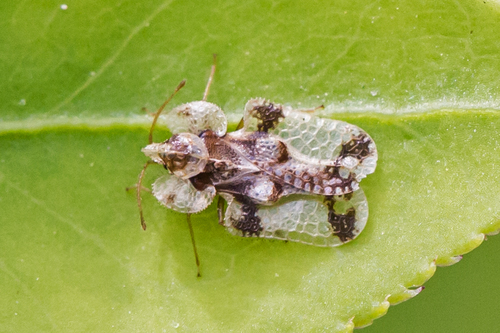
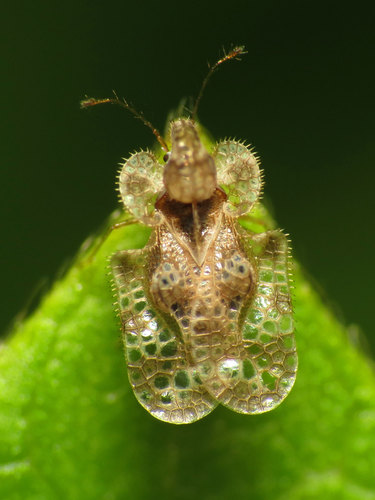
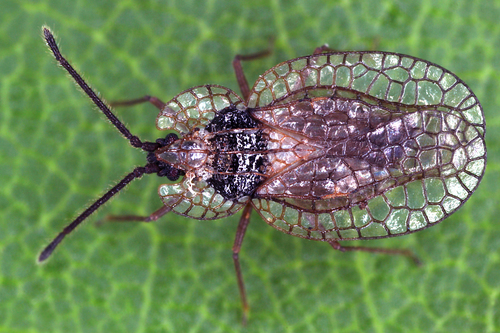
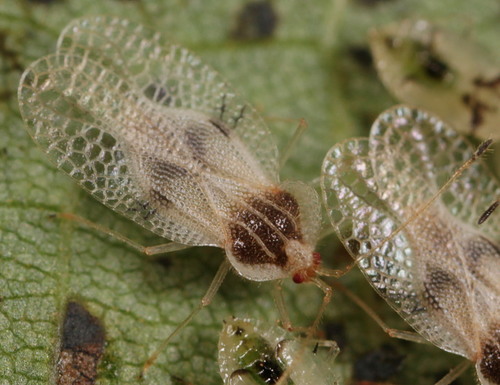
Tingis cardui (Linnaeus, 1746) is a Palearctic lacewing bug species. It is widespread across almost all Europe, only absent from the far north. It is also common in North Africa, Asia Minor, the Middle East, southern Russia, the Caucasus, Siberia, and northern China. Tingis cardui lives on Cirsium plants, particularly Cirsium vulgare, and also on Cirsium palustre. It occurs less frequently on Carduus nutans, Carduus crispus, and Carduus acanthoides. This species overwinters as a mature adult (imago) in ground litter or under loose bark. Adult bugs emerge in April or May, and rest on the basal leaves of their host plants. Some individuals make dispersal flights to colonize new host plants. Mating and egg-laying (oviposition) last until July. Females place each egg individually into host plant leaf tissue, on both sides of the leaves. Nymphs develop from June to September. Older nymphs are often found among the spines on the outside of flower heads, or very near these structures. New generation adults first appear starting in late July or early August.