About Tinea trinotella Thunberg, 1794
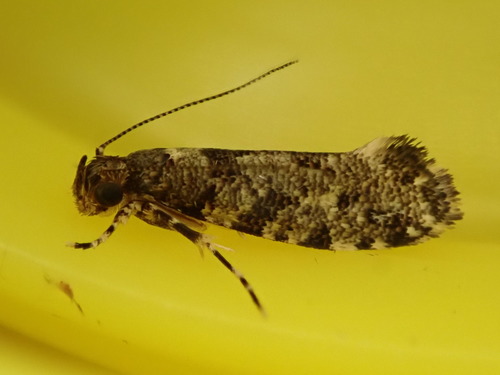
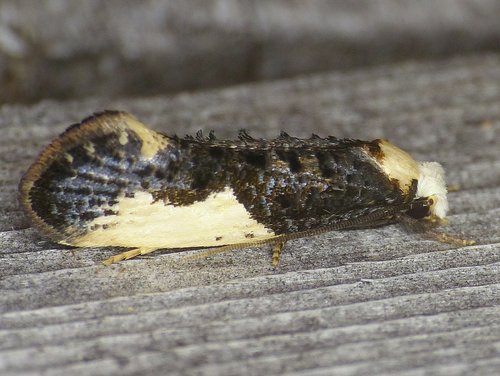
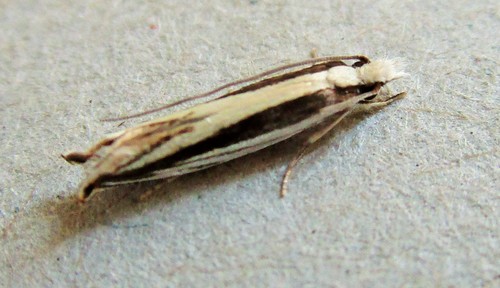
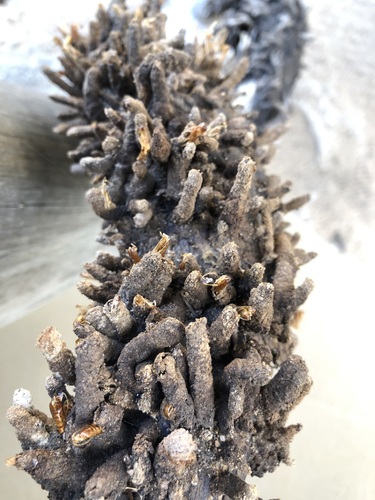
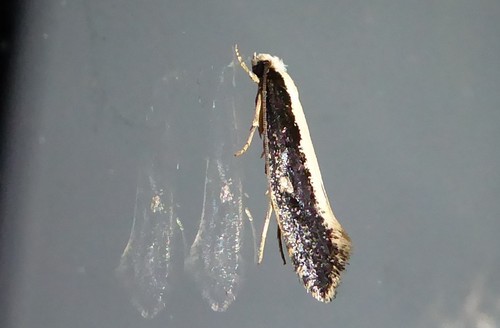
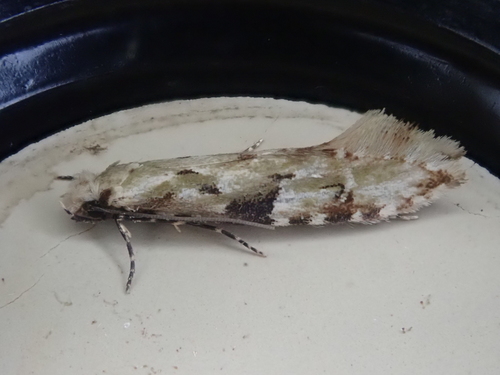
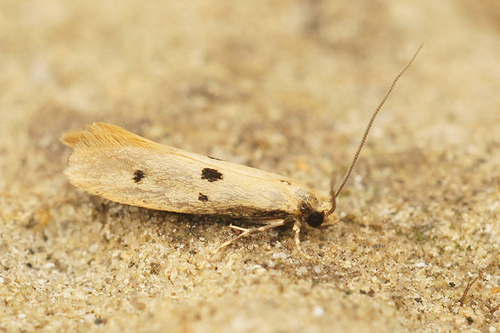
Ecology and description: Tinea trinotella is widespread and common across most of the western Palearctic. There are currently no recorded observations of the species from Slovenia, but because it occurs in surrounding countries, it is likely that it has simply not been documented there yet. Its confirmed absence from Iceland is thought to be genuine. Adult Tinea trinotella are nocturnal, and are active between May and August, with activity timing varying by location. They are easily attracted to artificial light sources. In at least part of this species' range, two generations can be produced each year. This is a small moth, with adults measuring 12–18 mm in wingspan. Its forewings are an even greyish buff with a golden tone, and have three distinct, sharply defined black spots: one large, one medium, and one small. This three-spot pattern matches the species' specific epithet trinotella. On its head, the moth has a tuft of yellow or orange hairs. The caterpillars of this species live in small portable cases, which they construct from debris bound together with their own silk, similar to the cases built by the caterpillars of the case-bearing clothes moth (Tinea pellionella) and other related species. Caterpillars most often live in bird nests, including nests of domestic chicken (Gallus gallus domesticus), domestic pigeon (Columba livia domestica), common linnet (Carduelis cannabina), and common chaffinch (Fringilla coelebs), where they feed on leftover food and similar organic detritus. They have also been found living on discarded woolen fabrics.