About Tinea semifulvella Haworth, 1828
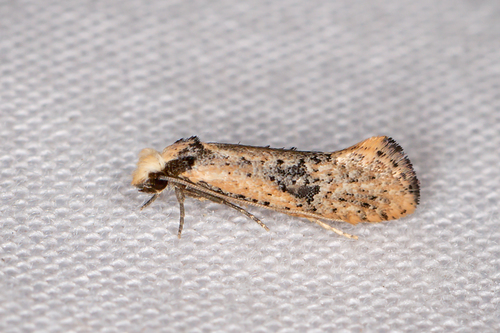
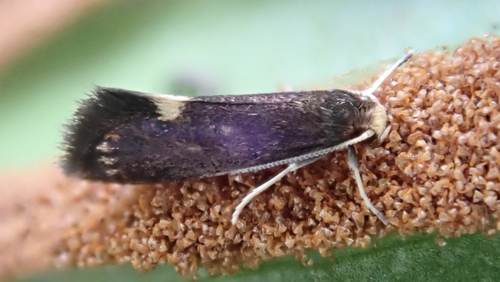
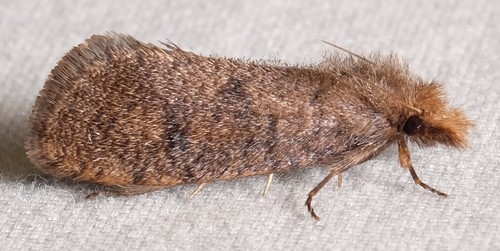
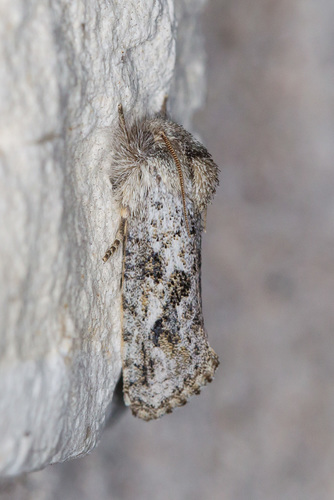
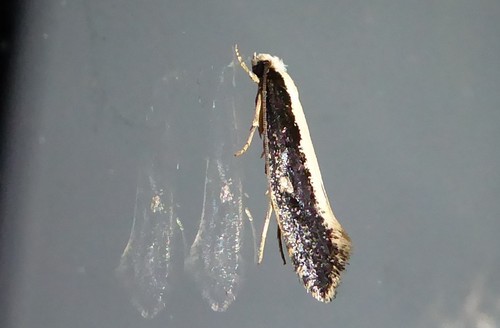
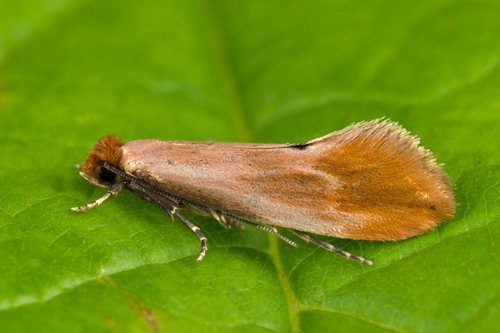
Tinea semifulvella Haworth, 1828 is a species of tineoid moth. It belongs to the fungus moth family Tineidae, and within that family it is part of the nominate subfamily Tineinae. It is widespread and common across most of the western Palearctic, but has not been recorded in Portugal, the Balkans, or outlying islands such as Iceland. Adult moths of this species are nocturnal. They can be found on the wing from May to September, with timing varying by location, and are readily attracted to light sources. This is a smallish moth; adult individuals have a wingspan of 14 to 22 millimetres (0.55 to 0.87 in). Compared to most other species in the genus Tinea, Tinea semifulvella is more colorful, though this coloration fades significantly in preserved dead specimens. Its forewings are grey with a brownish tinge at the base, and turn rusty-red across the outer section. There is a distinct black dot on the forewing edge that borders the hindwings. The hindwings are a paler, cleaner grey than the forewings. The body of the moth is dusky grey, but the head bears a tuft of brick-red hair. Both the forewings and hindwings are surrounded by a hairy fringe, with the fringe more prominent on the hindwings. The caterpillars of Tinea semifulvella feed on natural fibers, most commonly fibers of animal origin including feathers, furs, and wool. Caterpillars have been found inside bird nests, and have been recorded feeding on rags and old clothes. However, this species is not notably synanthropic, and its caterpillars generally feed only on resources found outdoors. Unlike the closely related case-bearing clothes moth (Tinea pellionella), Tinea semifulvella is rarely or never recorded as a pest.