About Tinca tinca (Linnaeus, 1758)
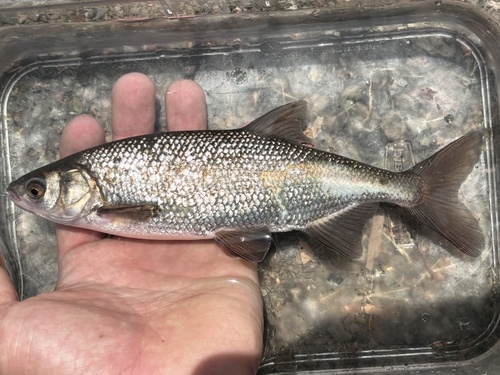
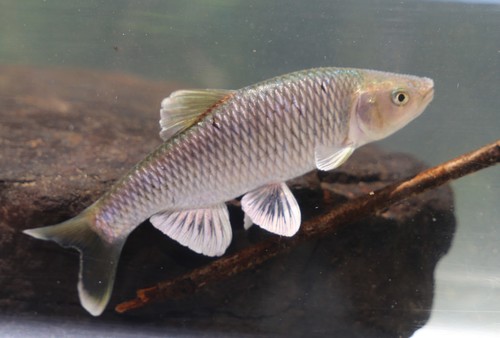
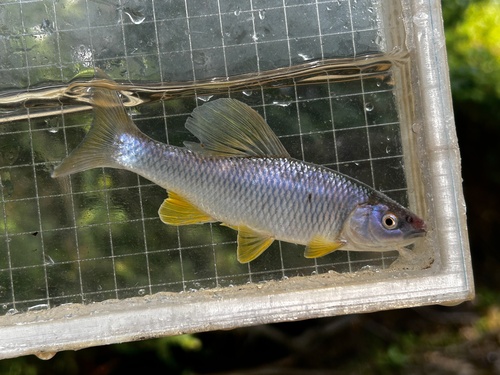
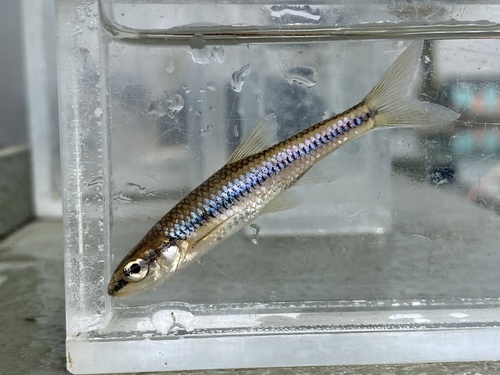
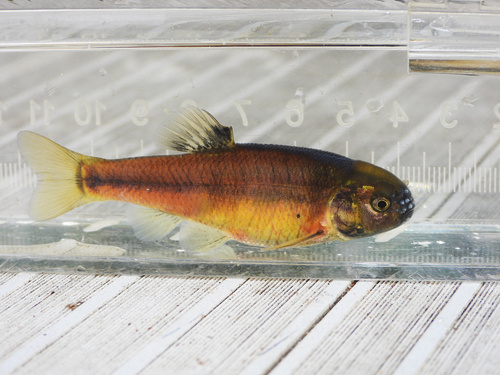
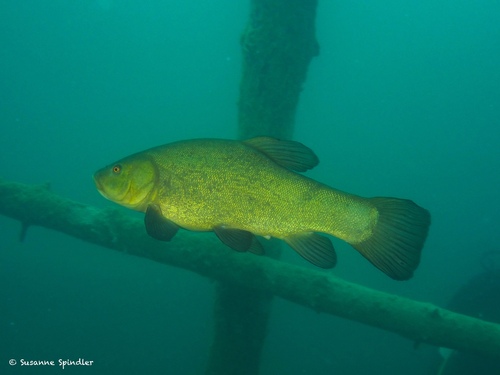
Morphology: Tench have a stocky, carp-like body shape, with olive-green skin that is darker on the upper side and almost golden on the lower side. Their tail fin is square-shaped, while all other fins are distinctly rounded. The mouth is quite narrow, and has a very small barbel at each corner. The maximum recorded body length of tench is 70 cm (28 in), though most individual tench are much smaller. A record tench caught in England in 2001 weighed 15 lb 3.4 oz (6.899 kg). Tench have small, red-orange eyes. Females can reach weights around 7 kg (15 lb), though a 4 kg (8.8 lb) individual is considered large. Males rarely weigh more than 3 kg (6.5 lb). This species shows strong sexual dimorphism: males can be identified by their larger, more curved pelvic fins that extend past the anus, along with noticeable muscles at the base of these fins that are generally not present in females. Males also have a very thick, flattened outer ray on their ventral fins. Adult females often have a more convex ventral body profile than males. Tench have very small scales that are deeply embedded in thick skin, giving them a slippery texture similar to an eel. Folklore holds that this slime cured any sick fish that rubbed against a tench, and this belief gave tench the alternative name "doctor fish".
Ecology: Tench are most commonly found in still waters with a clay or muddy substrate and abundant aquatic vegetation. The species is rare in clear water over stony substrate, and is completely absent from fast-flowing streams. Tench can tolerate water with low oxygen concentrations, and can live in bodies of water where even carp cannot survive. Tench feed mostly at night. They prefer animal prey: they eat bottom-dwelling animals such as chironomids in eutrophic waters, and feed on snails and pea clams in well-vegetated waters. Breeding occurs in shallow water, usually among aquatic plants where sticky green eggs are deposited. Spawning typically takes place in summer, and a single female can produce as many as 300,000 eggs. Tench grow rapidly, and can reach a weight of 0.11 kg (0.25 lb) within their first year of life.