About Tiliqua gigas (Schneider, 1801)
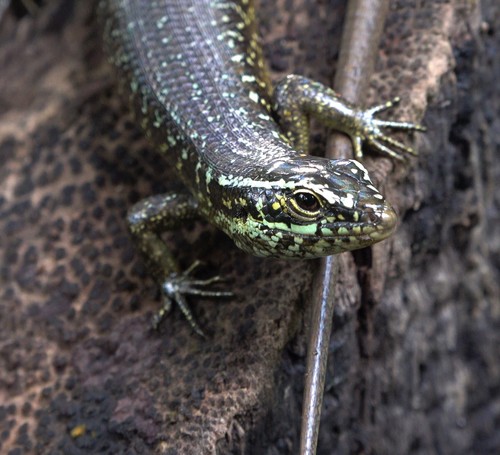
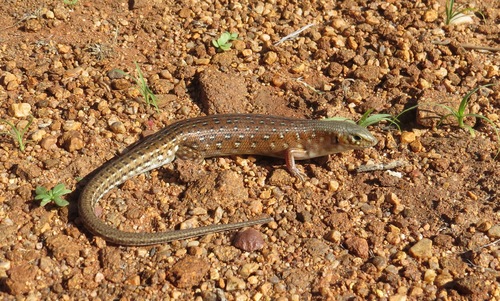
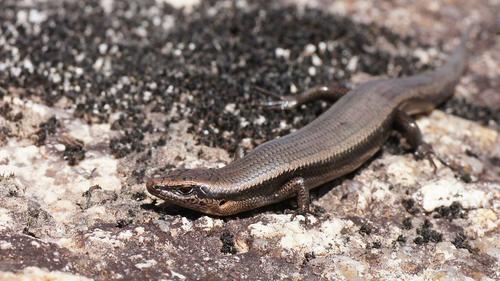
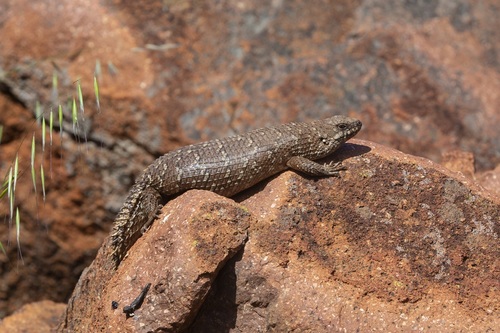
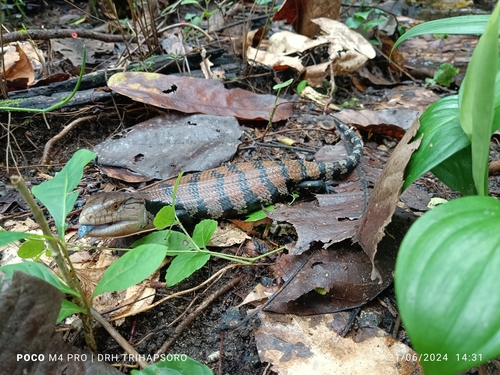
Tiliqua gigas, described by Schneider in 1801, has an elongated body and very small limbs, which is typical for most skinks in its genus. Adults typically reach 18 to 24 inches (46 to 61 centimeters) in total length and weigh up to 1 kilogram. This species is distinguished by its thinner, elongated tail, and individuals do not enter seasonal brumation, instead regulating their breeding cycle according to wet and dry seasons. Three recognized subspecies have distinct morphological traits: the nominate subspecies T. gigas gigas is the most tropical, has the skinniest tail of the three subspecies, and has solid dark or near-solid dark limbs. T. gigas evanescens can be easily identified by slightly more colored speckling on its limbs, a single centered stripe on the back of its neck, and very thin body banding that is present most but not all of the time; this subspecies also has the longest tail of the three. T. gigas keyenesis is characterized by full-body speckling that extends across the entire face. The Australian northern blue-tongued skink, Tiliqua scincoides intermedia, is currently recognized as the largest of all blue-tongued skink species and subspecies. Insufficient research has been completed to confirm that any Tiliqua gigas subspecies holds this largest overall title. It is undisputed that T. gigas evanescens is the longest of all blue-tongued skinks, often reaching total snout-to-tail lengths that exceed 30 inches.