About Tilapia sparrmanii Smith, 1840
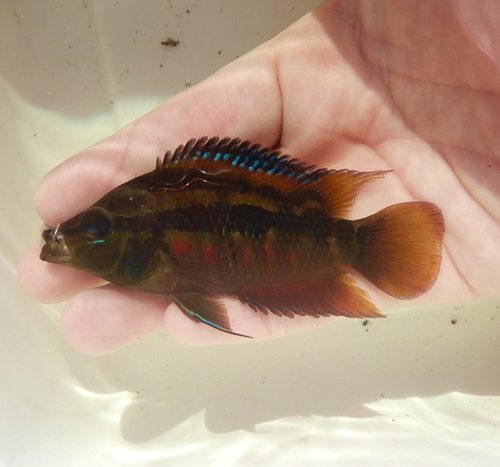
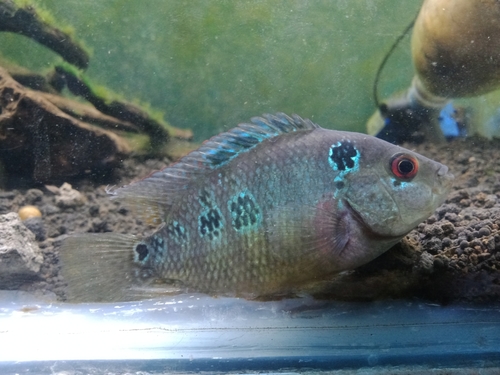
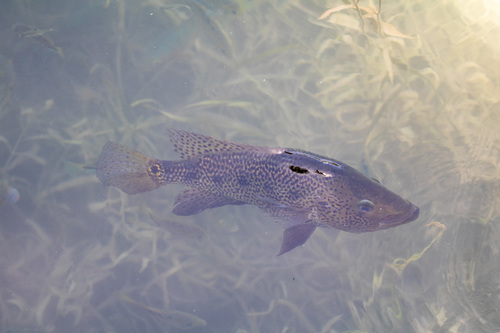
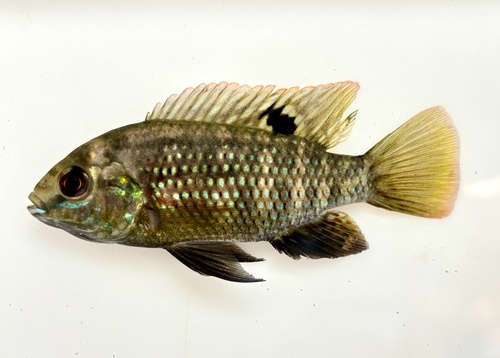
This species, scientifically named Tilapia sparrmanii Smith, 1840, has 13 to 15 total dorsal spines. It is a small, deep-bodied fish with a narrow head and small, strong jaws. Its body often displays a rich deep yellow coloration with wide dark brown bands, and red or orange fin margins; mature adults are very dark with prominent black stripes and a patch of scarlet scales behind the head. Individuals can grow up to 235 mm in length, and the heaviest recorded specimen weighed 445 g. This species is distributed across Africa: it occurs in the middle Congo River basin, including the Kwilu, Kwango, Kasai drainage and Lomami; the upper Congo River basin, including the Lualaba, upper Lualaba, Lufira, Upemba region, Luvua, Lake Mweru, Luapula and Bangweulu; and also in Cunene, Okavango, Lake Ngami, Zambezi, Limpopo, northern tributaries of the Orange River, upper Cuanza, Sabi, Lundi and Lake Malawi. It inhabits a wide diversity of habitats, and favors areas with plant cover along the edges of rivers, lakes or swamps. It tends to be confined to shallow weedy areas, so it does not form large populations in deep lakes, and is reported to be cold-confined. Due to its relatively small size, it is unlikely to play a large role in capture fisheries. However, it is cultured in ponds in Njombe, Tanzania, and has apparently been stocked into Lake Kiungululu, Tanzania, where it is not currently exploited. It serves as a forage fish for Bass, and is a popular angling species among young and inexperienced anglers, often considered a 'gateway' species for people new to angling.