About Thyridopteryx meadii Edwards, 1881
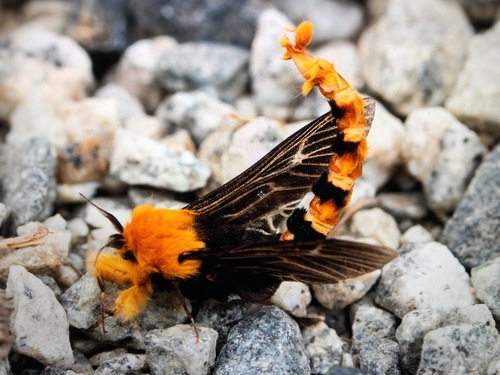
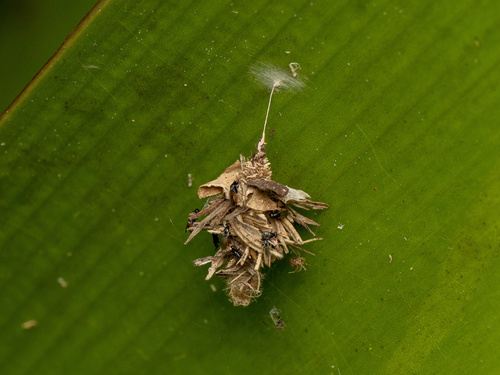
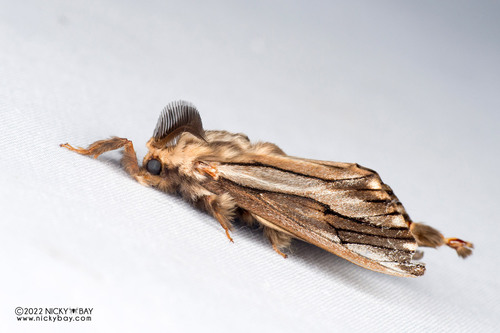
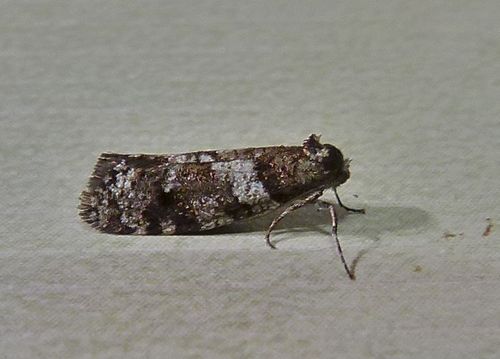
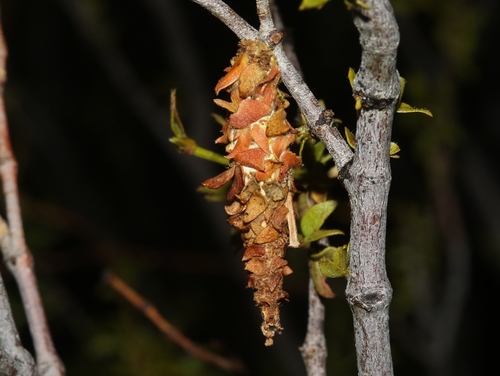
This species, commonly known as the creosote bagworm, constructs bags 30 to 40 mm long from creosote leaf fragments, creosote twig fragments, or a mixture of both. Individuals spend most of their lives inside these bags. After pupation, adult males emerge from the bags as moths with scaleless, semi-transparent white wings and a long, black, furry body. Like other bagworm species, adult females keep a larval appearance after pupation and remain inside their bags, while adult males fly to locate females by their scent. This species is found throughout the Mojave Desert in any location where creosote bush grows, and has been recorded in California, Texas, Arizona, and Utah. The creosote bagworm moth feeds on creosote bush, and it is the main insect that causes flower death through its defoliating activity. Instead of following a fixed annual life cycle, this species responds opportunistically to rainfall, which produces softer new growth on its host plant. Creosote bagworms survive long droughts and cold winter frosty temperatures either as larvae or eggs, sealed inside their bags. When rain returns, eggs hatch and larvae quickly resume activity. If conditions are favorable, a creosote bagworm can complete its full life cycle in just a few weeks. If not, the life cycle can be extended, as larvae can stay dormant for at least a year. The species is most active during the late summer monsoon.