About Thymallus thymallus (Linnaeus, 1758)
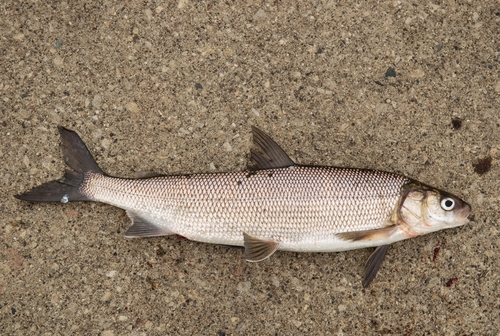
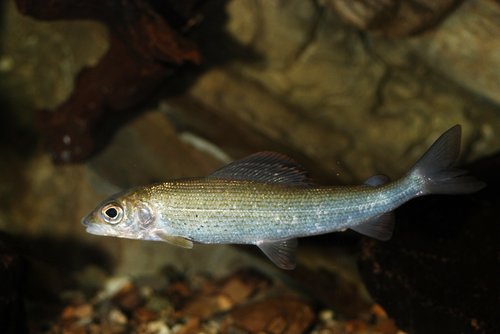
This species is scientifically named Thymallus thymallus (Linnaeus, 1758), commonly called grayling; it is also often referred to as European grayling to distinguish it from other species in the Thymallus genus, where it serves as the type species. Many obsolete synonyms exist for this species. The European grayling reaches a maximum recorded length of 60 cm (24 in) and a maximum recorded weight of 6.7 kg (15 lb), with recorded individuals living up to 14 years. It has the typical appearance of the Thymallus genus, and can be distinguished from the similar Arctic grayling (T. arcticus arcticus) by having 5–8 dorsal spines and 3–4 anal spines (which are absent in Arctic grayling); T. thymallus also has fewer soft rays in these fins than Arctic grayling does. This fish prefers cold, clean, running river water, but it can also be found in lakes, and exceptionally in brackish waters around the Baltic Sea. It is omnivorous, feeding on vegetable matter, crustaceans, insects and spiders, molluscs, zooplankton, and smaller fish such as Eurasian minnows. It is itself prey for larger fish, including the huchen (Hucho hucho). Along with Arctic grayling, T. thymallus is one of two economically important species in the Thymallus genus; it is raised commercially and fished for sport. The grayling is a protected species listed in Appendix III of the Bern Convention, and it has become critically endangered in the Baltic Sea.