About Thunnus atlanticus (Lesson, 1831)
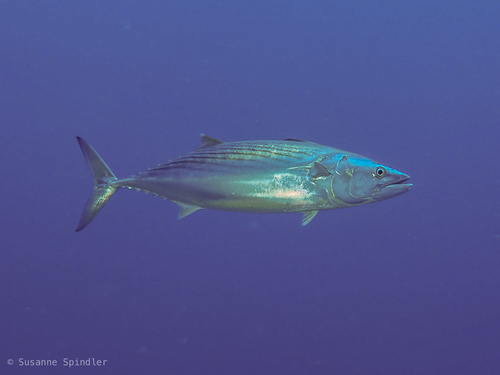
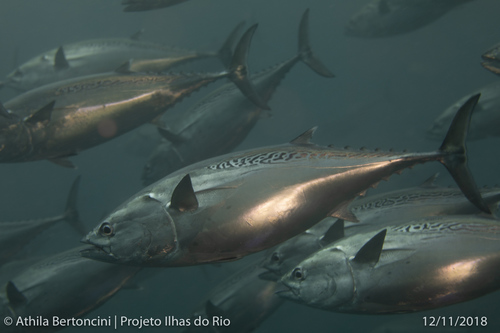
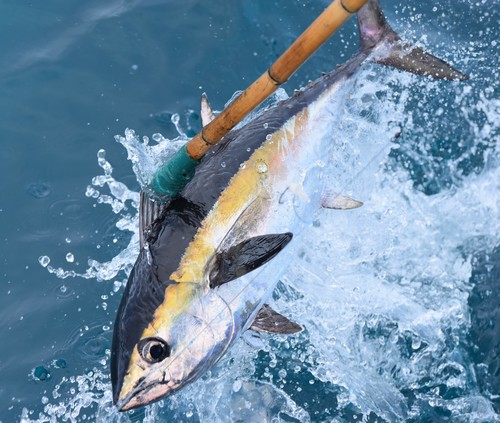
Blackfin tuna (scientific name Thunnus atlanticus (Lesson, 1831)) is the smallest tuna species. The All-Tackle world record blackfin tuna was caught off the coast of Florida, weighing 20.6 kg (45 lb 7 oz). Blackfin tuna have oval-shaped bodies with dark blue to black backs. Their sides and bellies are silver, which gives them an iridescent appearance in the water, plus a lateral yellow stripe. They have durable, compact scales and an oblique mouth. Their small dorsal finlets are brownish with white edges, which distinguishes them from other tuna species that have yellow dorsal fins. These dorsal finlets run in a line between the two large dorsal fins and the tail. Blackfin tuna can also be told apart from other tuna by their number of gill rakers. Most tuna species have at least 30 gill rakers, while blackfin tuna only have 20 to 23, the lowest count of any tuna species. Additionally, the ventral surface of the blackfin tuna's liver, located in the chest cavity, is smooth, while other tuna species have striations on this ventral liver surface. In terms of biology and ecology, blackfin tuna hunt epipelagic (surface-dwelling) and mesopelagic (deeper-water) fish and squid. They also eat crustaceans including shrimp, crabs, amphipods, stomatopods, and decapod larvae. They consume smaller prey by filtering water, and chase larger prey to catch them. This species hosts multiple groups of parasites, including Digenea, Monogenea, Cestoda, Nematoda, and Crustacea. The crustacean parasites of blackfin tuna include parasitic copepods: Caligus coryphaenae, Caligus productus, Euryporus brachypterus, and Pseudocycnus appendiculatus. Cookiecutter sharks (Isistius brasiliensis) act as external parasites on this species.