About Thujopsis dolabrata (Thunb. ex L.f.) Siebold & Zucc.
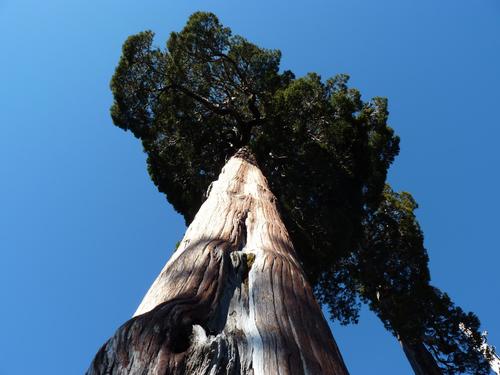
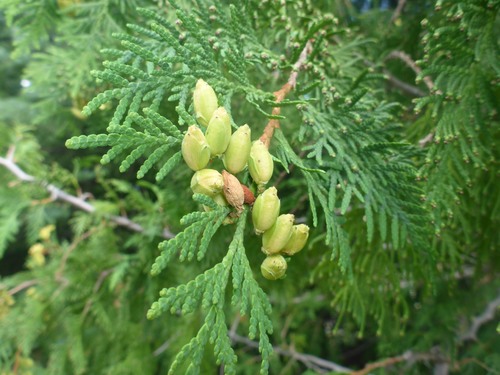
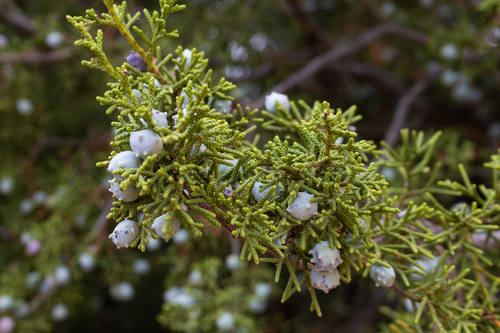
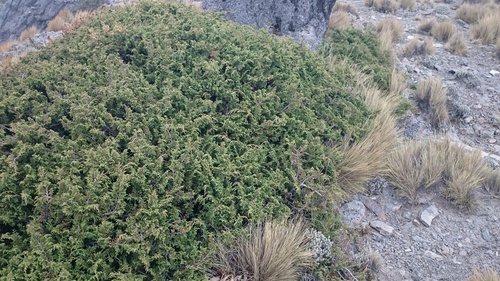
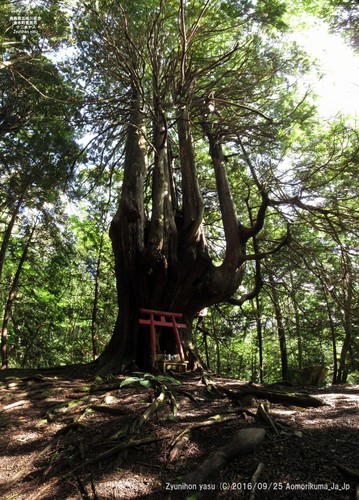
Thujopsis dolabrata is a medium to large evergreen tree that grows up to 40 meters tall, with a trunk diameter reaching up to 1.5 meters. It has red-brown bark that peels in vertical strips. Its leaves are arranged in decussate pairs; they are scale-like, 3–10 mm long, glossy green on the upper surface, and marked with vivid white stomatal bands on the lower surface. The leaves have a distinctive thick, almost fleshy texture. The seed cones are ovoid, 7–15 mm long and 6–10 mm in diameter, with 6–12 thick scales. Fresh cones are brown with a violet-white wax bloom. A characteristic natural product extract called thujaplicinol has been found in this species, mostly in its needles, outer bark, and xylem. Locally called asunaro, this tree is a valued ornamental plant. It is commonly planted around temples and in gardens in its native Japan, and is also grown as an ornamental in Europe and North America. In Europe and North America, planting is restricted to areas with good rainfall or gardens with reliable irrigation, because this species is not drought tolerant. In the United Kingdom, Thujopsis dolabrata has received the Royal Horticultural Society's Award of Garden Merit. It is also used on a small scale for forestry in Japan, where it is grown for its valuable durable, scented wood, which is similar to the wood of Thuja plicata.