About Thryptomene calycina (Lindl.) Stapf
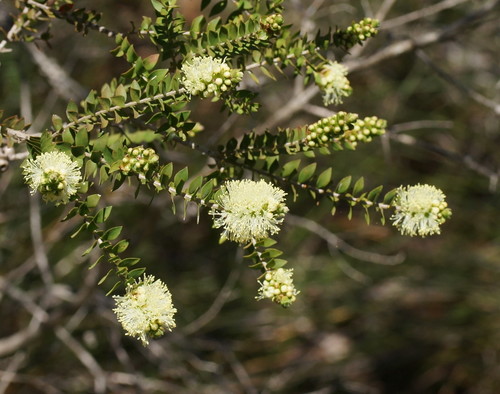
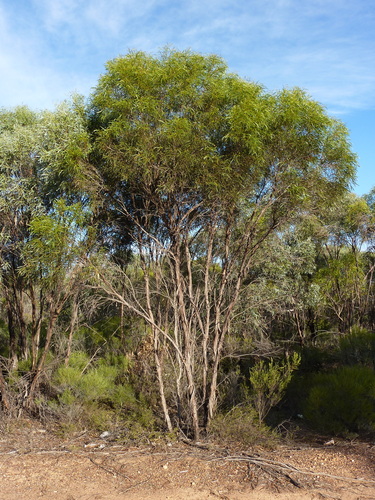
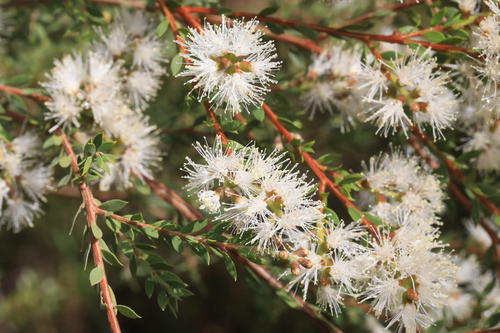
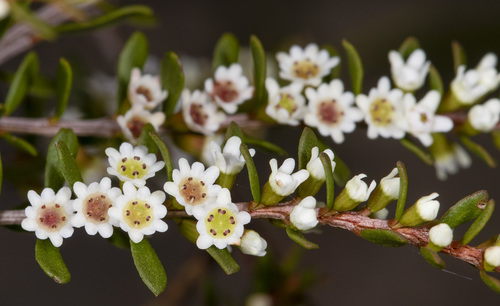
Thryptomene calycina, also known as Grampians thryptomene, is an erect or spreading shrub that usually reaches a height of 1 to 3 meters (3 feet 3 inches to 9 feet 10 inches). Its leaves are oblong to elliptic or egg-shaped, with the narrower end positioned toward the base. The leaves measure 5 to 14 millimeters (0.20 to 0.55 inches) long and 2 to 4 millimeters (0.079 to 0.157 inches) wide, are sessile, and have a keel on their lower surface. Flowers are produced singly, in pairs, or in groups of three in upper leaf axils, growing on a pedicel that is 2 to 6 millimeters (0.079 to 0.236 inches) long. The flowers are often pinkish when in bud; their sepals and petals are similar in appearance, white, broadly elliptic, and about 1.5 millimeters (0.059 inches) long, and each flower has five stamens. Most flowering takes place between July and November. Grampians thryptomene grows mostly in sandy soil, found in heath and heathy woodland in the Grampians. It is also naturalised in a Melbourne suburb, and there is an old historical record of the species from South Australia. In horticulture, Thryptomene calycina is propagated from cuttings and is sometimes sold at commercial nurseries. It grows best in light soil, and tolerates full sun or part shade.