About Thryophilus sinaloa S.F.Baird, 1864
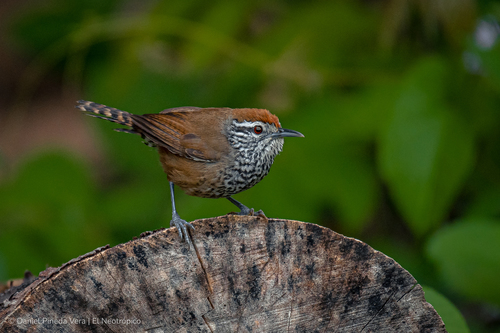
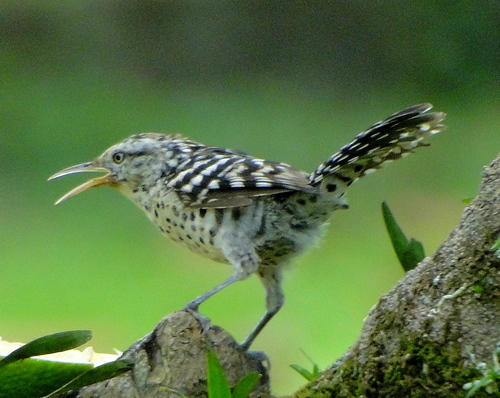
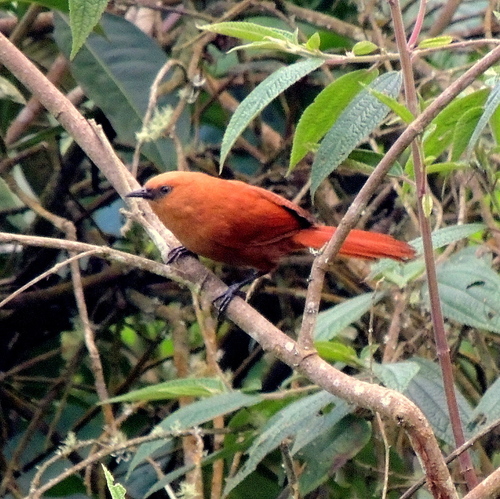
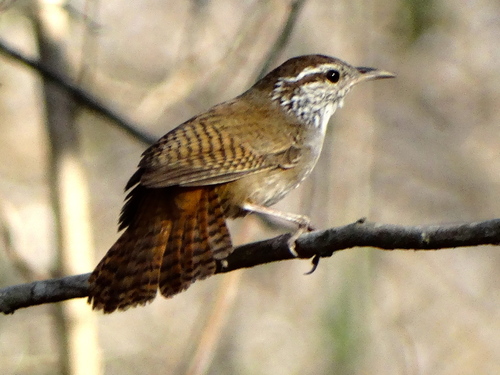
The Sinaloa wren (Thryophilus sinaloa S.F.Baird, 1864) measures 11.8 to 14 cm (4.6 to 5.5 in) long, and weighs 10.9 to 19.8 g (0.38 to 0.70 oz). Adults of the nominate subspecies have dull brown upperparts that grow more rufescent on the rump. Their tail is rufous brown with black or dusky bars. They have a white to buffy white supercilium, a black streak behind the eye, and white cheeks marked with dusky stripes. The sides of the neck have broad black and white streaks. Their throat and breast are white, darkening to pale brown on the flanks. Juveniles are similar in appearance, but have paler, more cinnamon-colored flanks and less distinct facial markings. Adult T. s. cinereus are paler and grayer than the nominate subspecies. T. s. russeus have deep russet brown upperparts. The Sinaloa wren is endemic to Mexico, though individual birds are seen almost annually in southern Arizona. T. s. cinereus, the northernmost subspecies, occurs from northeastern Sonora south to northern Sinaloa and western Chihuahua, and also visits Arizona as a vagrant. T. s. sinaloa is found from central Sinaloa and western Durango south to Michoacán. T. s. russeus occurs from central Guerrero east to western Oaxaca. This species lives in the understory and edges of deciduous forest, including both undisturbed and second-growth forest. It is also found in plantations.