About Thomomys bottae (Eydoux & Gervais, 1836)
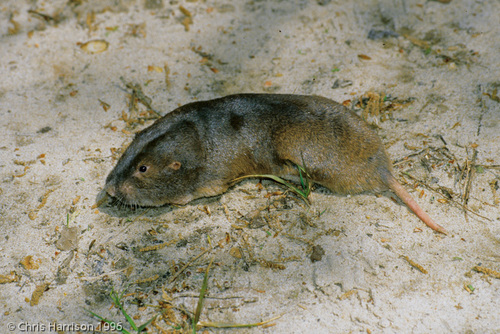
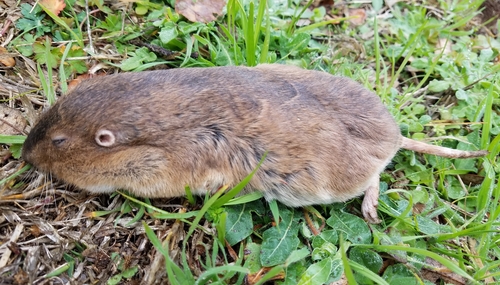
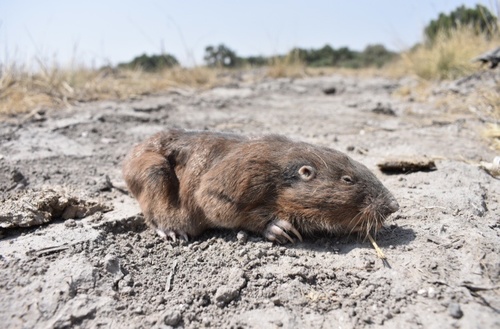
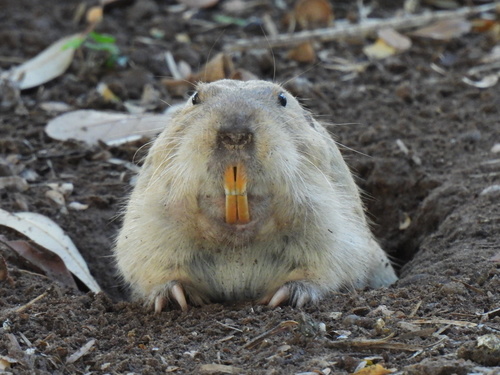
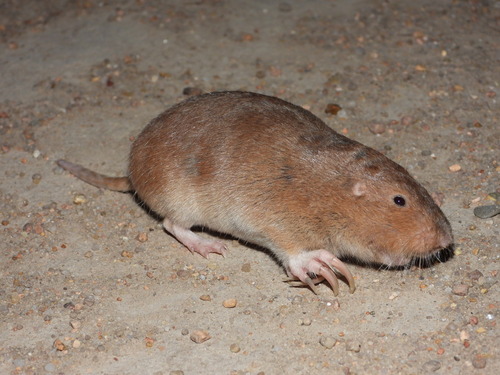
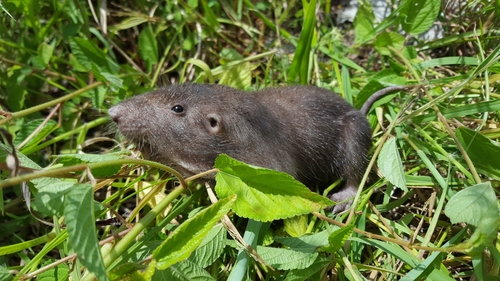
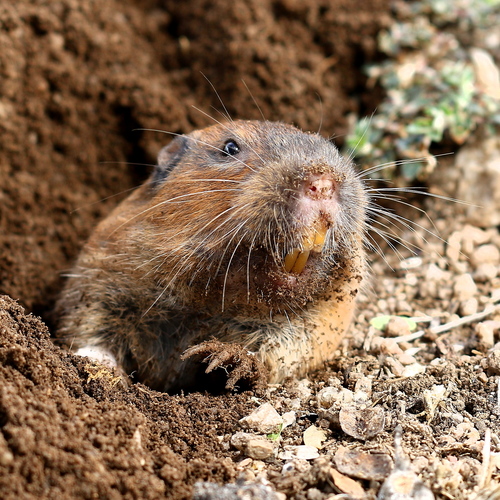
Botta's pocket gopher, Thomomys bottae, is a medium-sized gopher. Adult individuals range from 18 to 27 cm (7.1 to 10.6 in) in total length, including a 5 to 6 cm (2.0 to 2.4 in) tail, and have a dental formula of 1013/1013. Males are larger than females: males weigh 160–250 g (5.6–8.8 oz), while females weigh 120–200 g (4.2–7.1 oz). It is widely believed that males continue growing throughout their lives, but size variation suggests some males are naturally predisposed to be larger than others, and the largest male is not necessarily the oldest. This species has highly variable coloration, which is used to distinguish many of its subspecies. Color can also change over the course of a year when the animals molt. Both albino and melanistic individuals have been reported. Unlike the closely related southern pocket gopher, Botta's pocket gopher generally does not have a black stripe running down the middle of its back, which is used to tell the two species apart in overlapping ranges. Botta's pocket gophers range from California east to Texas, and from Utah and southern Colorado south to Mexico. Within this range, they live in a variety of habitats including woodlands, chaparral, scrubland, and agricultural land. They are only absent from rocky terrain, barren deserts, and major rivers, and can be found at elevations of at least up to 4,200 metres (13,800 ft). 31,000-year-old skeletal remains of this species have been recovered from Oklahoma. Around 195 subspecies have been described, mostly based on geographical distribution; many of these were previously classified as separate full species. The number of described subspecies per region with type localities is: California (43, including the nominate subspecies), southern Oregon (2), Nevada (16), Utah (20), Arizona (43), New Mexico (15), Colorado (4), western Texas (10), Baja California (16), Baja California Sur (8), Sonora (8), Chihuahua (2), Coahuila (6), and extreme northern Sinaloa (2). Botta's pocket gopher is strictly herbivorous, feeding on a wide range of plant matter. Shoots and grasses are particularly important components of its diet, while roots, tubers, and bulbs act as supplemental food during winter. Individuals often pull whole plants underground by their roots to eat them within the safety of their burrows, where they spend 90% of their lives. For non-reproductive adult Botta's pocket gophers, metabolic rate, consumption rate, and the amount of energy assimilated stay consistent across winter, spring, summer, and fall. The average body temperature of an adult is 36 °C (97 °F). Burrowing is extremely energetically demanding; it requires between 360 and 3,400 times more energy than moving across open ground, with the exact difference depending on soil density. To adapt to this high energy cost, Botta's pocket gopher is efficient at energy conservation, with a low basal metabolic rate and low thermal conductance. Main predators of Botta's pocket gopher include American badgers, coyotes, long-tailed weasels, and snakes. Additional predators are skunks, owls, bobcats, and hawks. This species is considered a pest in urban and agricultural areas, due to its burrowing behavior and preference for alfalfa. However, it is also considered beneficial because its burrows are a key source of soil aeration for the region. Digging by Botta's pocket gophers aerates soil to a depth of around 20 cm (7.9 in), and the species is responsible for creating Mima mounds that reach up to 2 m (6 ft 7 in) in height. Populations of Botta's pocket gopher can mine as much as 28 tonnes of soil per hectare per year, most of which is moved below ground rather than pushed to the surface to form mounds. This species has been linked to aspen deaths in Arizona, and its activity creates patches of bare ground that can limit the establishment of new plant seedlings. In areas with abundant food, such as agricultural land, Botta's pocket gopher can breed year-round, with up to four litters born each year. In northern regions and other less hospitable habitats, breeding only takes place during spring. Local habitat also affects the age at which females begin breeding. In agricultural land, nearly half of all females breed in their first year, while none breed in their first year in desert scrub. Females can breed within the same season they are born, or within three months of birth. Males generally do not breed until the season after they are born, or when they reach 6–8 months old. Gestation lasts 18 days, and produces a litter of up to 12 pups; three or four pups per litter is more typical. Pups are born hairless and blind, and measure approximately 5 cm (2.0 in) in length. Their initial silky fur is replaced by a coarser coat of grey hair as they mature, before the full adult coat develops. Botta's pocket gopher can hybridize with southern pocket gopher, and the two were often classified as a single species until the 1980s. However, male hybrids are sterile, and female hybrids have greatly reduced fertility that means they rarely produce offspring of their own. Hybridization with Townsend's pocket gopher has also been reported, and this also does not typically extend beyond the first hybrid generation.