About Thomisus spectabilis Doleschall, 1859
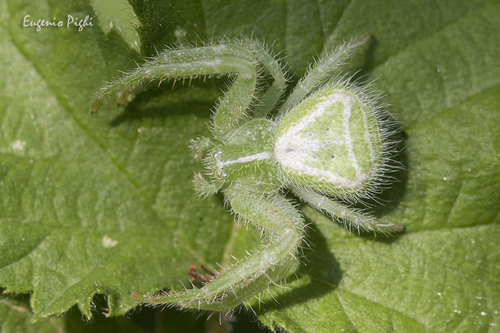
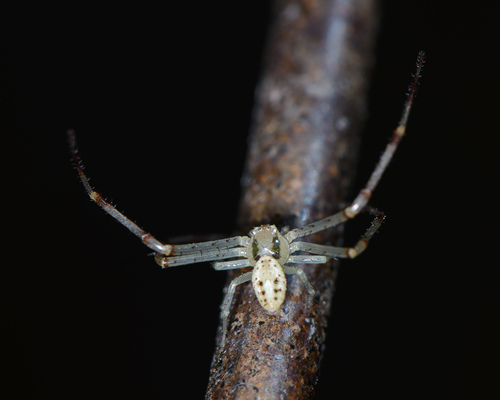
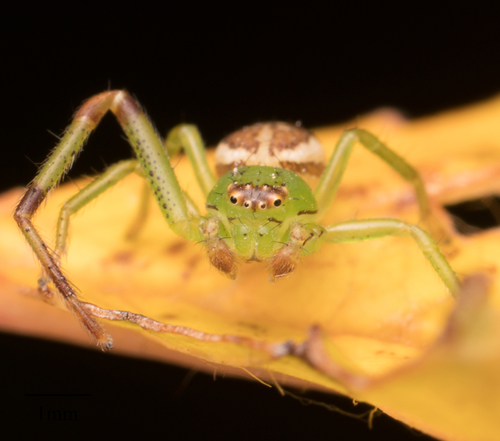
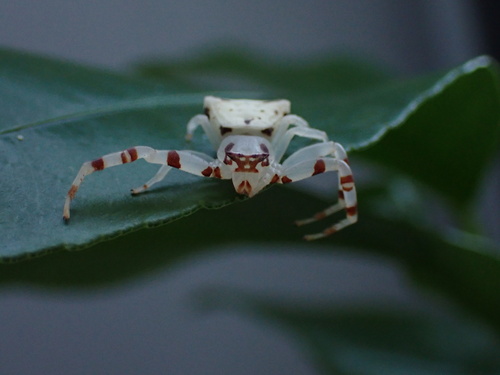
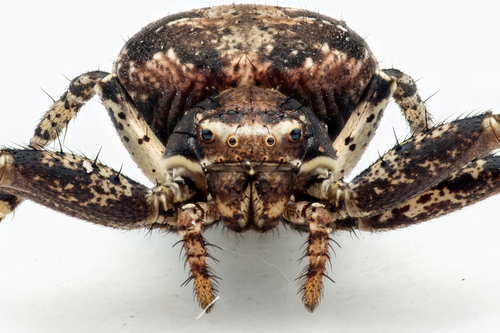
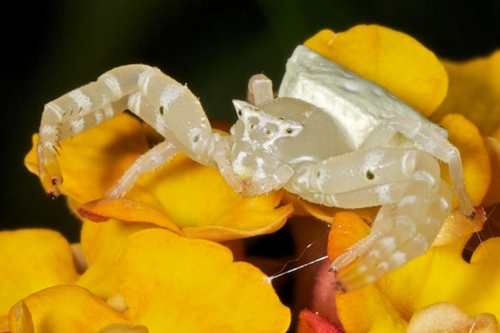
Thomisus spectabilis undergoes a unique color transformation, shifting from yellow to white. This color change helps the spiders both hide from predators and stalk prey on similarly colored daisies. The transformation lets them switch between being conspicuous and cryptic to their prey. Their colorful bodies reflect ultraviolet light in a pattern that attracts bees to the flower they occupy. When the spider shifts to a specific color, the color is displayed uniformly across its head, legs, and abdomen. The total leg span of this spider can reach up to 30 mm. It has small black eyes arranged into a white band across the head that resembles a mask. The spider's abdomen is pentagon-shaped, with two small bumps across its surface. It has stout legs arranged in a pattern similar to that of a crab. While the spider has pinching fangs, it lacks claw tufts, so it cannot climb across smooth surfaces. As Australian crab spiders, these individuals select habitats that improve their chance of catching prey. This involves creating contrast between the spider and its host flower, so they choose flower colors and positions that maximize this contrast. Because contrast with flowers is so important, these spiders do not simply select habitats with large numbers of their prey. Instead, they consider both flower type and prey count when choosing a habitat to maximize prey capture. T. spectabilis is mostly attracted to newer flowers, and is drawn to these flowers through olfactory cues. It is most commonly found in tropical or subtropical areas, but some individuals also prefer white clothing lines. This species is spread across Australia, but is primarily located in Eastern Australia. It is mainly a suburban spider. In Brisbane, it is normally found in backyards, bushes, and gardens.