About Thetidia smaragdaria (Fabricius, 1787)
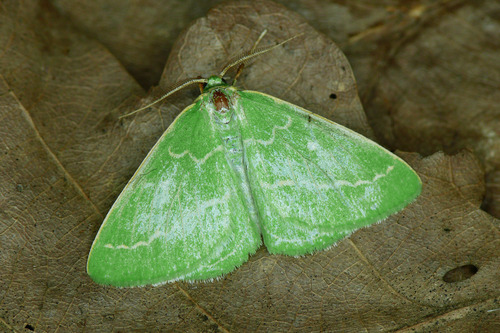
The Essex emerald, scientifically named Thetidia smaragdaria, is a moth species belonging to the family Geometridae. Johan Christian Fabricius first described this species in 1787, originally under the name Phalaena smaragdaria. This moth is distributed across the entire Palearctic region, and has been recorded in many European countries. The British subspecies Thetidia smaragdaria maritima was last observed in Kent in 1991, and is now considered to be extinct. The first recorded observation of this moth in Sweden dates to 2004. The wingspan of adult Essex emerald moths ranges from 27 to 35 mm. The species produces one new generation per year, and adult moths are active in flight from mid-June to mid-July. The larvae of this moth feed on Artemisia maritima and Achillea millefolium. Larvae can be found from July through June of the following year, and the species overwinters in its larval stage.