About Thesprotia graminis Scudder, 1878
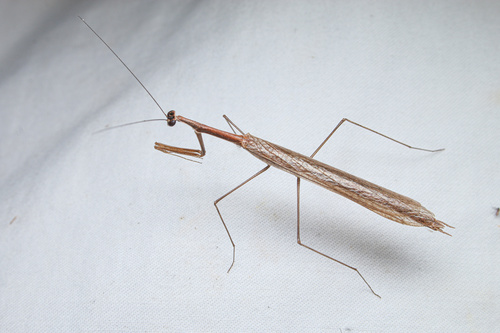
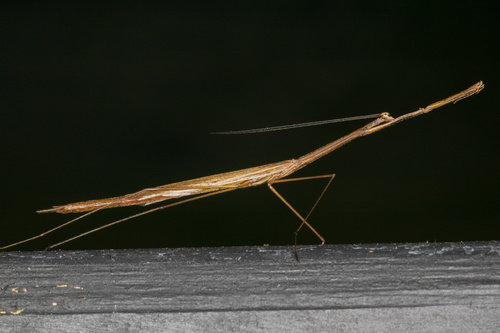
Thesprotia graminis, commonly called the American grass mantis or grass-like mantis, is a mantis species native to the Southern United States. It has been recorded in Florida, Georgia, South Carolina, Alabama, Mississippi, Louisiana, and Texas. This species can reproduce either through parthenogenesis or sexual reproduction. In appearance, T. graminis is similar to Brunneria borealis, and individuals are typically light brown in color. Contrary to what its common name suggests, T. graminis lives in a range of habitat types beyond grasslands, including pine stands, thickets, and Spanish moss (Tillandsia usneoides). Because T. graminis resembles pine needles, it camouflages very effectively in areas where pine needles dominate the ground cover. Like all mantids, T. graminis undergoes hemimetabolism, an insect development pattern with three distinct life stages: egg, nymph (juvenile), and adult. The reproductive ecology of T. graminis was poorly documented historically, but new research has expanded scientific understanding of this topic. A recent Master's Thesis completed at Texas A&M University San Antonio documented that wild-captured T. graminis follow a pseudo-iteroparous reproductive strategy despite being classified as a semelparous species, with individuals either laying eggs only once or producing multiple additional egg cases before dying.