About Theromyzon tessulatum (O.F.Müller, 1773)
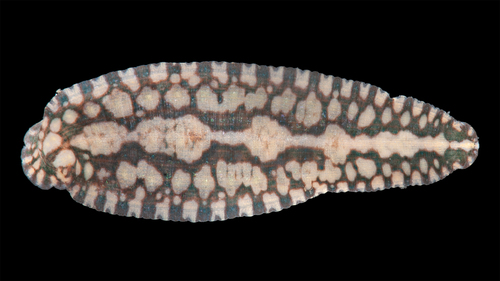
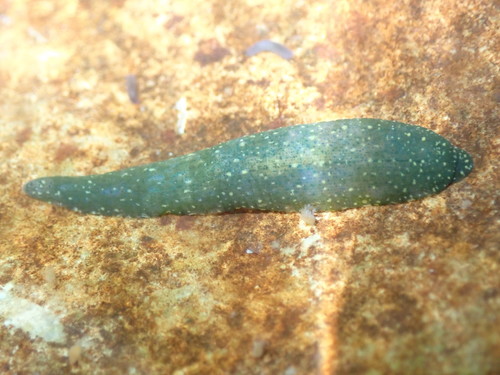
The cuticle of Theromyzon tessulatum is transparent, and ranges in color from olive green to brownish. Larger individuals often have six longitudinal rows of small yellow spots. This leech is active and frequently changes shape, reaching up to 6 cm (2.4 in) long when fully extended. Its posterior sucker is broad and easy to see, while its anterior sucker is small and cannot be seen when viewing the animal from above. This leech lives in freshwater habitats across Europe. It is common in the low-lying coastal regions of Holland, which are frequented by waterfowl that serve as its hosts. It is uncommon in Britain, where it has a discontinuous distribution, likely spread by the movement of its bird hosts. It has also been recorded at multiple locations in North America. When parasitizing ducks and other waterfowl, T. tessulatum invades the host's mouth and respiratory passages. During other life stages, it lives freely in freshwater habitats. Adult leeches brood their egg capsules on their undersides, and may carry as many as two hundred eggs at a time. When the young leeches are ready to emerge, the adult uses its sensory organs to detect water vibrations, and moves toward any disturbance that could indicate a potential nearby host. Suitable hosts have body temperatures between 37 and 40 °C (99 and 104 °F). While the species is generally nocturnal and negatively phototactic (meaning it avoids light), brooding adults ready to release their young may swim in open water during the daytime. If an adult finds a suitable host, it attaches using its sucker to the host's nasal passages, respiratory tract, or the inside of the mouth. A unique trait of this leech is that the attaching adult does not feed on the host itself; instead, the brooded young transfer to the host to take their first blood meal.