About Thelenota anax Clark, 1921
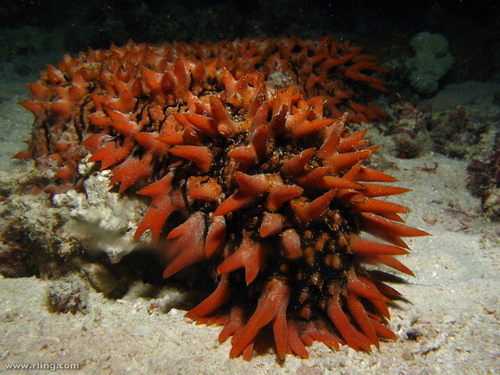
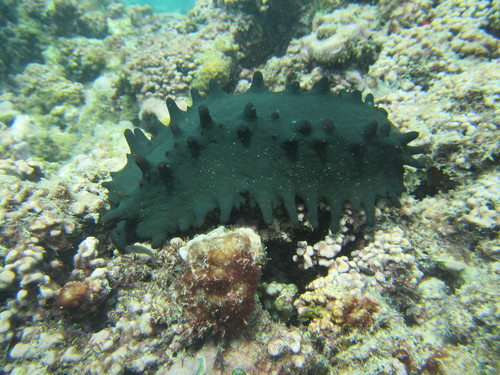
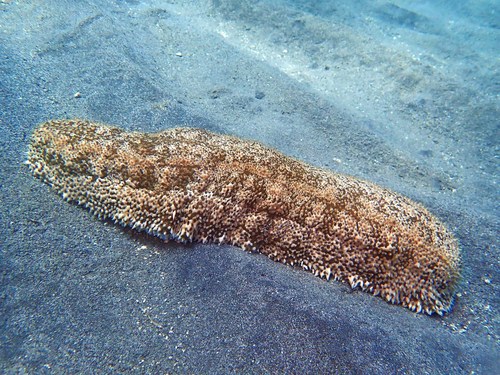
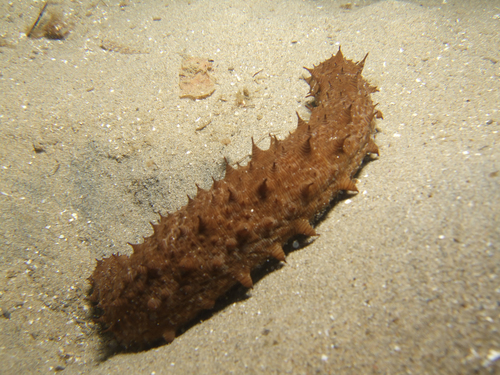
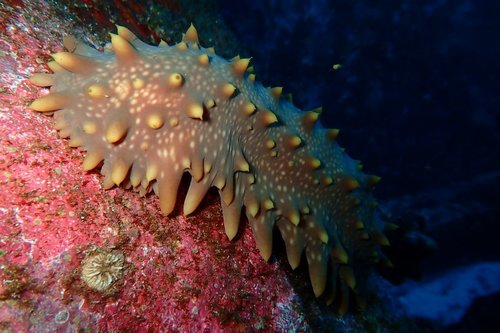
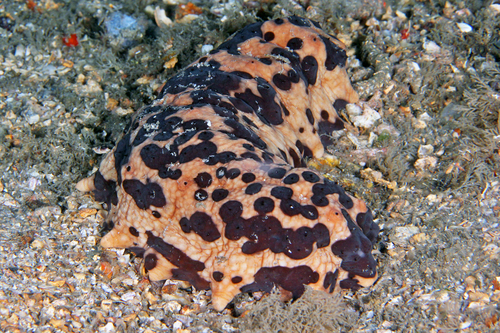
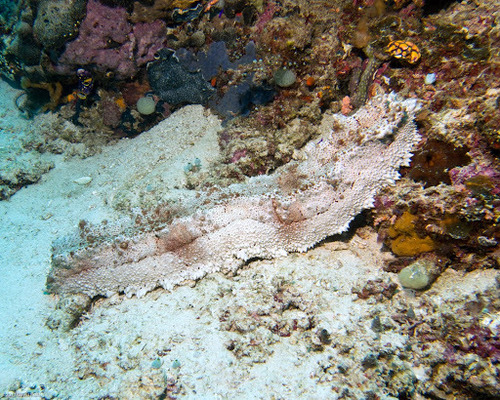
This species, Thelenota anax, has a body that can be creamy beige or light brown with dark brown or red spots. It usually has light-colored bumps on the top of its body. T. anax also has large papillae located laterally along its body. On its ventral surface, it has long white podia. Its mouth is also located ventrally, and it is surrounded by 18–20 peltate tentacles. The anus is located on the dorsal side of the animal, towards the terminal end. Individuals have an average length of around 69 cm, while the longest recorded specimen reached 89 cm. The largest individuals can weigh up to 5 kg. This species has two gonads that are approximately 70–500 mm long. Thelenota anax prefers to inhabit soft, sandy areas of the ocean floor at depths greater than 25 m, and some individuals can be found on the sides of reef slopes. T. anax is commonly consumed in Asian and Middle Eastern countries for its purported medicinal benefits, though research into its effects is still ongoing. T. anax produces many different bioactive compounds, including arachidonic acid, eicosapentaenoic acid, and docosahexaenoic acid. These compounds are known to reduce the risk of coronary disease and some cancers, and they have anti-inflammatory properties. Specifically, arachidonic acid promotes blood clotting and wound healing, which is why many Asian countries use T. anax to treat burns and cuts. Studies have also shown that T. anax produces the glycosides Stichopside C (STC) and Stichoposide D (STD). STC triggers production of Ceramide, a tumor suppressor lipid, and causes apoptosis of colorectal cancer cells and leukemia cells. STD causes apoptosis of only leukemia cells and inhibits their growth.