About Thelenota ananas (Jaeger, 1833)
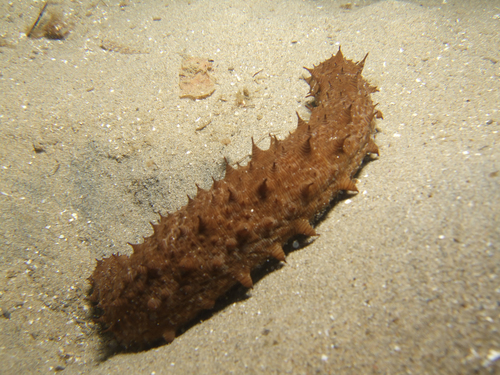
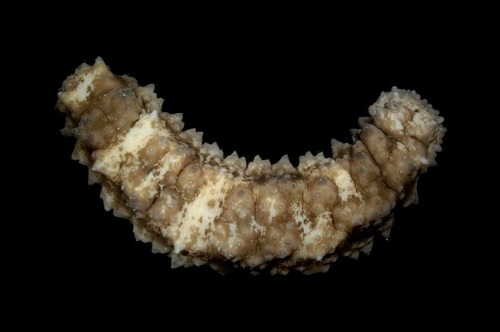
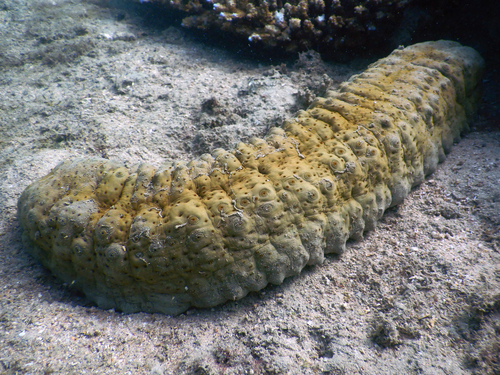
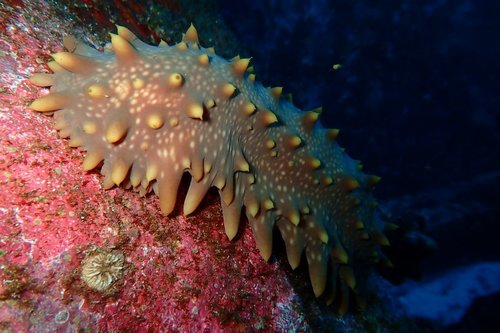
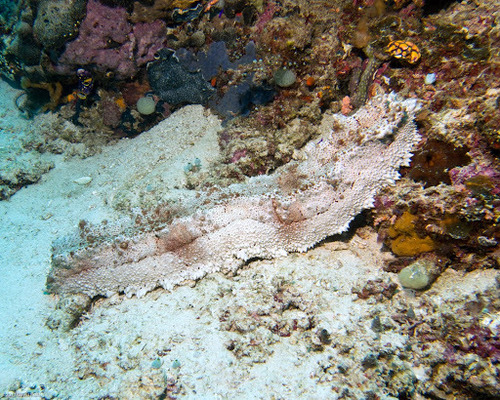
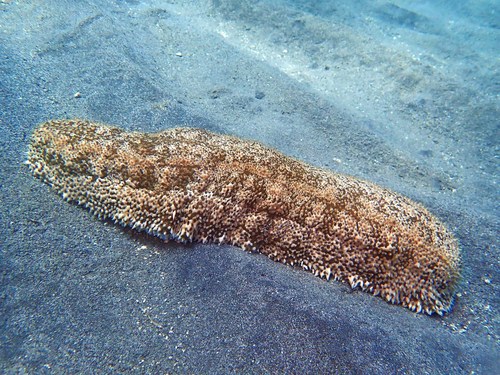
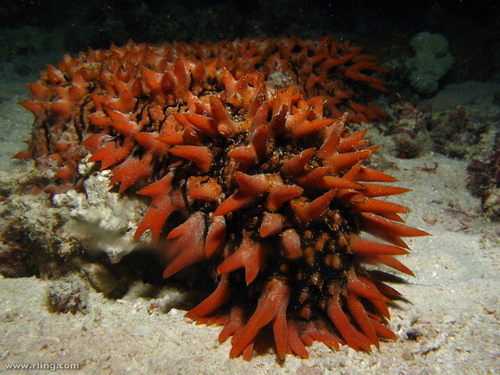
Thelenota ananas, commonly known as the pineapple sea cucumber, is a sea cucumber species distinguished by its large size, warm coloration, and pointed, star-shaped spotted teats that cover its entire body. These teats are arranged in groups of two or three. The body of this species is reddish-orange, with teats that are slightly darker in color. Fully grown individuals can reach up to 70 cm (28 in) in length, and weigh between 3–6 kg (6.6–13.2 lb). The flat ventral side of the body has numerous large tube feet, and this species is a slow-growing organism. Thelenota ananas lives on clean, sandy bottoms of lagoons at depths of up to 30 m (98 ft), or on flat rocky slabs near large coral heads and coral rubble. It is typically found in the seas surrounding India, and at the Great Barrier Reef, Australia. It thrives in average water temperatures between 26–27 °C (79–81 °F). Large individuals of this species occur dispersed, at low population densities. Thelenota ananas is one of the most popular edible sea cucumber species consumed in China and some other Southeast Asian countries. Its consumption is associated with multiple health effects, including antioxidant, anti-inflammatory, anti-tumor, anti-proliferative, anti-coagulant, and anti-viral benefits. Sea cucumbers of this species contain saponins, which can help regulate cholesterol metabolism, and reduce the development of obesity, hyperlipidemia, and diabetes.