About Thaumatophyllum bipinnatifidum (Schott ex Endl.) Sakur., Calazans & Mayo
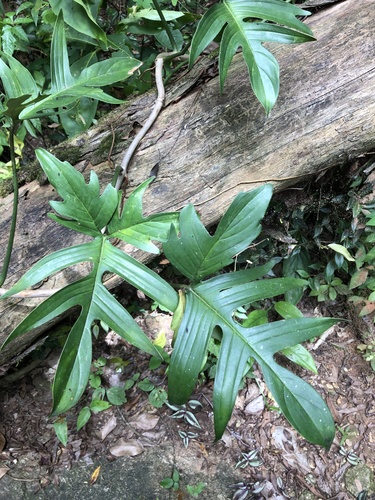
This plant has the accepted scientific name Thaumatophyllum bipinnatifidum (Schott ex Endl.) Sakur., Calazans & Mayo, and is commonly known by synonyms including Philodendron bipinnatifidum and Philodendron selloanum. Its common names are split-leaf philodendron, lacy tree philodendron, selloum, horsehead philodendron, and guaimbé. Note that the common name "split-leaf philodendron" is also used for Monstera deliciosa. It is a member of the Araceae family; it was historically classified in the genus Philodendron. This species is native to South America, specifically Brazil, Bolivia, Argentina, and Paraguay. It is widely cultivated as a landscape plant in tropical, subtropical, and warm temperate climates.
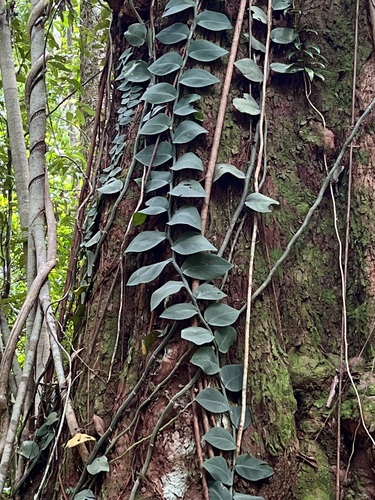
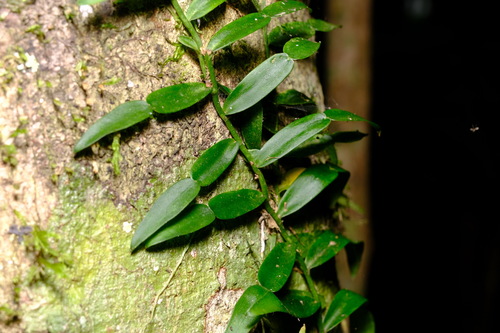
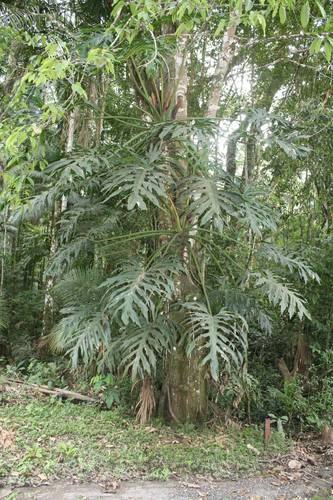
As a tropical plant, it is usually grown in full sun, but it can tolerate and adapt to deep shade. It grows best in rich, moisture-retentive soil that can be slightly alkaline, and it cannot tolerate high salt concentrations in soil. It can support itself at large heights by developing a tree-like base, but it will show epiphytic characteristics if it can attach to and climb a nearby supporting tree. Its trunk produces many strong aerial roots that both support the full plant mass and absorb water and nutrients from the soil. The plant is well known for easily covering large areas of ground; its tree-like trunk typically spreads between eight and ten feet wide. When grown in cooler climates that experience at least some freezing winter weather, all aboveground structures die back completely after a hard frost, and then resprout from the roots the following spring.
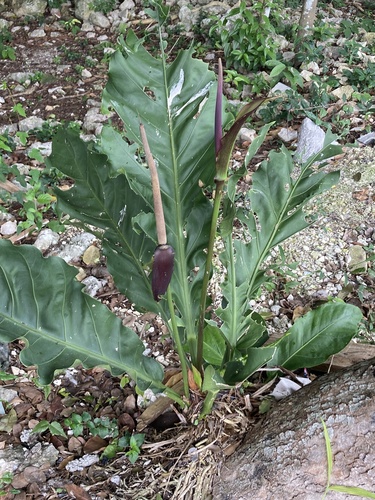
Its reproductive structure consists of a spadix that sits at the center of a modified leaf called a spathe, which is often mistaken for a flower, as its role is to protect the spadix. The spadix is divided into three sections: fertile male flowers at the tip, sterile male flowers at the center, and fertile female flowers toward the base of the flower chamber. The central sterile male flowers prevent self-fertilization and produce heat. Pollination of this species is carried out by beetle species in the genera Erioscelis and Cyclocephala.
Over the two days the entire reproductive structure is open, sterile male flowers produce and maintain a constant temperature of 34 °C (93 °F) — temperatures as high as 46 °C (115 °F) have been recorded — independent of environmental conditions. It does this by burning stored fatty tissue; its metabolic output during this process is comparable to that of a small cat. Unlike many plants, P. bipinnatifidum metabolizes fat rather than carbohydrate to fuel this heat production. This feature is thought to represent possible evolutionary convergence, where this plant species and animal species evolved similar mechanisms to use fat reserves for energy consumption. The primary purpose of heating the flower structure is to volatilize and disperse scents that attract pollinating beetles. The consistent high heat increases the distance over which beetles can detect the scent, raising the probability of successful pollination. Additionally, the heat creates a welcoming climate that stimulates beetle activity once inside the flower and induces mating, as the temperature is favorable for this behavior. This also increases the chance of pollination by encouraging beetles to stay longer inside the structure.
In cultivation, P. bipinnatifidum is grown as a landscape plant in many tropical, subtropical, and warm temperate regions, including the Philippines, all of Australia, the gulf coast and east coast of the United States (including Florida and California), South Africa, and northern New Zealand. In cool temperate regions, it is grown as a houseplant. It has been awarded the Royal Horticultural Society's Award of Garden Merit.