About Thasus neocalifornicus Brailovsky & Barrera, 1994
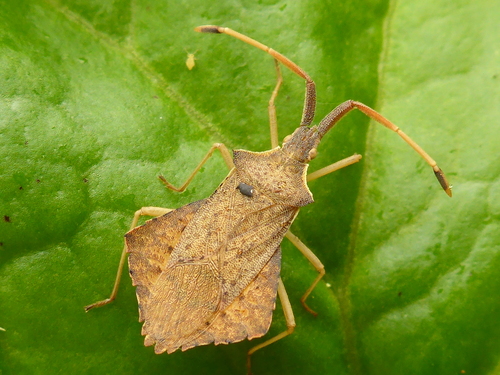
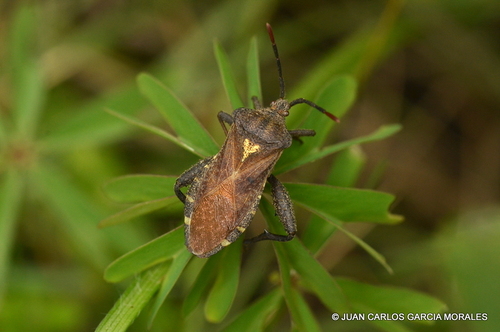
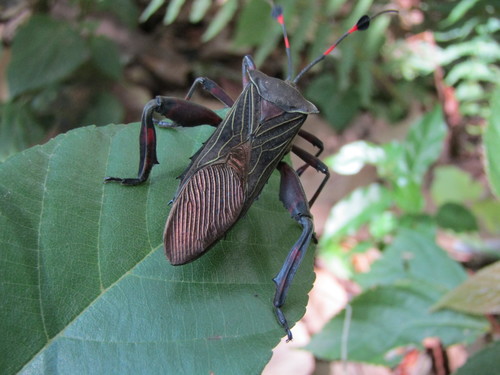
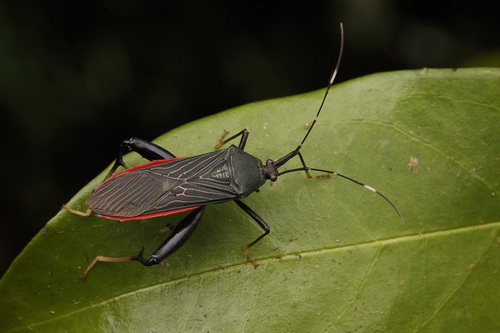
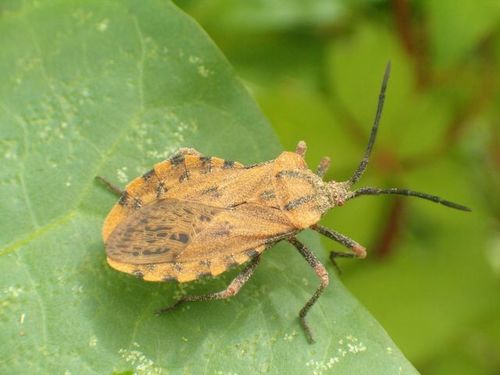
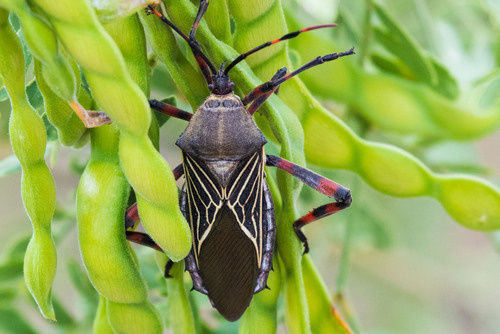
Thasus neocalifornicus was formally described by Brailovsky & Barrera in 1994. This species is the largest terrestrial member of the suborder Heteroptera. Adult individuals reach around two inches in length. Flightless nymphs have more vibrant coloration and complex patterning than adults; nymphs have aposematic white and red coloration, while adults are dark brown with crimson and black striped legs and antennae. The antennae are setaceous, with a small disc-like nodule located about two thirds of the way up the antenna. Adult hind femora are widened, with spikes along the inner edge that are more pronounced in males. This is the only species in its genus with third and fourth antennal segments that are equal or subequal. A triangular scutellum sits between the wing bases on the dorsal thorax. Before it was distinguished in 1995, this species was commonly misidentified as either T. gigas or T. acutangulus. This bug inhabits the Sonoran Desert, ranging from southwestern Arizona in the United States to Baja California Sur, Mexico. Population size can be plentiful depending on the season. It has also been recorded in Texas in the United States, and in the Mexican states of Sinaloa and Sonora. Most United States populations are found in the Tucson area, and most Mexican populations are found around the southern tip of Baja California Sur. This is the only species in the genus Thasus confirmed to occur in the United States. Thasus neocalifornicus is univoltine, producing one generation of offspring per year. Nymphs develop from first to fifth instars between January and July, with each subsequent instar resembling an adult more closely than the previous. Nymphs often prefer the undersides of leaves, and migrate to the base of mesquite trees in summer. Adults lay eggs on mesquite trees from August to October. Only the eggs survive the winter season.