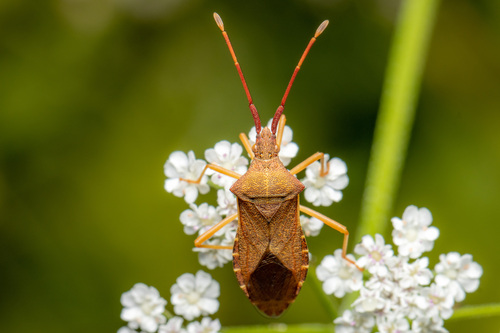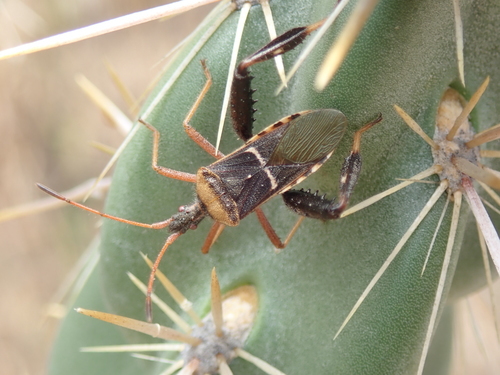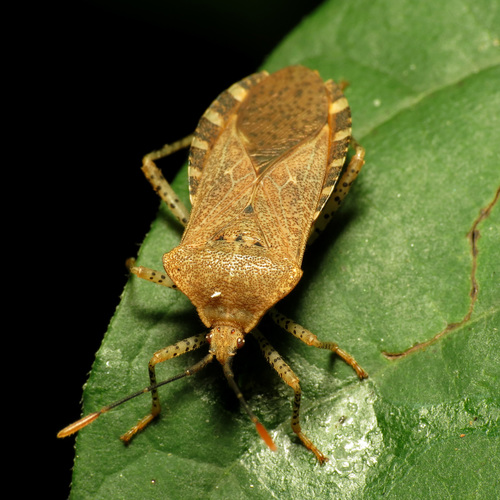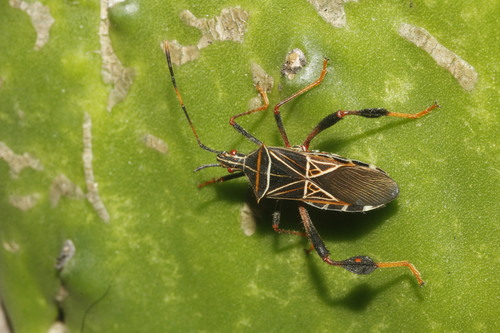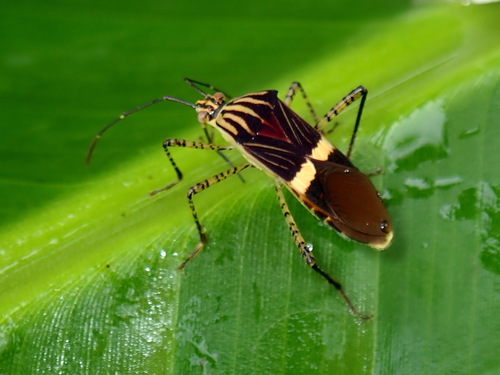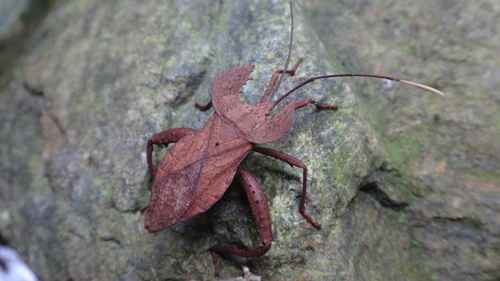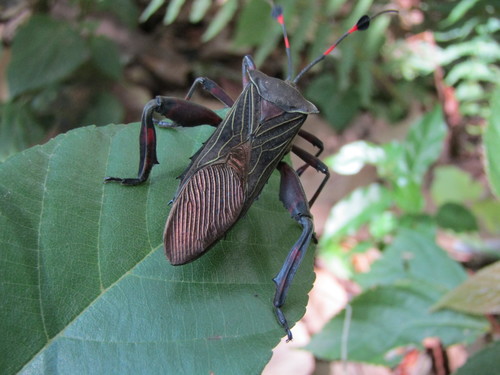
About Thasus acutangulus (Stål, 1859)
Thasus acutangulus, commonly known as the Mesquite Bug, is also referred to by the synonym Pachylis acutangula, and it is a type of leaf-footed bug. This species was first described by Swedish entomologist Carl Stål in 1859. This species is most commonly recorded from Mexico and Guatemala. Within Mexico, confirmed records come from Veracruz, specifically the locations of Orizaba and Misantla; within Guatemala, confirmed records are from Senahu and Cerro Zunil. It has also been documented along the River Sarstoon in what was then called British Honduras, which is now modern Belize. The single reported record from Guanacaste, Costa Rica, is generally considered a misidentification, per notes published by Distant (1881–1892), Aldrich and Blum (1978), and Walker (1871). In addition, all published reports of this species occurring in the United States are considered misidentifications of the related species Thasus neocalifornicus. T. acutangulus inhabits the foliage of native trees. Adults are most often observed from March through August, with a distinct large peak in sightings during April and May. A food plant record previously assigned to this species by Aldrich and Blum (1978) was noted by Schaefer and Mitchell (1983) to likely be a misidentification, and that record actually corresponds to the species Pachylis laticornis instead.