About Thanatus formicinus (Clerck, 1757)
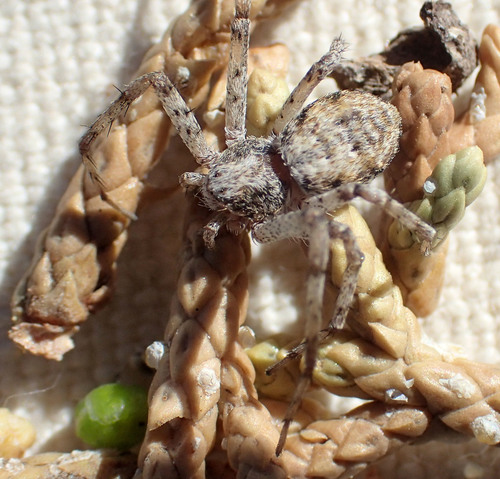
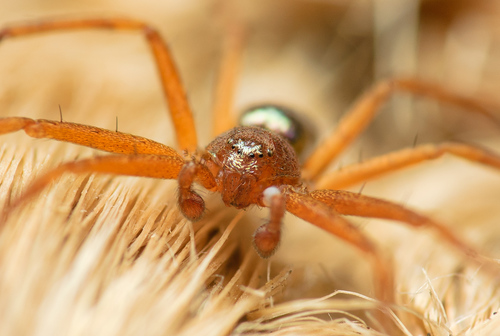
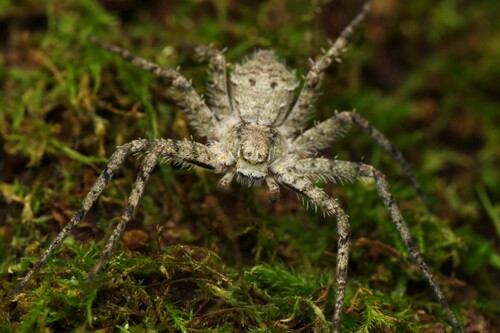
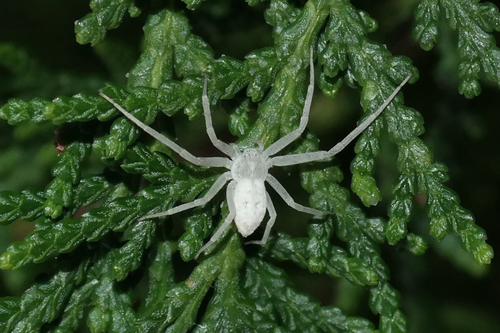
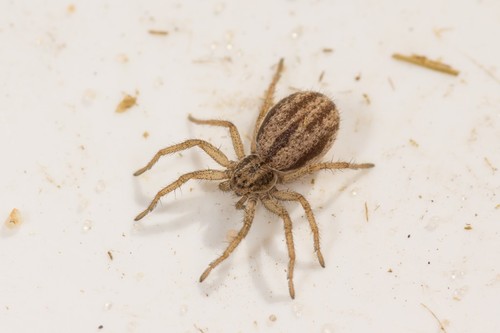
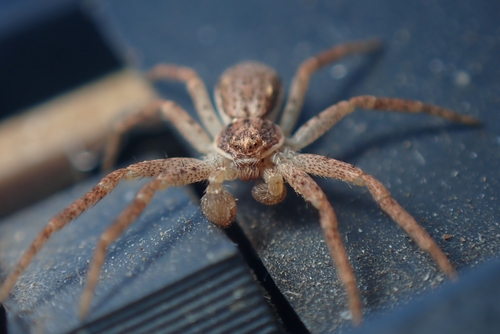
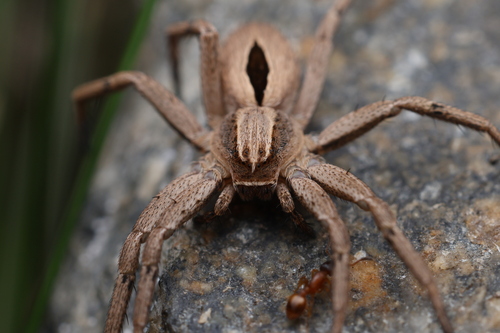
Thanatus formicinus, also called the diamondback spider, shows sexual dimorphism. Males and females are similar in color and pattern, but males are distinctly smaller than females. Males have a body length of 5.2 mm to 7.4 mm, while females have a body length of 6.9 mm to 12 mm. The abdomen ranges from pale brown to greyish brown, with a distinct rhomboidal mark edged in white. Two thin, curved black lines may also be present at the rear of the abdomen. The carapace matches the abdomen in color, and has a light-colored central band. The legs and palps are also a similar color to the abdomen, with a small number of black spots on the legs. Males match females in color and markings, but are usually darker than females. Thanatus formicinus has a Holarctic distribution, occurring across North America, Europe, and Asia as far east as Japan. It is also found in Iraq, Iran, Turkey, and North Africa, and has been introduced to Svalbard. In the United Kingdom, this species has always been rare. Before 1969, it was only recorded from three sites in southern England, and no records were made after 1969 until a population was found in Clumber Park, Nottinghamshire in 2017. Across its range, this spider is typically found in dry and semi-dry meadows, and warm, dry forest steppes. In Britain, it occurs in sphagnum-dominated bogs that also contain Molinia caerulea and some heather.