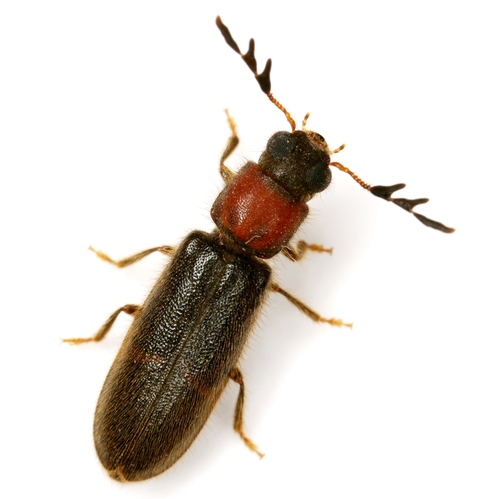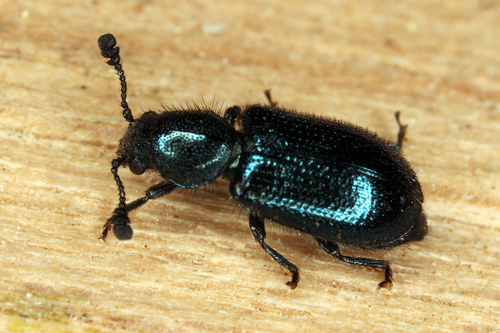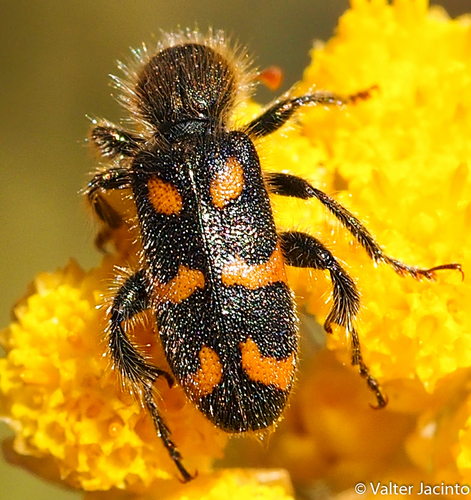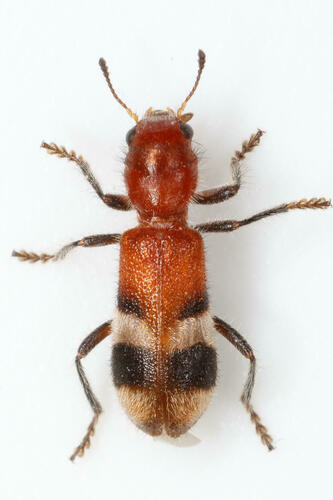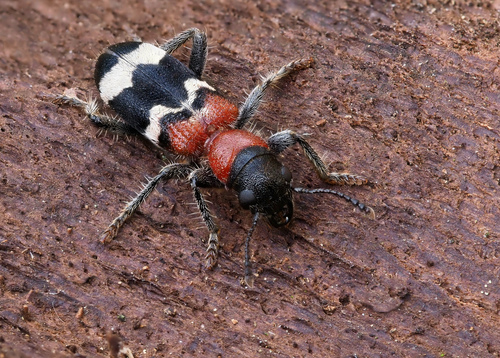
About Thanasimus formicarius (Linnaeus, 1758)
Thanasimus formicarius, commonly called the ant beetle or the European red-bellied clerid, is a medium-sized, rather soft-bodied insect. It has strong mandibles that can tear through the hard sclerotized body covering of bark beetles. Both adult and larval Thanasimus formicarius are well-known common predators of bark beetles in Europe. Thanasimus formicarius preys on 27 species of bark beetle from 15 genera: Agrilus, Dendroctonus, Dryocoetes, Hylastes, Hylesinus, Hylurgops, Hylurgus, Ips, Leperesinus, Orthotomicus, Pityogenes, Pityokteines, Polygraphus, Scolytus, Tomicus and Trypodendron. These prey beetles infest coniferous trees such as pine, spruce, larch, and Douglas fir, plus broad-leaved trees such as oak, ash, and poplar. The species is confirmed to prey specifically on Agrilus biguttatus. Its most frequent common prey includes the pine bark beetles Tomicus piniperda and Tomicus minor, and the European spruce bark beetle Ips typographus. Adult Thanasimus formicarius overwinter at the base of conifer trees, and only rarely overwinter at the base of deciduous trees. They emerge in spring and fly to the lower sections of trees to hunt for bark beetles. They are often observed waiting for prey on the bark of fallen pine or spruce trees. Both Thanasimus formicarius and their bark beetle prey are attracted to monoterpenes released from damaged areas of fallen trees. Stacked wood is particularly attractive to this species because of the monoterpene volatiles it emits. Thanasimus formicarius is also attracted to specific pheromone components produced by bark beetles, so the ant beetles are often caught in pheromone traps set for bark beetles. After hatching, Thanasimus formicarius larvae enter bark beetle scolytid galleries and feed on the immature life stages of bark beetles. Larvae grow very slowly, and remain in the larval stage for two years. They pupate in the fall inside niches carved into outer tree bark. Adult Thanasimus formicarius live between 4 and 10 months. Both males and females mate multiple times with many different partners throughout the breeding season. Mating is brief. Before copulation, the male chases the female and firmly grasps her pronotum with his mandibles. Females lay eggs between April and June. They typically produce 20 to 30 eggs, which they deposit in bark crevices near bark beetle tunnels under pine tree bark. Pink-colored larvae hatch approximately one week after eggs are laid. The larvae live under tree bark, where they prey on bark beetle larvae, eggs, and pupae, but will also feed on other insects that live under bark. Larvae are very quick and highly skilled at moving through bark beetle corridors to pursue prey, and can even run backwards through these passages. Before pupation, larvae create an oval chamber under the bark and line it with mucus. Adult beetles emerge the following spring.