About Thamnophilus torquatus Swainson, 1825
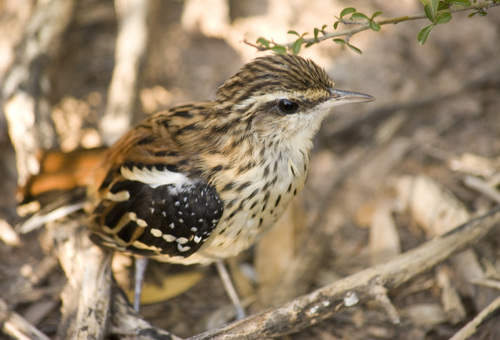
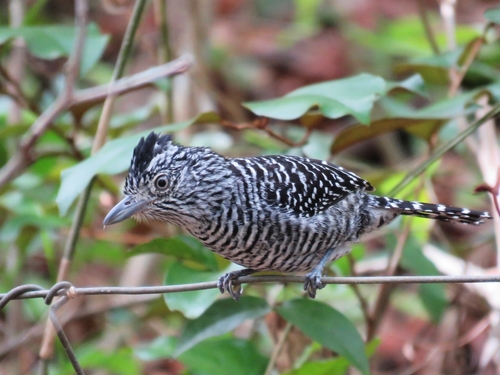
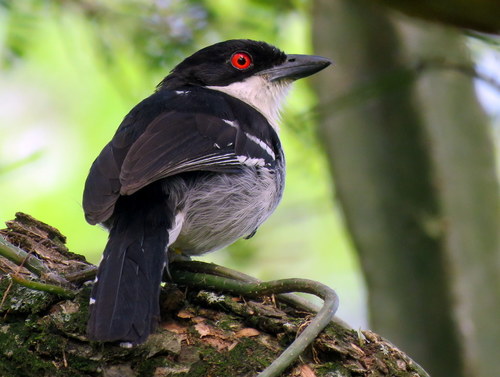
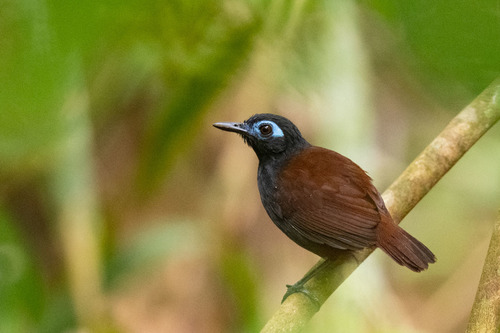
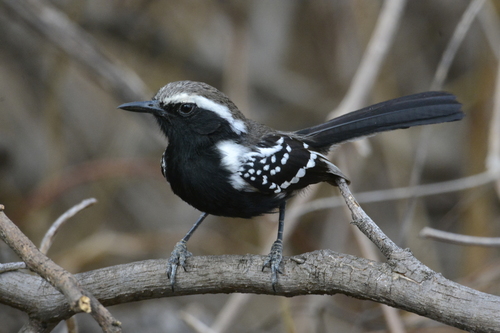
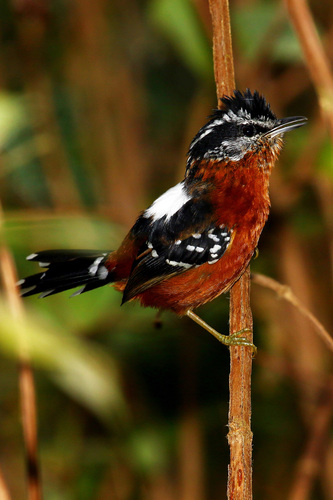
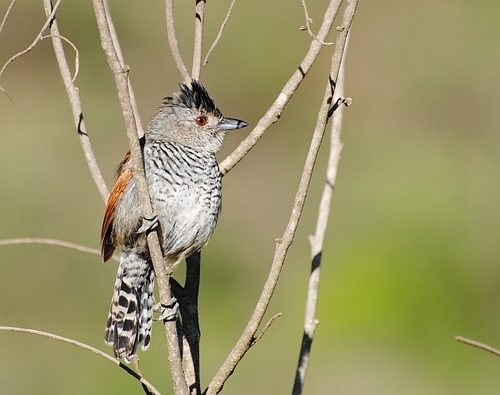
Rufous-winged antshrike (Thamnophilus torquatus Swainson, 1825) measures approximately 14 cm (5.5 in) in length and weighs between 18 and 20 g (0.63 to 0.71 oz). As members of the genus Thamnophilus within the antbird family, these are largish antbirds, all possessing stout hooked bills similar to those of true shrikes. This species shows significant sexual dimorphism. Adult males have a black crown, with gray face, neck, and upperparts. Their wings and wing coverts are cinnamon-rufous. The tail is black, with white bars on the outer tail feathers. Their throat and underparts are whitish, with black bars across the breast. Adult females have a rufous crown and a mottled whitish and gray face. Their upperparts are pale cinnamon-rufous, and their wings match those of males. The female's tail is rufous. Their underparts are buffy, and darker on the breast, flanks, and crissum; the breast sometimes has faint dusky bars. The rufous-winged antshrike is distributed across Brazil, ranging from southern Pará east to Pernambuco, and south to eastern Rio de Janeiro state. In western parts of its range, its distribution extends southwest through Mato Grosso and Mato Grosso do Sul into the Santa Cruz Department of eastern Bolivia, and Canindeyú Department of eastern Paraguay. It lives in the understorey of cerrado and adjacent semi-deciduous woodlands, and also occupies brushy gallery forest and second growth habitats including overgrown pastures and plantations. Most individuals occur below 1,000 m (3,300 ft) in elevation, but the species can be found as high as 1,750 m (5,700 ft).