About Thamnophilus murinus P.L.Sclater & Salvin, 1868
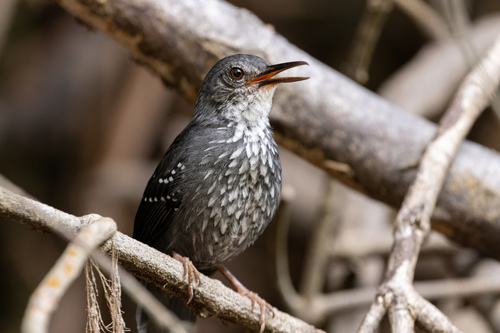
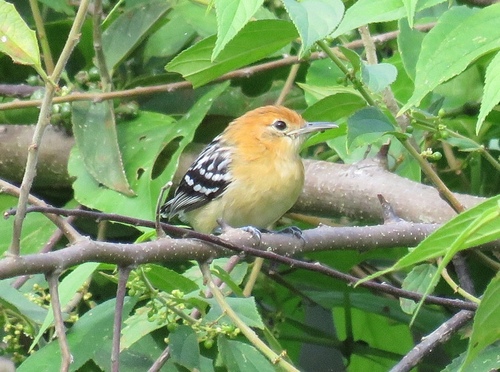
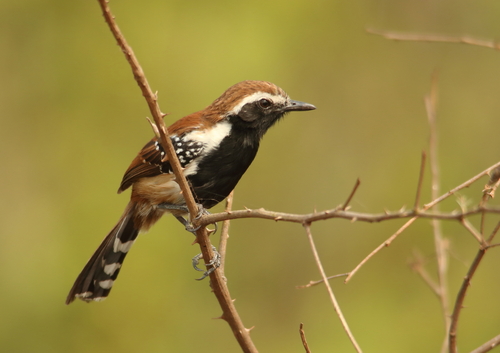
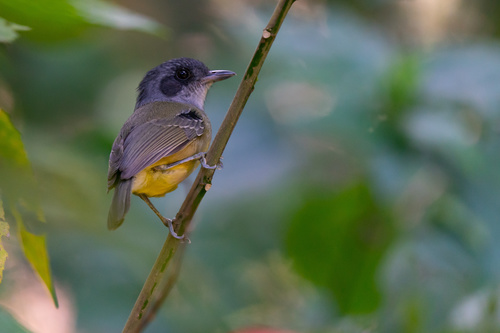
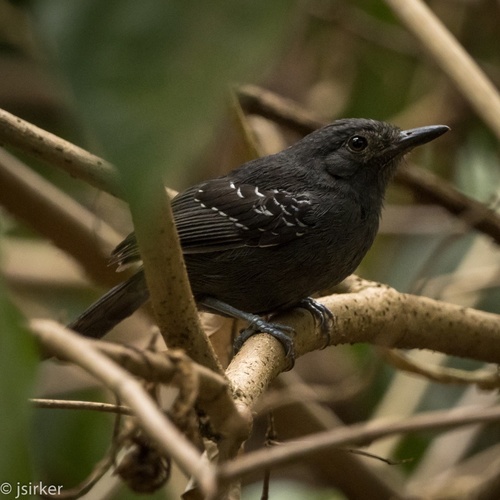
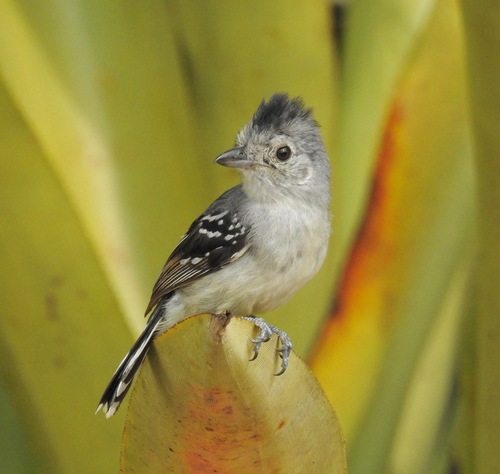
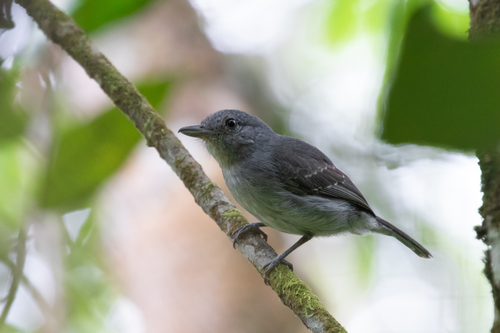
The mouse-colored antshrike (Thamnophilus murinus) is 13 to 14 cm (5.1 to 5.5 in) long and weighs 17 to 20 g (0.60 to 0.71 oz). Members of the genus Thamnophilus are largish birds in the antbird family, all with stout hooked bills similar to those of true shrikes. This species shows significant sexual dimorphism. Adult males of the nominate subspecies have gray upperparts with a hidden white patch between their scapulars. Their wings are dark yellowish brown, appearing somewhat more rufous in the eastern portion of the species' range; their wing coverts are grayer with buffy white tips. Their tail is brownish black and gray with white feather tips. Their underparts are paler gray than their upperparts, with the lightest color on the throat and belly, and the center of the belly is often white. Adult females have a dull rufous forehead and crown, and olive-brown upperparts. Their wings are brown, and like males' wings, are more rufous in the east; their wing coverts and flight feathers have buffy white tips and edges. Their tail is warm brown with thin white tips on the outer feathers. Their underparts are pale gray, with an olive tinge on the flanks and a yellowish brown tinge on the breast, sides, and crissum. Both sexes have a gray or brown iris. Males of subspecies T. cayennensis have somewhat more reddish brown wings than the nominate subspecies. Males of T. canipennis have gray wings and gray wing coverts with grayish white tips and edges; both sexes of this subspecies have a gray iris. The nominate subspecies of mouse-colored antshrike ranges from east-central Colombia's Guainía and Vaupés departments east through southern Venezuela, Guyana, and Suriname, and through Brazil north of the Amazon from the Negro River to northeastern Amazonas state. Subspecies T. cayennensis occurs in French Guiana and in northeastern Brazil north of the Amazon in Amapá and Pará states. Subspecies T. canipennis is found from southeastern Colombia's Amazonas Department south through most of eastern Ecuador into eastern Peru as far south as northwestern Madre de Dios Department, and into extreme northern Bolivia. Its range also extends east into western Brazil to the Japurá River, and further beyond south of the Amazon to the Madeira River. The mouse-colored antshrike primarily lives in lowland terra firme and white-sand evergreen forest. It favors the forest understorey to mid-storey, and is usually found in the forest interior, but also occurs at forest edges. In terms of elevation, it is found below 400 m (1,300 ft) in Colombia, below 450 m (1,500 ft) in Ecuador, below 1,200 m (3,900 ft) in Peru, and below 1,300 m (4,300 ft) in Venezuela and Brazil.