About Thalassoma duperrey (Quoy & Gaimard, 1824)
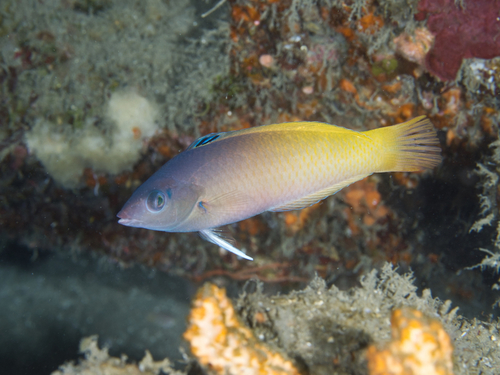
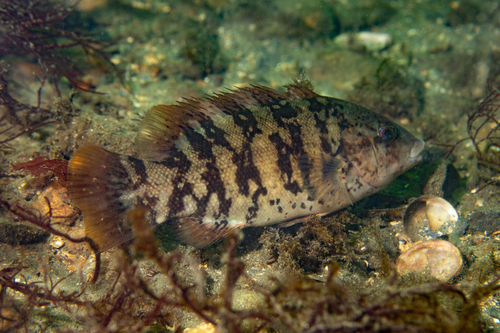
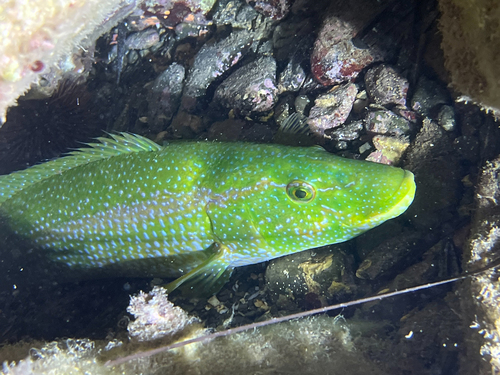
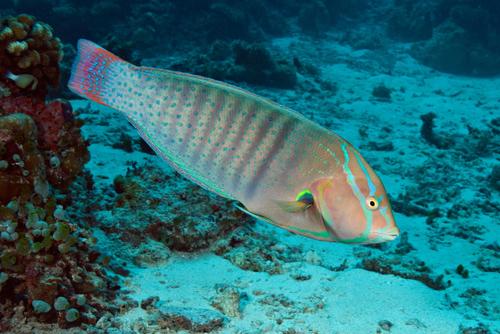
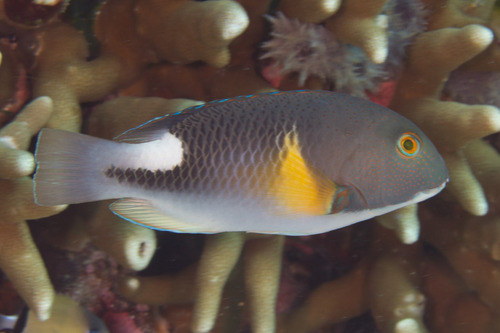
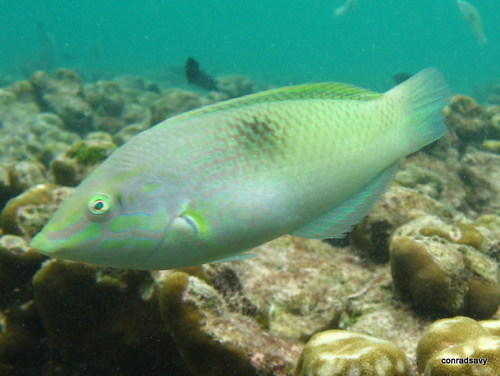
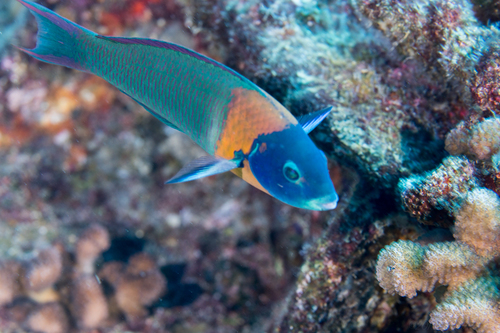
This species, scientifically named Thalassoma duperrey (Quoy & Gaimard, 1824), is commonly called the saddle wrasse. Adult saddle wrasses have a dark blue-green head, followed by a dull orange band that intensifies in color during spawning seasons. The remainder of their body is blue-green, marked with numerous magenta arrow-shaped markings running down their sides. Terminal males usually have a white bar around the orange band that can be displayed or hidden, and they also have a crescent-shaped tail fin. Juvenile saddle wrasses are typically more whitish overall, with a dark stripe running from the top of the head to the tail. Smaller adults can revert to juvenile coloration to avoid harassment from larger fish. This species can reach a maximum length of 11.5 inches (29.21 cm). Saddle wrasses are endemic to Hawaii and Johnston Atoll, where they are very common. They inhabit intertidal and shallow habitats down to approximately 70 ft (21.34 m) depth, and prefer areas with abundant corals, rocks, and small nooks and crannies that provide quiet retreats and hiding spots from potential threats. These fish sleep hidden in holes or burrows in sandy areas. In Hawaii, this species is known as hīnālea, and it was an integral part of Hawaiian society and fishing communities. It served as a staple food and a common component of the traditional Hawaiian diet. Hīnālea were also regularly used in ceremonies and as offerings to Hawaiian gods and goddesses. Traditional Hawaiian fishing practices for this fish include melomelo, where club-like sticks were charred and anointed with oil, then submerged underwater to attract hīnālea. Hawaiian fishermen, called lawai'a, wove trapping baskets called hīnaʻi hoʻoluʻuluʻu from vines of the endemic 'āwikiwiki plant; these baskets were weighted and lowered into the ocean to trap hīnālea.