About Thalasseus albididorsalis (E.Hartert, 1921)
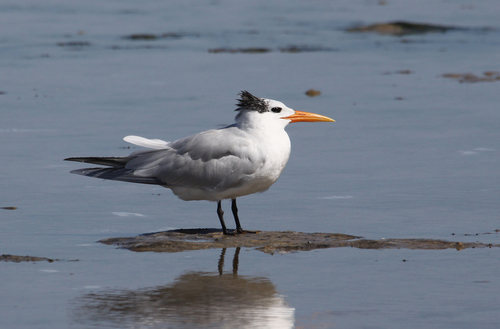
The West African crested tern, scientifically named Thalasseus albididorsalis (E. Hartert, 1921), is one of the three larger species of crested terns, alongside the royal tern and greater crested tern. It has a shallowly forked tail, and adult individuals have a long, orange bill. This species measures approximately 50 cm (20 in) in total length, has a wingspan ranging from 125–135 cm (49–53 in), and weighs between 320–440 g (11–16 oz), with an average weight of 367 g (12.9 oz).
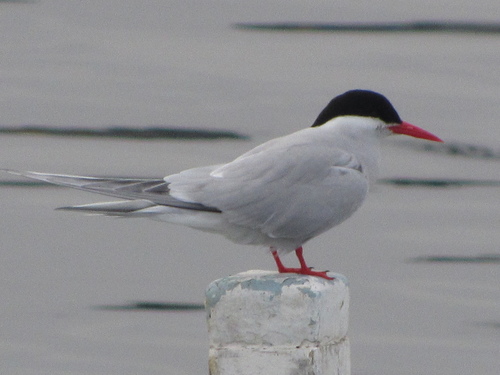
In breeding plumage, the underside of the West African crested tern is white, while its upper parts are silvery grey. The top of its head is black, with a shaggy crest on the rear of the head. Like all terns in the Thalasseus genus, its primary feathers are silvery when new, but quickly darken to a blackish shade as they wear. Adult birds have black legs. Non-breeding adult plumage is almost identical to breeding plumage, except that the black coloration on the head is restricted only to the crest.
Juvenile West African crested terns have variable plumage: their underside is white, and their upper parts have streaks and blotches. Juveniles have a smaller, paler yellow bill, and their legs are rarely black, most often appearing green, yellow, or pink.
Currently, the West African crested tern is only confirmed to breed on a small number of islands off the African coast between Mauritania, Senegal, and The Gambia, though researchers suspect it may also breed as far east as Nigeria. During the non-breeding season, it can be found along the African coast from Morocco down to Namibia.